The Greene brothers are filed, almost without exception, under California. The catalogs call them regional. The textbooks place them inside a movement that prized the local, the indigenous, the honest material drawn from the ground near at hand. The Arroyo Seco runs through every account of their work like a watermark. And the houses themselves seem to confirm it: low, horizontal, brown, settling into their lots as if they had grown there.
Then you go inside, and you put your hand on a wall, and the wall is Burma.
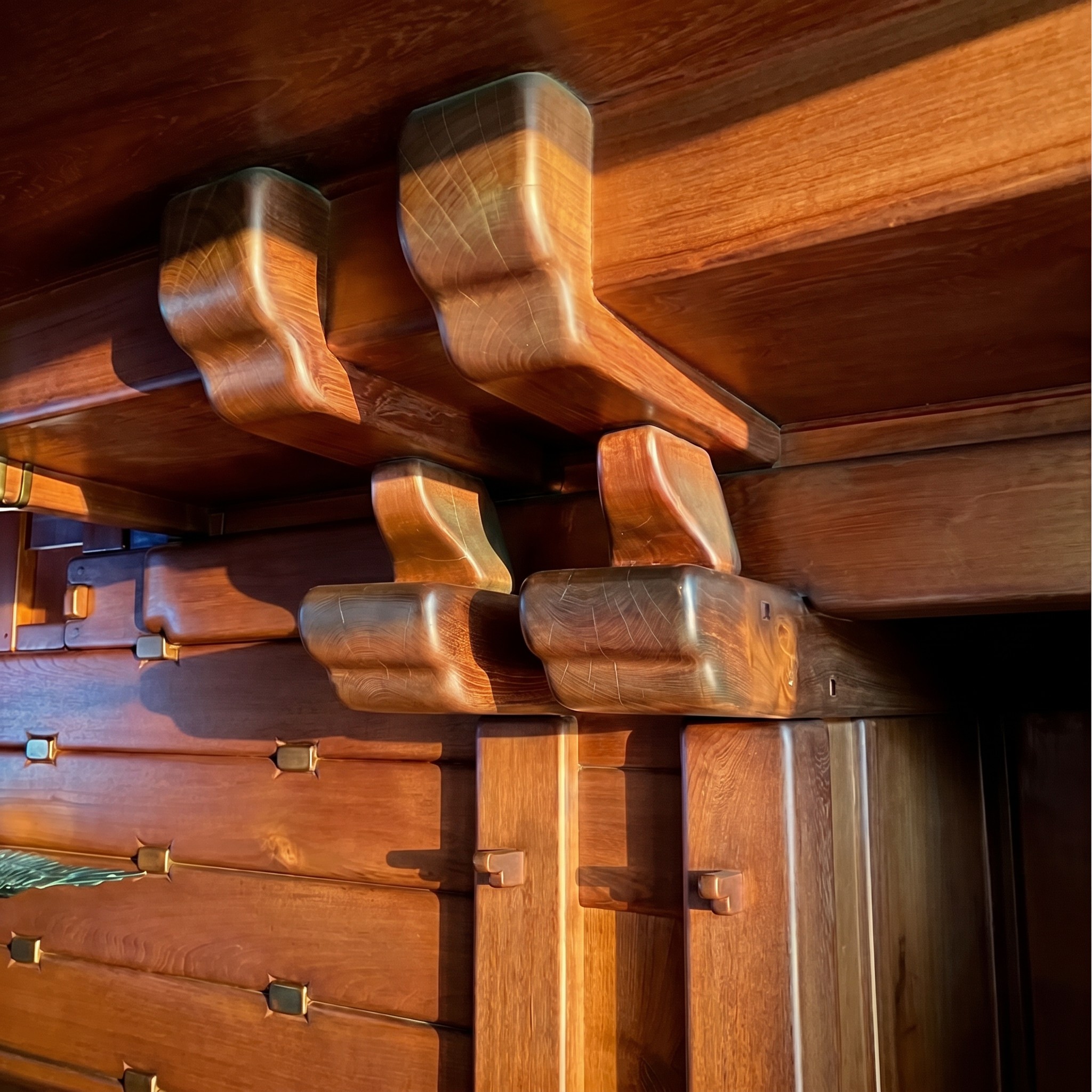
The great rooms of the ultimate bungalows are sheathed in wood that never grew within four thousand miles of Pasadena. Burmese teak. Honduras mahogany. Santo Domingo mahogany. Port Orford cedar from the far Oregon coast. The most celebrated regional architecture in American history was built, on its visible surfaces, out of a forest assembled from the tropics and the timber ports of the Pacific. This is not a footnote. It is the central paradox of the work, and it has gone almost entirely unexamined, because the houses look so much like the place they sit in that no one thinks to ask where the wood came from.
A California Style, Cut From a Distant Forest
Begin with the contradiction stated plainly. Charles and Henry Greene are remembered as the architects who made a building belong to its site. Their houses answer the Pasadena climate, the angle of the Southern California sun, the dry arroyo, the live oaks. The horizontal lines repeat the horizon. The deep eaves throw the same shade a sycamore throws. Everything about the silhouette argues for rootedness.

But rootedness was a matter of form, not of substance. The brothers chose their structural framing from the local and the cheap, and then they reserved their visible, touchable, finish-grade wood for species that had to cross an ocean to arrive. The logic was not regional at all. It was the opposite. When a surface would be seen and handled and lived against for a century, the Greenes wanted the finest wood on earth for that purpose, and they did not care in the least where on earth it had grown.
This is worth holding onto, because the easy story about the Greenes is a story about place. The truer story is about hierarchy. They were ruthless about which wood went where. The frame could be Douglas fir from the Northwest. The shingles could be redwood. But the rail your hand would close around on the stair, the panel your eye would rest on at dinner, the beam that announced the structure of the room — those were teak and mahogany, and the brothers would accept no substitute. The California style, on its skin, was an imported forest.
The Doctrine That Demanded the Best Wood
To understand why imported wood sat so comfortably inside a movement built on honesty, you have to understand what the Arts and Crafts doctrine of honest materials actually demanded. It did not demand local. It demanded truthful. A material was to be used as itself, finished so that its real nature showed, never disguised as something it was not. Oak was to look like oak. Joinery was to be visible. Paint that pretended pine was walnut was a lie, and the lie was the sin.
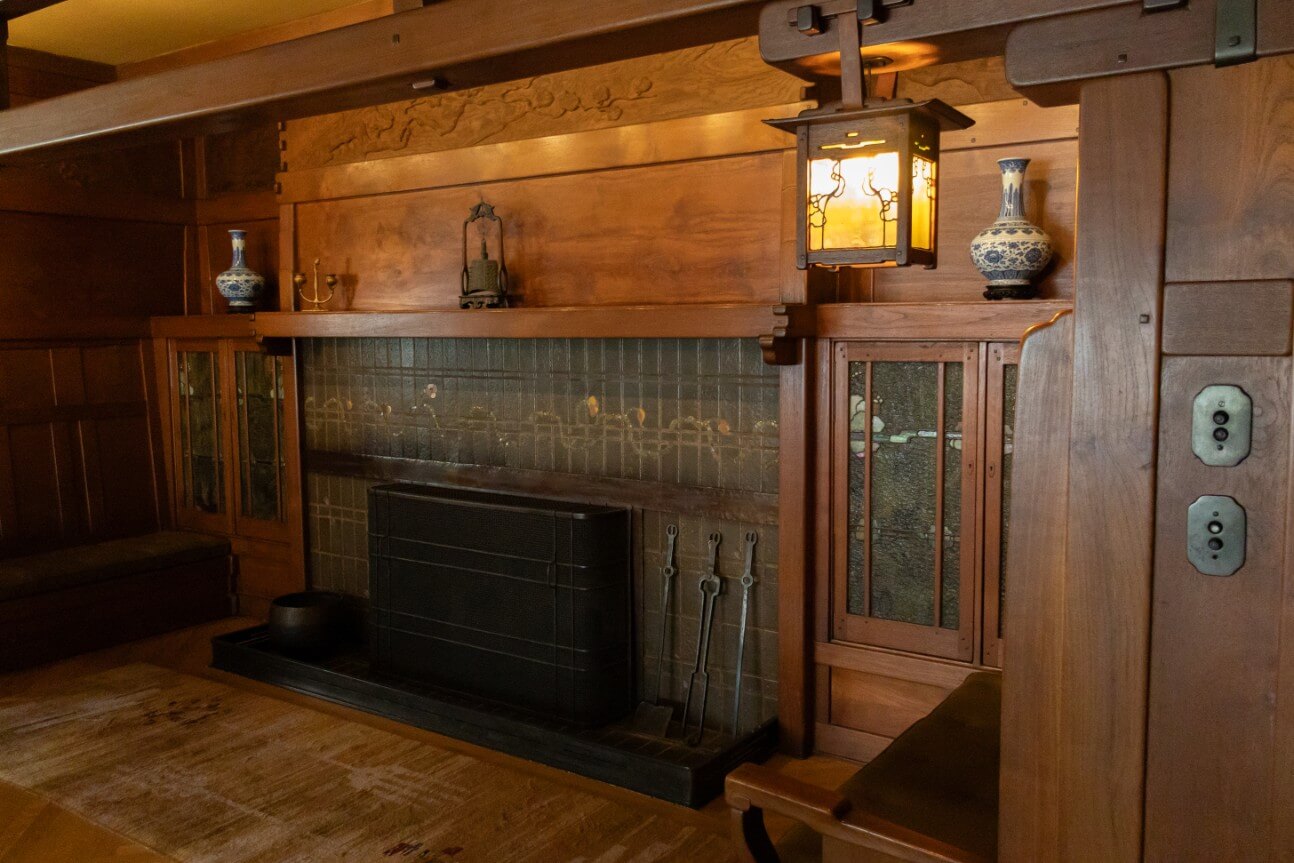
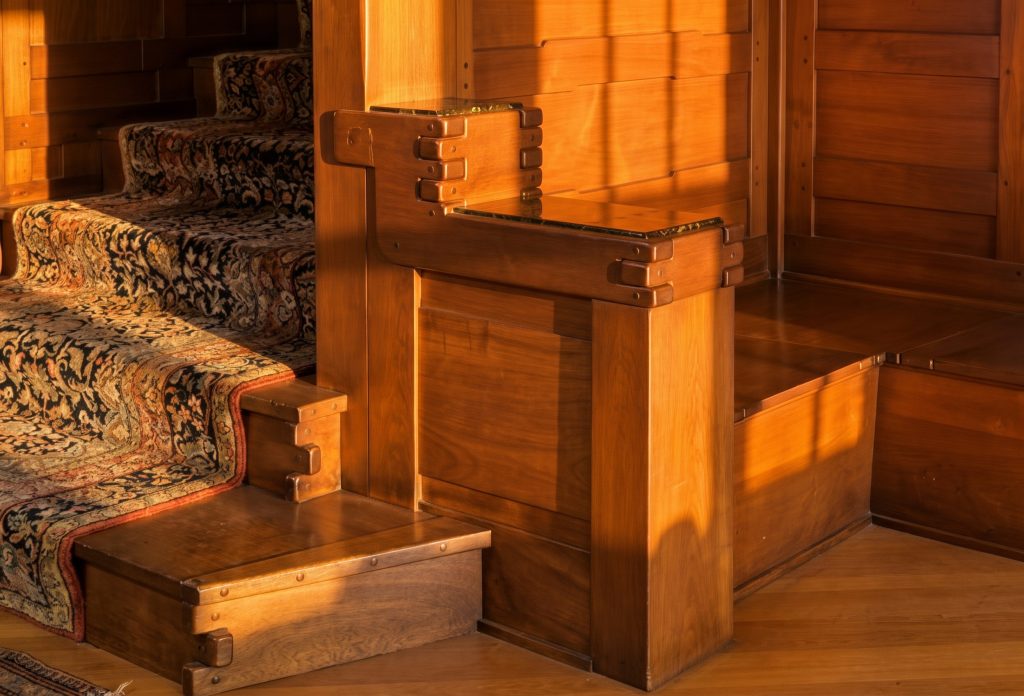
The Greenes inherited this conviction and pushed it further than almost anyone. They did not stain their show woods to imitate richer species. They did not veneer cheap carcass wood and call it solid. They selected a wood for its own grain, its own color, its own behavior, and then they spent extraordinary labor revealing exactly those qualities. The honesty was in the revealing. It had nothing to do with the distance the board had traveled. We have written before about how, in their hands, the joint became the ornament — structure displayed rather than hidden — and the same instinct governed their choice of material. Show the truth of the thing.
Once you accept that the doctrine asked for truth rather than locality, the imported forest stops being a betrayal and becomes a consequence. If the goal is the most honest possible expression of wood as wood, then you want the wood that expresses itself most fully — the densest figure, the most stable behavior, the deepest natural color that needs no help from a can. For the Greenes, in the first decade of the twentieth century, that meant the tropical hardwoods that the Pacific lumber trade had only recently made available on the West Coast. The doctrine did not point them toward the arroyo. It pointed them toward the docks.
Honduras Mahogany: The Dark Interior
Of the two great imported woods, mahogany did the quieter, deeper work. Honduras mahogany — and in some pieces its near cousin from Santo Domingo — is the wood of the Greene interiors that want to be grave. It is dense, close-grained, a brown that reddens toward the heart and darkens with age and oil and light into something close to garnet. It takes the hand-rubbed finish the brothers favored and gives back a glow that is genuinely impossible to fake with a lesser wood and a darker stain. People try. It never looks the same.
The dining room of the Gamble House is the case in point. Where the entrance hall opens golden, the dining room turns inward and dark, and that shift in temperature is a shift in species: from teak to mahogany. The room is more formal, more intimate, a little more solemn, and the wood is doing that work as surely as the proportions are. The furniture the brothers designed for these rooms followed the wall into the same material — library tables, serving tables, the cased pieces — most of it Honduras mahogany with ebony details, so that the movable objects and the fixed surfaces spoke one language.

Mahogany earned its place in the cabinet shop for reasons that go beyond color. It is famously stable. It moves little with the seasons, which is precisely what you want in a wide panel or a long tabletop that must not crack or cup as a house breathes through a century of dry summers and damp winters. It carves crisply and holds an edge. It is, in the plain judgment of the trade, one of the best cabinet woods that has ever existed — which is exactly why it had been cut so hard, across the Caribbean basin and Central America, that good old-growth Honduras mahogany is now a rationed and protected thing. The Greenes used it when it was still abundant enough to panel a room. That window has closed.
Burmese Teak: The Golden Hall
If mahogany is the wood of the grave interior, teak is the wood of the threshold. The entrance hall and living room of the Gamble House are paneled in Burmese teak, and the first thing the wood does is glow. Teak carries a natural oiliness and a warm tawny-gold color that catches morning light and holds it. Walk in at sunrise and the hall is lit from within the wood itself. That is the effect the brothers wanted at the point of arrival, and only one material on their list produced it.
Teak’s reputation, of course, was built at sea before it was built in any drawing room. It is the wood navies used for decks because it resists rot, repels water, and barely reacts with the iron of fastenings — its natural oils protect both the wood and the metal that pierces it. For a family of shipwrights’ instincts, and for architects who treated a house as a piece of fitted joinery, teak carried associations of permanence and seaworthiness that no domestic hardwood could match. The brothers used it where the building met the weather and where the visitor met the building.

And teak came from the farthest away of all. Burma — and the wider trade in Southeast Asian teak — sat at the end of the longest supply line in the brothers’ material vocabulary. The wood that opens the most famous house in Pasadena began as a tree in a monsoon forest, was felled and floated and shipped across the Pacific, and arrived on the California coast as sawn stock to be selected, board by board, for the figure of its grain. The golden first impression of the Gamble House is, in the most literal sense, an impression made by Burma.
The Client Who Sold Timber
Here the paradox sharpens into something almost too neat to be true. The access that let the Greenes panel whole rooms in exotic hardwood did not come only from the open market. It came, at least twice, from clients whose own fortunes were made in wood — American wood, the domestic timber the brothers conspicuously did not put on their finest surfaces.
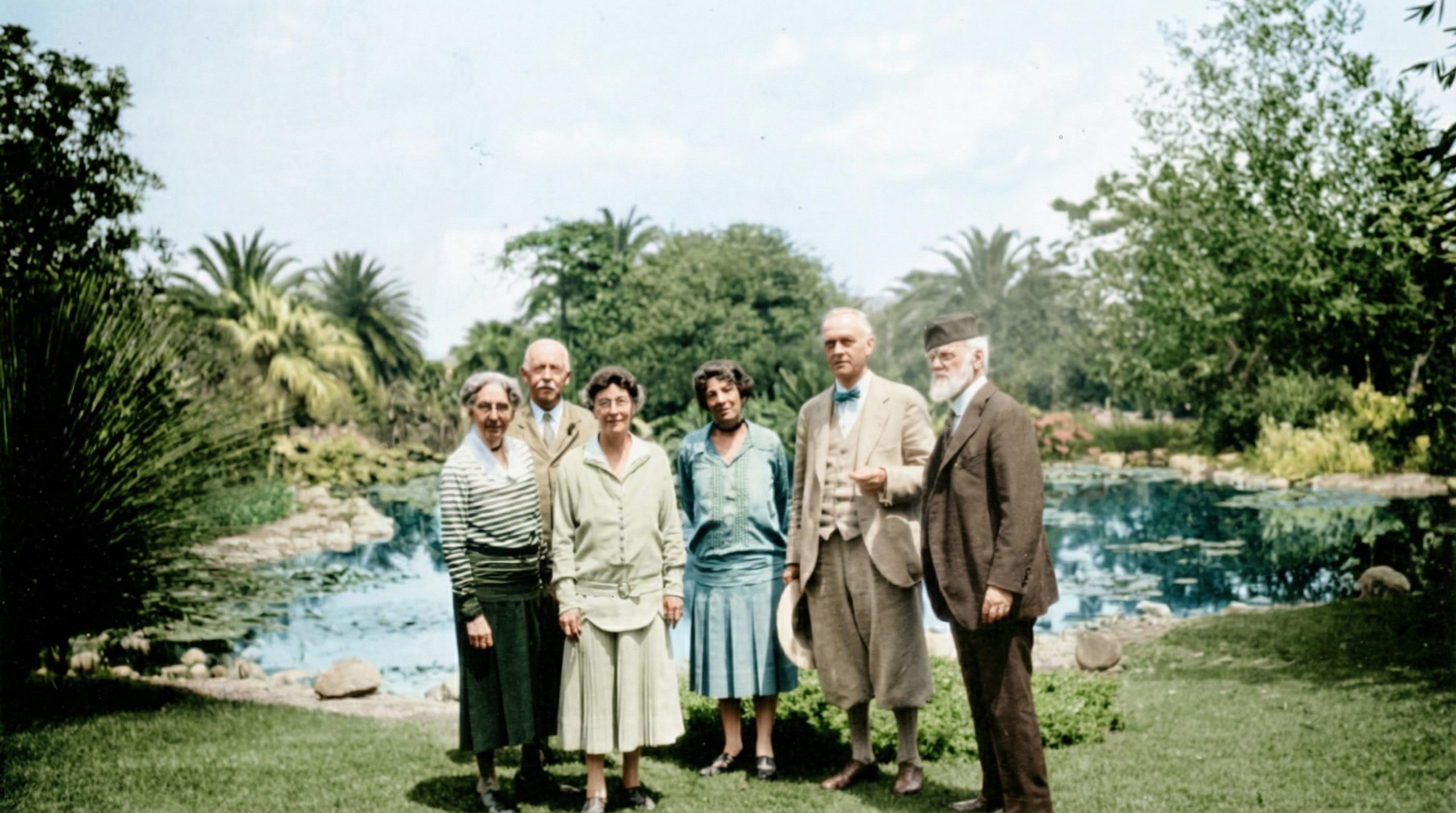
Robert Roe Blacker had built his wealth in Michigan timber. When he commissioned the first of the great Pasadena houses, his standing in the lumber trade is widely credited with opening doors to the rarest and most exotic stock — the Burmese teak, the Honduras mahogany, the ebony, the old-growth Port Orford cedar — that the brothers then deployed more lavishly in the Blacker House than they had anywhere before it. The man who had grown rich cutting down American forests gave the Greenes their first full license to fill a house with an imported one. The arc of that is hard to miss, and it ended badly: the house was later stripped of its fixtures and sold off in pieces, the imported wood and the art glass worth more dismembered than whole.
The pattern repeats in Berkeley. William Thorsen, who commissioned the only ultimate bungalow built outside Pasadena, was likewise a lumber baron — and the Greenes asked him, in effect, to live inside the kind of forest his own industry did not sell. We have told that story at length elsewhere: a fortune made by felling Northwestern timber, spent on a house lined with hardwood from the tropics. Twice over, the men who paid for the imported forest were men whose money came from the domestic one. The Greenes were not sentimental about that irony. They simply took the access and chose the wood.

What made the choice possible at all was the moment. The brothers were working at the exact period when the Pacific lumber trade was depositing the woods of the world onto the Southern California coast. The port of Los Angeles was being dredged and built out; coastwise and trans-Pacific shipping brought Oregon cedar, Northwest fir, and Asian teak into the same yards. A Pasadena architect in 1907 could specify a Burmese hardwood with a confidence that would have been impossible a generation earlier. The Greenes did not invent that supply line. They were its most refined customers.
The Local Woods They Hid
It would be wrong to say the Greenes used no local wood. They used a great deal of it. They simply used it where it would not be seen, or where seeing it carried no expressive weight. This is the other half of the hierarchy, and it is just as deliberate as the first.
The structural framing of the houses — the studs, the joists, the hidden carpentry — was ordinary Douglas fir from the Pacific Northwest, the standard building lumber of the region. Roofs were shingled in California redwood, chosen for its weather resistance and its cheapness in a state that was then cutting redwood at industrial scale. Port Orford cedar, fragrant and pale and stable, came down from the Oregon coast for drawers, linings, and the secondary work of cabinetry where its smell and stability mattered more than its face. These are the woods of the continent, and the Greenes leaned on them constantly.
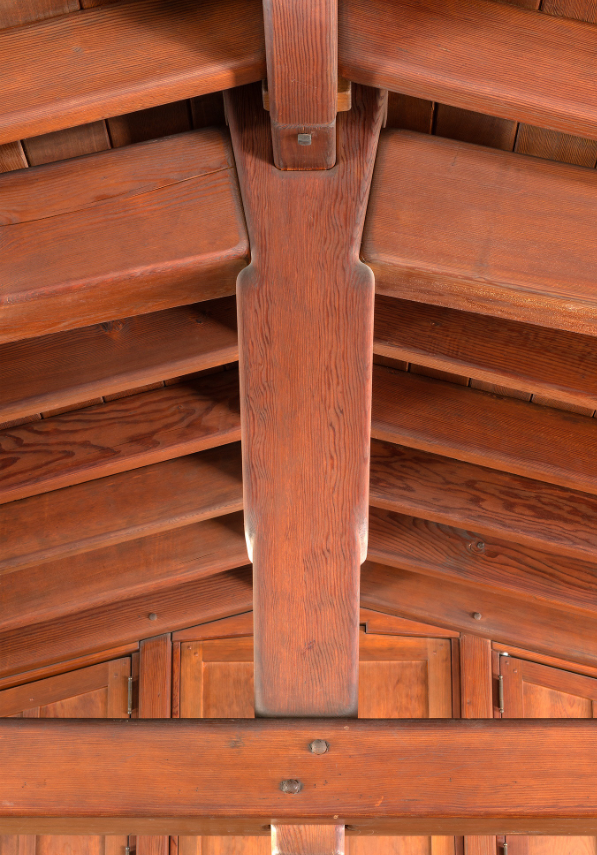
The division tells you what the brothers actually believed about wood. Local softwood was for carrying loads and shedding rain — honest, useful, anonymous labor. Imported hardwood was for the work of expression — the surfaces that would be looked at, leaned on, remembered. They were not snobs about it in any simple way; they were precise. A material was assigned to the role it performed best. Fir held the house up. Teak greeted the guest. Redwood took the weather. Mahogany held the room together at the level of the eye. No board was asked to do a job it was poorly suited for, and the most demanding job — the visible one — went to the wood that had traveled the farthest.
The Finish That Let the Grain Speak
An imported forest would have been wasted on lesser handling. The whole point of paying for teak and mahogany was the grain, and the grain is only as good as the finish that reveals it. Here the Greenes and their cabinetmakers — Peter and John Hall’s shop, above all — did the work that justified the wood.
They did not bury the surface under thick varnish. They built up a hand-rubbed finish, oil and wax worked into the wood over hours, that sank in rather than sat on top, leaving the surface satin rather than glassy and leaving the grain not just visible but tactile. They softened every edge, rounding and easing the arrises by hand so that no corner met you sharply and every surface invited the hand to move along it. The famous warmth of a Greene interior is partly the species and partly this: a finish that treats the wood as something to be touched, not merely seen.
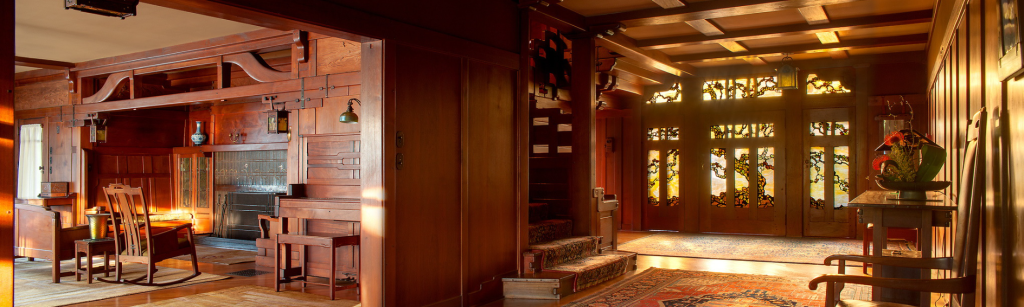
This is where the imported wood and the doctrine of honesty finally meet. The Greenes had chosen species whose natural color and figure were so good that they needed no disguise, and then they finished them in a way that added nothing and hid nothing — that simply let teak be golden and mahogany be deep. The board from Burma and the board from Honduras were allowed to look exactly like what they were. The honesty the movement preached was satisfied not by where the wood came from but by the refusal to lie about it once it arrived. The same conviction that produced the exposed ebony peg produced the unstained mahogany wall.
What It Costs to Import a Forest
None of this was cheap, and the cost is part of the story of why the work ended. To panel rooms in selected teak and mahogany, to hand-rub every surface, to round every edge, to fit joinery to the tolerance of furniture across an entire house, was to build at a price that almost no one could pay. The ultimate bungalows were the product of unusual fortunes meeting unusual patience, and that combination was rare even in the good years. We have looked before at what an honest chair actually cost to make in this manner; multiply that arithmetic across a house and the math becomes its own kind of warning.
When taste shifted and the great commissions dried up after the early 1910s, the imported forest became a liability as much as a glory. The houses were expensive to maintain, the woods were of a kind that grew harder to source as the century cut through the world’s tropical hardwoods, and a generation that wanted white walls had no use for a room lined in dark mahogany. The very richness that defined the work made it look, for decades, like an extravagance from a vanished age — which is part of why so many of the houses came so close to being lost.
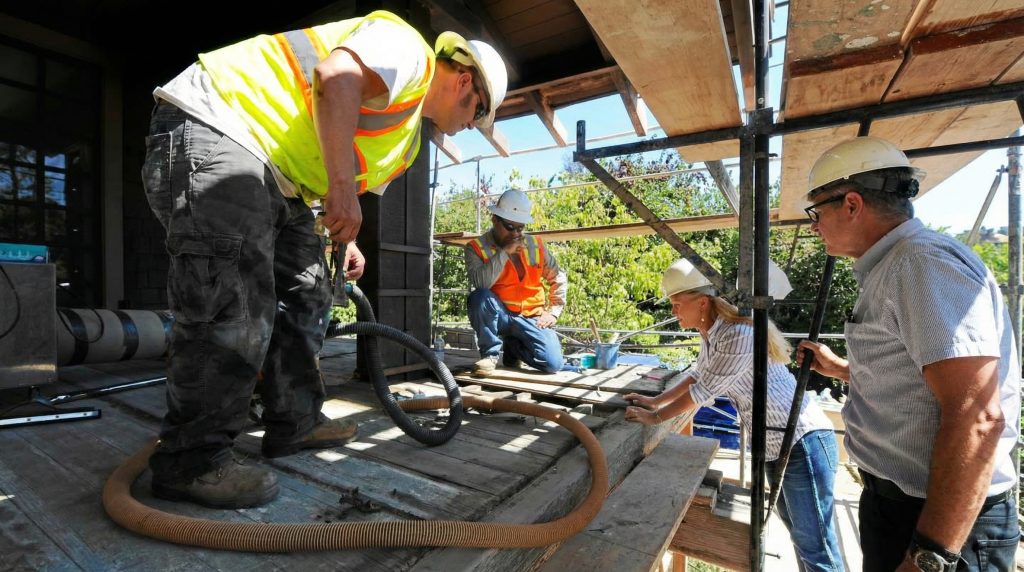
What survives now survives under conservation — the teak and mahogany surfaces maintained, repaired, and protected by institutions and stewards who understand that these woods cannot simply be replaced from a yard. The species the Greenes specified so freely are now, several of them, rationed by international agreement. You could not build the Gamble House today as it was built. The forest it was made from is no longer available to be imported at that scale, and the world has decided, correctly, that it should not be. The houses are therefore not only masterworks but records — of a brief moment when the woods of the whole earth lay open on a California dock, and two brothers from Ohio chose, with perfect confidence and no apology, the very best of them. To see how completely those choices have entered the permanent record, one need only note that the brothers’ papers and drawings are now held among the treasures of the Huntington in San Marino, and their houses studied as carefully as any monument in American architecture.
So set aside, for a moment, the word regional. The Greenes built buildings that belong to their place as few buildings ever have. But they built them, where it counted, out of a forest that belonged to no place near them at all. The horizon line was Pasadena. The wall was Burma. The dining room was Honduras. The frame, holding it all up out of sight, was the only part that was truly from home.
The forest was never local. The conviction was. And conviction, unlike timber, never had to clear a port.