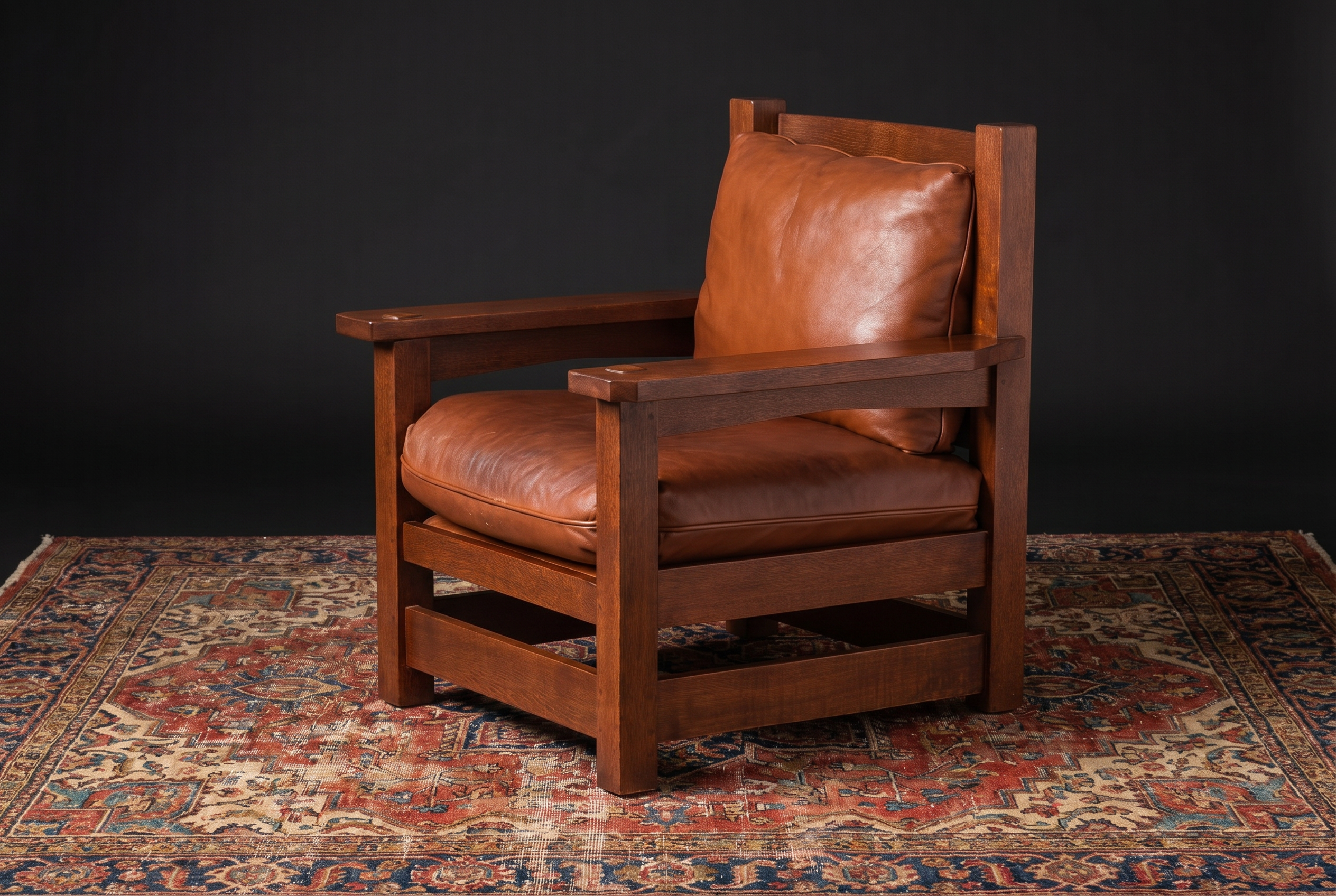
William Morris, addressing an audience of working men in a Hampstead lecture hall in the 1880s, said something that has haunted the Arts & Crafts movement ever since. “I spend my life,” he told them, “ministering to the swinish luxury of the rich.” It was not a casual remark. It was the confession of a socialist who had spent his career arguing for the dignity of labor and the moral seriousness of beautiful objects, and who had watched, year by year, as the objects he produced ended up in the homes of the wealthy clients who alone could afford them. The workmen whose dignity Morris had set out to honor with his textiles, his wallpapers, his furniture, and his books could not afford a single one of those things. The movement that bore his name and inherited his principles would never solve this problem. It is, perhaps more than any other single fact, the reason the movement failed.

The Arts & Crafts movement was, at its philosophical core, a response to industrial capitalism’s degradation of the worker. Morris and Ruskin and the others who shaped its earliest thinking had watched the factory system strip the laboring classes of pleasure, judgment, and craft pride, reducing skilled work to repetitive operations and skilled workers to interchangeable units of production. The movement’s answer was not technological or political but moral and material: to insist that objects could be made differently, that workers could find dignity in their labor again, and that the resulting goods could carry that dignity into the homes that received them. The chair would be honest. The honesty would matter.
What no one in the early movement had quite confronted was that the honest chair would also be expensive — and that the expense would, almost by definition, place it out of reach of the workers whose dignity it was supposed to honor. This was not a flaw that could be fixed with better organization or wider distribution. It was structural. A chair made by a skilled craftsman working at a humane pace, using carefully selected materials, finished to a high standard, and sold to support a living wage, will always cost more than a chair made by machines in a factory operating at industrial scale. The movement’s principles required the higher cost. The movement’s customers, accordingly, were the only people who could pay it.
Morris and the Firm
Morris’s own career provides the clearest case study of the contradiction. He had founded Morris, Marshall, Faulkner & Company — later reorganized as Morris & Co. — in 1861, at the age of twenty-seven, with the explicit ambition of producing decorative goods that would honor traditional craft methods and reach a broad public. The reach-the-broad-public ambition was sincere. It was also impossible. Morris’s firm produced textiles, wallpapers, stained glass, furniture, and printed books at a level of craft refinement that the contemporary luxury market had not seen since the medieval guild traditions. Each item was correspondingly expensive. The clients who could afford them were the same upper-middle-class and aristocratic clients who had always been able to afford fine goods.
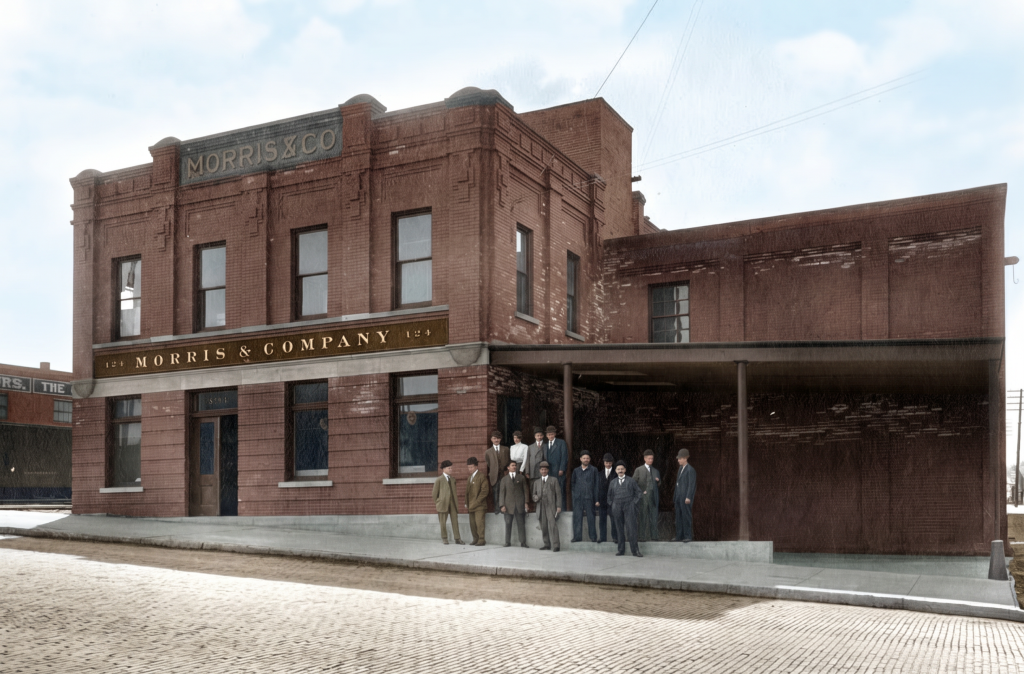
By the 1880s, Morris had become a committed socialist, lecturing at workmen’s clubs, marching in the streets of London with the Social Democratic Federation, writing political pamphlets and journalism that argued for the comprehensive transformation of the industrial economy. He understood, with growing acuteness, that his own commercial success rested on a contradiction he could not resolve through better practice. Morris & Co. paid its workers fairly, by the standards of the period; provided dignified working conditions; preserved the kind of integrated craft labor the factory system was destroying. But the firm’s customers remained exclusively the wealthy. The dignity Morris was protecting was the dignity of his employees. The dignity of the workers who would have to buy machine-made furniture because Morris’s furniture was beyond their means — that dignity, the movement could not protect.
Morris confronted this contradiction with characteristic intellectual honesty. He never pretended it was anything other than what it was. The Hampstead lecture quotation is one of dozens in his published writings and recorded speeches in which he names, openly, the gap between his philosophical commitments and his commercial reality. He did not believe the gap could be closed within the existing economic order. His political work after the 1880s was increasingly committed to the proposition that only a fundamental restructuring of the economy could produce conditions in which beautiful, honest goods could be made at prices ordinary workers could afford. The revolution he was waiting for did not come. The firm continued to produce expensive goods for wealthy clients. Morris died in 1896, the contradiction unresolved.
Stickley and the American attempt
The American Arts & Crafts movement inherited Morris’s philosophical principles and tried, with varying degrees of seriousness, to solve the price problem he had not solved. Gustav Stickley’s Craftsman Workshops in Eastvwood, New York, represented the most sustained effort. Stickley believed, or wanted to believe, that the Arts & Crafts vision could be scaled to reach the American middle class. His furniture lines were designed to be substantially less expensive than Morris’s English work — simpler in their joinery, more standardized in their proportions, produced in larger volumes, distributed through a national network of retailers and through the mail-order catalogs that were transforming American commerce in the early years of the twentieth century.

Stickley’s compromise was technical rather than philosophical. He used machinery in his workshops more extensively than the English movement had — for milling, for rough dimensioning, for some of the repetitive operations that hand work made impossibly slow. He retained hand finishing for the visible surfaces. He standardized his proportions so that the same chair could be made in batches of fifty or a hundred rather than as individual commissions. The result was furniture whose Arts & Crafts credentials were defensible — honestly constructed, materially substantial, visibly hand-finished — but whose price points reached lower into the American market than Morris’s work had reached into the English one.
It was not enough. Stickley’s furniture was still considerably more expensive than the factory-made alternatives that competed with it in the same retail spaces. A Sears, Roebuck catalog from 1908 offered dining chairs at prices a fraction of what the equivalent Stickley piece cost. The customer who walked into a furniture showroom in Cleveland or Minneapolis or Sacramento and compared a Craftsman chair to a factory-made imitation that looked almost the same to an untrained eye would, in the great majority of cases, choose the cheaper chair. Stickley’s market was the prosperous middle class — professionals, merchants, the slightly more comfortable section of the white-collar economy — not the working class his philosophy was meant to serve.
By 1915, the contradiction had defeated him commercially. The Craftsman Workshops filed for bankruptcy. *The Craftsman* magazine, the movement’s most influential American publication, ceased publication in 1916. The mail-order catalogs that had been the principal vehicle for spreading Arts & Crafts furniture into middle-class homes increasingly carried machine-made imitations rather than the Craftsman originals. Stickley spent the last years of his life in reduced circumstances, the empire he had built around the philosophy of dignified labor having collapsed under the weight of the price problem he could not solve.
The Greene clientele
The Greene brothers’ practice in Pasadena represents the contradiction at its most extreme. The major commissions — the houses that produced the most fully realized Arts & Crafts architecture in American history — were built for clients whose wealth was so far beyond the reach of ordinary working Americans that the gap was not even a topic that could be discussed honestly within the philosophical terms of the movement.
David and Mary Gamble were heirs to the Procter & Gamble fortune. Robert Blacker had made his money in the lumber industry of the upper Midwest. William Thorsen was the wool merchant whose Berkeley commission produced the third of the brothers’ three masterworks. The Pratts of the Pratt House were oil heirs. The Tichenors who commissioned the Long Beach house were heirs to a banking and ranching fortune. The Culbertsons who returned to the Greenes for multiple commissions were prosperous businesspeople whose wealth, while not at the level of the Gambles or Pratts, placed them squarely in the upper percentile of American economic life.

This was not accidental. The architecture the Greenes had developed by 1908 — the integrated design systems, the specified furniture, the bronze hardware drawn from custom patterns, the art glass programs commissioned from Emil Lange, the sustained collaboration with Peter Hall’s shop over the multi-year construction process — could not have been produced for clients of more modest means. The Gamble House cost roughly $50,000 to build in 1908, an enormous sum for the period, equivalent to several million dollars in current purchasing power. The construction took the better part of a year. The furnishings and finishings took longer. No middle-class American family in 1908 could have commissioned anything resembling the Gamble House. The brothers’ best work was, by the requirements of its own production, the work of a luxury practice.
Charles Greene appears to have felt this less acutely than Morris did, or at least to have written less explicitly about it. His own philosophical commitments were less politically charged than Morris’s; his quarrel was with the aesthetics of mass production rather than with the economics that produced it. But the practical fact of his career was that the architecture he had spent years developing could only be commissioned by the very wealthy. The carpenters who built the Gamble House could not have afforded to live in it. The craftsmen in the Hall shop who made the dining chairs could not have afforded to own them. The artisans in Lange’s studio who made the front door could not have afforded the door. Whatever the brothers thought about the dignity of labor, the labor that produced their work was paid for by the dignity of capital.
The bungalow as compromise
The American bungalow movement — the broad, vernacular, middle-class adaptation of Arts & Crafts principles that produced hundreds of thousands of small houses across the United States in the first quarter of the twentieth century — represents the closest thing the movement achieved to a successful price compromise. The bungalow was, in its essence, the Arts & Crafts house translated into terms that a middle-class family could afford. Smaller. Simpler. Built from standardized lumber and millwork ordered through pattern books and lumberyard catalogs. Constructed by general contractors rather than by specialty craft shops. Finished with off-the-shelf hardware rather than custom-cast bronze.

The bungalow worked, after a fashion. By 1920, perhaps a quarter of new American housing in the bungalow-friendly regions — Southern California, the Pacific Northwest, parts of the Midwest — was being built in some version of the style. The integrated indoor-outdoor relationship, the broad eaves, the front porch, the open plan, the natural materials and earth tones: all of these reached a vastly broader public than Morris or the Greenes had ever reached. The form succeeded.
But the form is not the philosophy. What the bungalow movement carried into middle-class American life was the visual vocabulary of Arts & Crafts, simplified and standardized to be affordable. What it did not carry was the labor philosophy that had been the movement’s deepest commitment. The bungalow was built by ordinary contractors using ordinary methods, its components produced by the same industrial system the movement had originally been founded to oppose. The Sears Roebuck mail-order house — entire bungalow kits shipped by rail to be assembled on the customer’s lot — represented the movement’s aesthetic triumph and its philosophical defeat in a single product. The honest chair had become a flat-pack chair. The dignity of labor had become the efficiency of distribution.
What the failure means
It is tempting to read the Arts & Crafts movement’s failure as a tragedy — as the defeat of a noble aspiration by economic forces too large for it to overcome. There is something to this reading. The movement did aspire to something genuinely worthwhile, and the world that succeeded it has not produced obvious replacements for what it was reaching toward. The dignity of labor, the relationship between maker and material, the integration of beauty and use in everyday life: these remain unsolved problems, and the movement’s failure to solve them does not make them less real as problems.
But it is also worth being honest about why the movement failed, because the reasons are not external to its own structure. The movement set itself the goal of producing honest goods under dignified labor conditions for ordinary working people. It could not solve the third term of that equation — the ordinary working people part — because the conditions of dignified craft labor produce goods that ordinary working people cannot afford. This was not a failure of the movement’s ambition. It was a feature of the movement’s logic. There was no path from the workshops of Morris & Co. or the Craftsman Workshops or the Hall shop in Pasadena to the homes of the working class that the movement claimed to honor. The path required a different economy than the one that existed, and the movement was not equipped to produce a different economy.
This recognition produces a difficult question about the work that survives. The Gamble House is one of the most beautiful domestic interiors in American architectural history. It is also, unavoidably, a monument to the wealth that made it possible. The teak paneling came from forests on the other side of the world. The craftsmen who made it were paid well by the standards of their period but were not paid the kind of money that would have let them commission similar work for themselves. The clients who lived in it were beneficiaries of capitalism’s most lucrative industries. None of this makes the house less beautiful. None of it makes the craft less skilled or the design less coherent. But it does require an honest viewer to hold two thoughts simultaneously: that the work is genuinely great, and that the conditions of its making cannot be generalized.
The Arts & Crafts movement failed because it could not generalize itself. It produced a body of objects and a body of buildings that have lasted and are loved. It did not produce the changed economy that would have allowed those objects and buildings to belong to the public it claimed to serve. Morris saw this clearly in the 1880s and named it directly in lectures the movement has spent more than a century not quite knowing what to do with. The chair was honest. The chair was expensive. The dignity it carried was real. The dignity it failed to extend to the workers who could not afford it was also real. Both things are true at once.
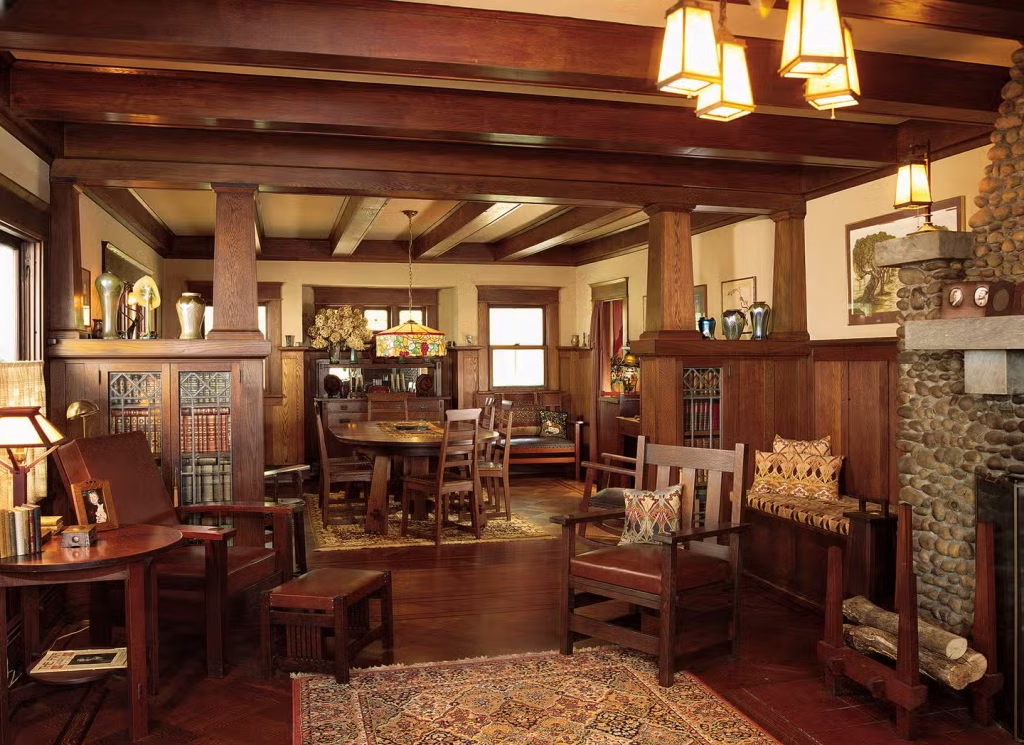
What survives — the Gamble House, the Blacker House, the Thorsen House, the surviving Stickley pieces in museum collections, the Morris textiles still produced today by the firm that bears his name — represents the movement’s aesthetic legacy, preserved precisely because it was made for the wealthy and inherited by their heirs. The movement’s other legacy, the one it cared about most, the one it staked its philosophical seriousness on, did not survive in any comparable way. The honest chair did not reach the workman’s kitchen. The contradiction Morris named is still open. The argument the movement was having has not ended. It has only changed venue.
The houses that embody the contradiction: the Gamble House, the Blacker House, and the Thorsen House.