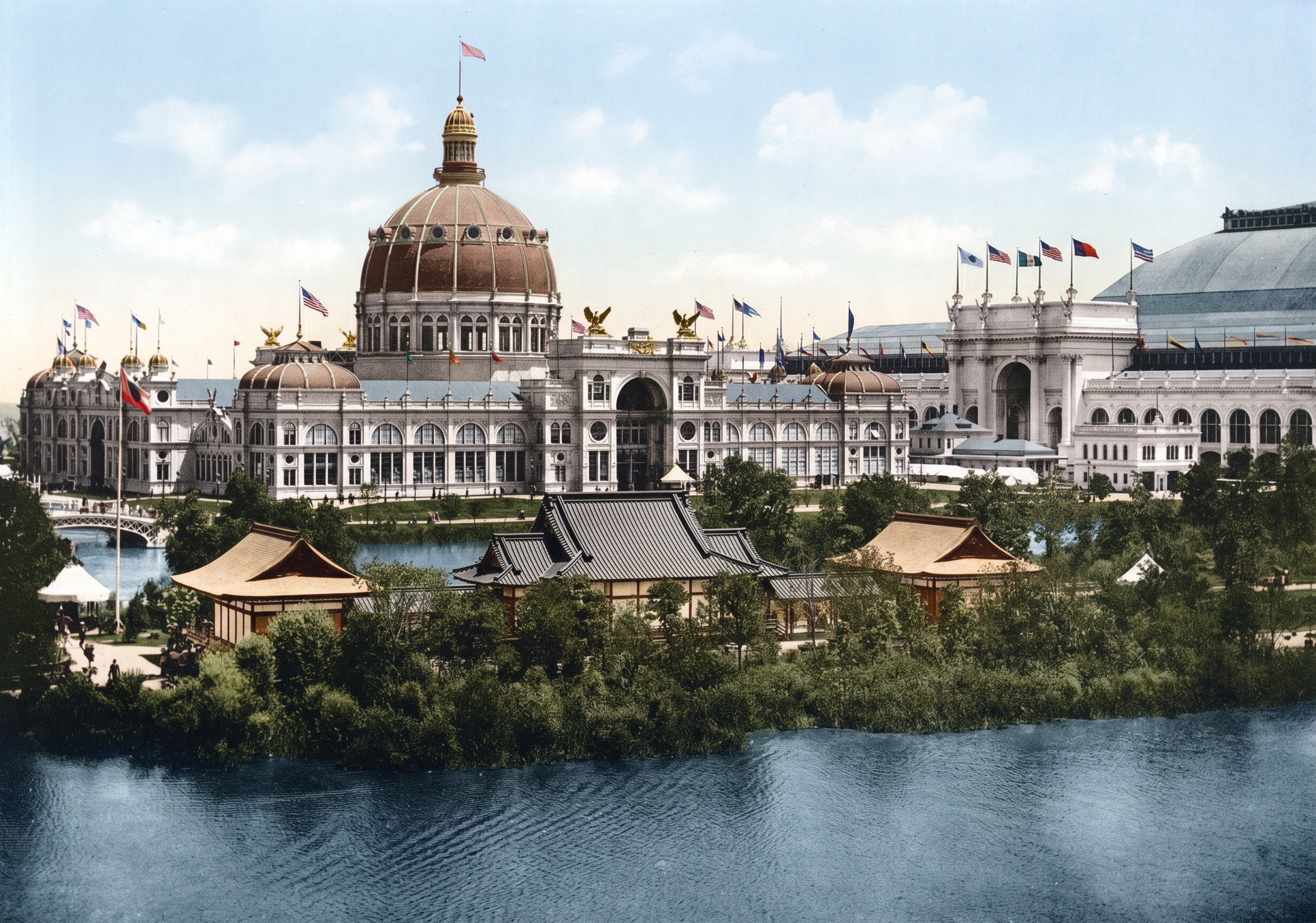
The story is told so often it has hardened into fact. In 1893 the two young Greene brothers, traveling by train from Boston to join their parents in Pasadena, stopped in Chicago and walked through the World’s Columbian Exposition. There, on the Wooded Island, stood the Ho-o-den — a half-scale Japanese pavilion built by the Japanese government, modeled on the Phoenix Hall at Uji. The brothers saw it. And the whole of Greene & Greene, in this telling, begins at that moment: the timber frames, the sheltering eaves, the joinery treated as ornament, the Japanese spirit that would later fill the Gamble House — all of it traced back to a single afternoon at the fair.
It is a good story. It is also, as an account of where the brothers’ Japanese vocabulary actually came from, mostly wrong.
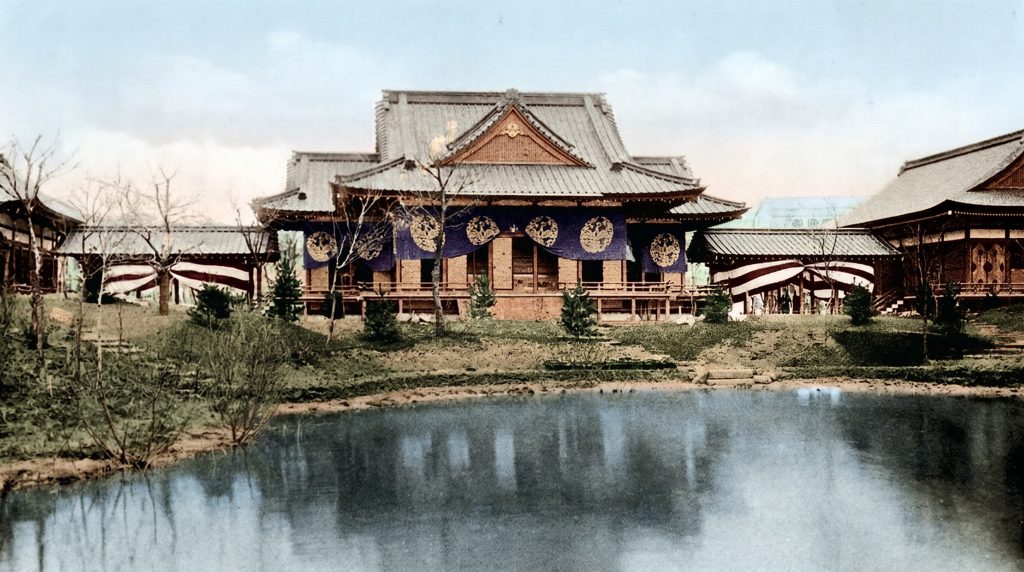
Start with the evidence for the 1893 visit, because it is thinner than the story implies. What we have is a recollection — Henry Greene, late in his long life, remembering that the brothers had seen Japanese architecture at the Chicago fair and that it had made an impression. That is real, and worth taking seriously. But a lasting impression is not the same as a working influence, and the buildings tell a different timeline than the anecdote does. Look at what the brothers actually designed in the years immediately after 1893. The shingled cottages, the Queen Anne and Colonial Revival commissions of their first Pasadena decade, show almost nothing of Japan. If the Ho-o-den had been the revelation the legend claims, it kept remarkably quiet for ten years.
The Japanese vocabulary does not appear in force until after 1903. And when you ask what changed around 1903, the answer is not a fair at all. It is a book.
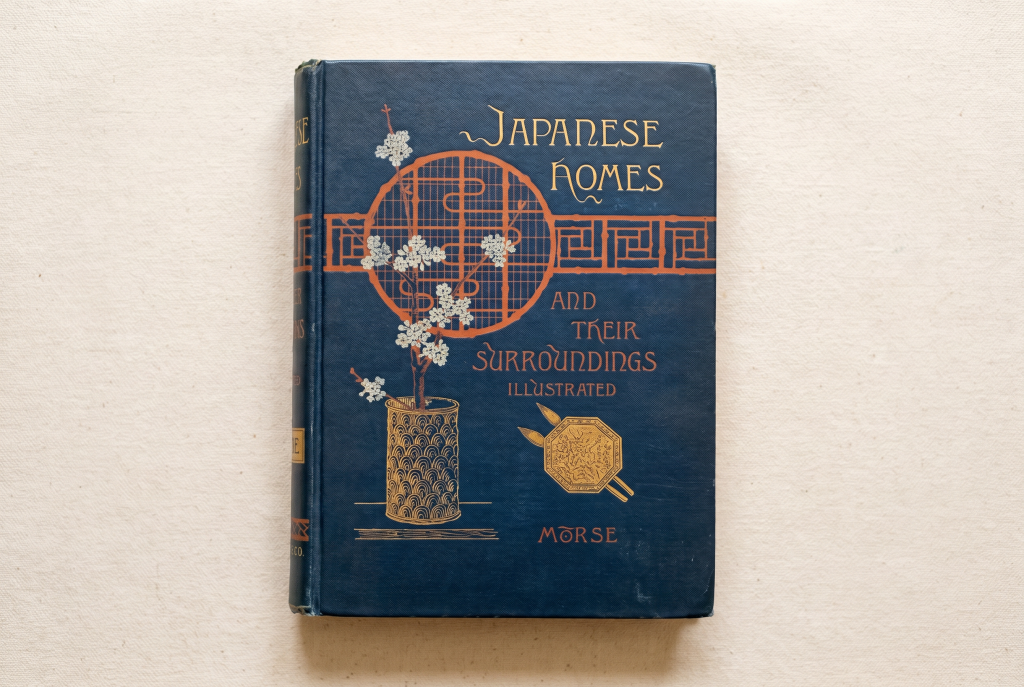
Edward Sylvester Morse was a zoologist who went to Japan to study brachiopods and stayed to study houses. His Japanese Homes and Their Surroundings, published in Boston in 1886, is not a picture book of temples. It is a patient, almost obsessive account of how Japanese domestic buildings are actually made — how the posts meet the ground, how the joints are cut, how a roof is framed and a screen is hung. Charles Greene owned it. And the documented influence runs not through atmosphere but through specific pages. Morse illustrated how the foundation stones of a Japanese house are pounded into place and how a wooden post rests on a stone foot rather than being buried in the earth. That detail was a revelation to Charles, and it shows up almost immediately in his work: the stone-footed posts at the Arturo Bandini house of 1903, and again at the Cora Hollister house. You can point to the drawing in Morse and then point to the post on the building. That is influence you can trace. The Ho-o-den offers nothing so exact.
There was a fair that mattered, but it was the wrong one for the legend — it came eleven years later. In 1904 Charles Greene visited the Louisiana Purchase Exposition in St. Louis, where the Empire of Japan mounted its most ambitious overseas display yet: a teahouse, a reception hall, and an extensive Japanese garden, far larger and more fully realized than the single pavilion of 1893. By 1904 Charles was already primed by Morse to understand what he was looking at, and the timing fits the work. The years on either side of the St. Louis fair are exactly when the mature Greene & Greene manner consolidates — the deep eaves, the exposed and rounded timber, the cloud-lift profiles, the lanterns. The fair that did the work was not the one the brothers stumbled through as young men. It was the one Charles sought out, with a book already in his head.
Why does the correction matter? Because the 1893 story flatters a particular idea of genius — the instantaneous conversion, the lightning that strikes a receptive eye and produces a style fully formed. It makes the brothers passive recipients of inspiration. The truer account is less romantic and more to their credit. Their Japanese manner was not absorbed in an afternoon; it was studied, out of a book, over years, and tested detail by detail in built work before it was trusted. Charles did not glimpse Japan and remember it. He read about Japan and used it. The distinction is the difference between a tourist and a draftsman.
It also matters because the 1893 myth crowds out the other, better-documented channels through which Japan reached Pasadena. The brothers did not need a pavilion to encounter Japanese craft; the material was arriving in California through dealers and importers, including the Bentz family of Santa Barbara and Pasadena, whose shops put Japanese objects directly into the brothers’ world — a source I have looked at separately in the source that had a storefront. And the deeper intellectual journey west, the one that carried the brothers from a Boston manual-training education to an Arroyo hillside, had as much to do with William Morris and the English Arts and Crafts movement as with any Japanese building, as I have argued in the long walk west. The Japanese strand is real, but it was woven in deliberately, from several threads, over a decade. It was not a bolt from a fairground.
None of this requires us to throw out the 1893 visit. Henry remembered it, and the memory is probably true; the Ho-o-den may well have planted something that lay dormant until Morse and St. Louis gave it form. But “planted something” is the most the evidence will bear, and the popular story asks it to bear far more — to be the single origin, the founding scene. Origins are tidy and the work was not. The brothers’ Japan came from a stone foot in a zoologist’s book, from a second fair a decade later, from objects in a Pasadena shop window, and from years of patient drawing. The pavilion on the Wooded Island is the picturesque version. Morse’s book is the real one.
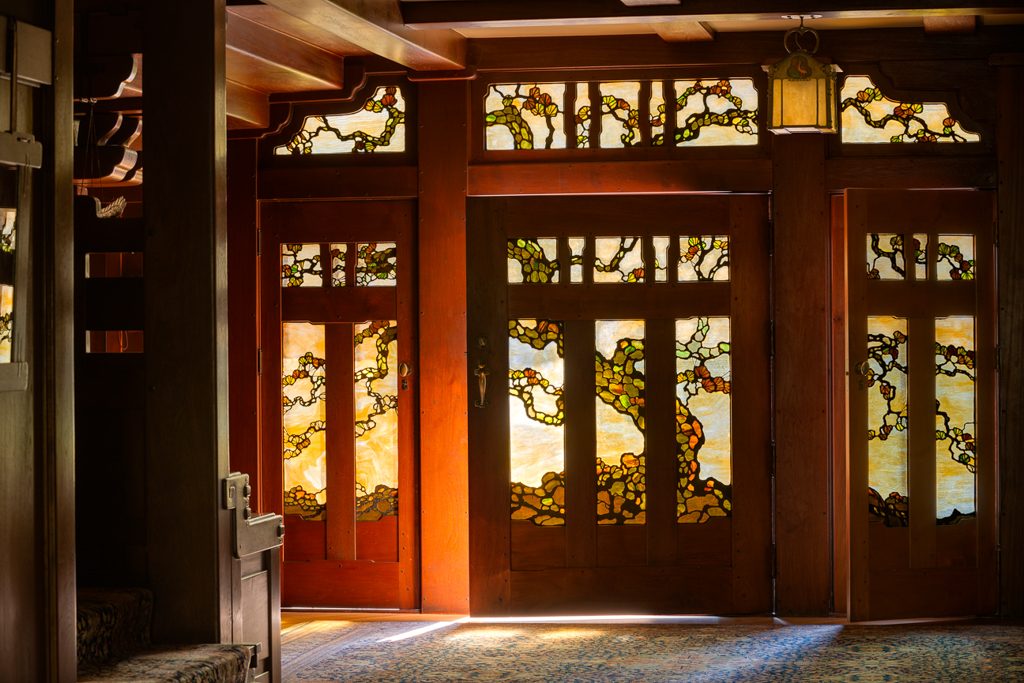
Credit the right fair, and the right book, and the brothers look less like men who were struck by lightning and more like what they were: careful readers who taught themselves a foreign grammar and then spoke it as if it were native. That is the harder thing, and the better one.