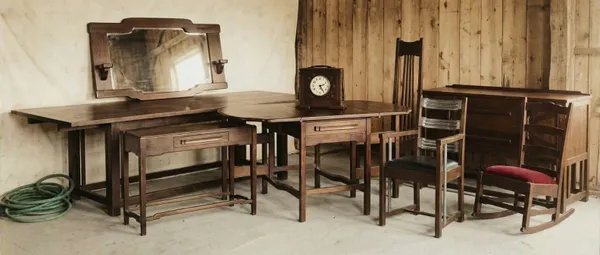
In the annals of American decorative arts, the year 1907 marks a significant turning point, a moment when the architectural firm of Greene & Greene, already renowned for their innovative contributions to the Arts and Crafts movement, embarked upon a commission that would not only solidify their reputation but also introduce some of their most iconic design elements. This was the Belle Barlow Bush furniture commission, a project born from unforeseen circumstances that ultimately blossomed into a testament to the enduring power of patronage, craftsmanship, and a shared vision of beauty.
Historical Significance
The story of the Belle Barlow Bush furniture is inextricably linked to the William T. Bolton house #3, a residence designed by Greene & Greene in 1906 for Dr. William T. Bolton, a prominent Pasadena physician. This was the third such commission from Dr. Bolton, a testament to his progressive tastes and his faith in the Greene brothers’ burgeoning talent. The house itself, located at 370 West Del Mar Boulevard in Pasadena, was a masterful expression of the California Arts & Crafts aesthetic, with its emphasis on natural materials, functional design, and a harmonious relationship with the surrounding landscape. The Bolton residence stood proudly among the grand homes of Pasadena’s famed “Millionaire’s Row,” a district that attracted the city’s most affluent and cultured citizens.

Tragically, Dr. Bolton died before the house was completed, leaving behind a vision that was only partially realized. At the time of his death, only the dining room furniture had been built, a tantalizing glimpse of what might have been. His widow, Alice, understandably chose not to move into the house, and for a time, the fate of this architectural gem hung in the balance. It was at this juncture that Mrs. Belle Barlow Bush, a woman of discerning taste and a keen appreciation for the arts, entered the picture. As the first rental occupant of the Bolton house, she recognized the inherent beauty of the architecture and the unrealized potential of its interiors. Rather than simply inhabiting the space, she chose to become an active participant in its creation, commissioning Greene & Greene to complete the remaining furniture and even making some alterations to the house itself in 1907. This decision would prove to be a defining moment not only for the house but for the trajectory of American furniture design.
The Bolton-Bush commission, as it came to be known, was a watershed moment in the Greenes’ career. By 1906, their work had evolved to encompass every detail of the interior, allowing them to create a totally unified environment where architecture and furnishings existed in perfect harmony. They had also forged an important relationship with craftsmen Peter and John Hall, whose extraordinary skill and shared commitment to quality made them the ideal partners to execute the Greenes’ increasingly sophisticated designs. The furniture created for Belle Barlow Bush would showcase this collaboration at its finest, resulting in pieces that remain among the most celebrated examples of American Arts and Crafts furniture.
Design Elements
The furniture created for Belle Barlow Bush represents a pivotal moment in the evolution of Greene & Greene’s design philosophy. It was in this commission that they first introduced and explored several of the signature details that would come to define their mature style, a style that seamlessly blended the rustic simplicity of the Arts and Crafts movement with the refined elegance of Asian design. The Bolton-Bush furniture displays the important hallmarks of the Greenes’ evolving aesthetic at this early stage in their career, establishing a design vocabulary that would reach its full flowering in the great commissions that followed, including the Blacker, Gamble, and Thorsen houses.
Perhaps the most significant innovation to emerge from the Bolton-Bush commission was the use of the square ebony peg. This seemingly small detail, used to conceal the brass screws that secured the furniture’s tenons, would become one of the most recognizable hallmarks of Greene & Greene’s work. According to the noted scholar Randell L. Makinson, the Bush-Bolton furniture designs illustrate the first use of these square ebony pegs, a detail that would become ubiquitous in the brothers’ subsequent work. In the Bolton-Bush furniture, the ebony peg is explored in varying sizes and profiles, a subtle yet powerful design element that adds a touch of visual interest and a sense of handcrafted quality to each piece. The dark, lustrous ebony against the warm tones of the mahogany created a visual contrast that was both dramatic and refined, a signature aesthetic that collectors and admirers would come to associate with the Greene & Greene name.
The Bolton-Bush commission also marked a shift in the Greenes’ choice of materials. While they had previously worked with a variety of woods, it was in this project that mahogany began to emerge as their preferred medium for furniture. The rich, warm tones of the mahogany, combined with the dark, dramatic accents of the ebony pegs, created a visual palette that was both sophisticated and inviting. This material choice reflected the Greenes’ deep appreciation for the natural beauty of wood, a reverence that was central to the Arts and Crafts philosophy. Unlike their contemporary Gustav Stickley, whose furniture was designed to be accessible to a broad audience, the Greenes’ work was unabashedly exclusive, crafted for clients who could afford the finest materials and the most meticulous workmanship.
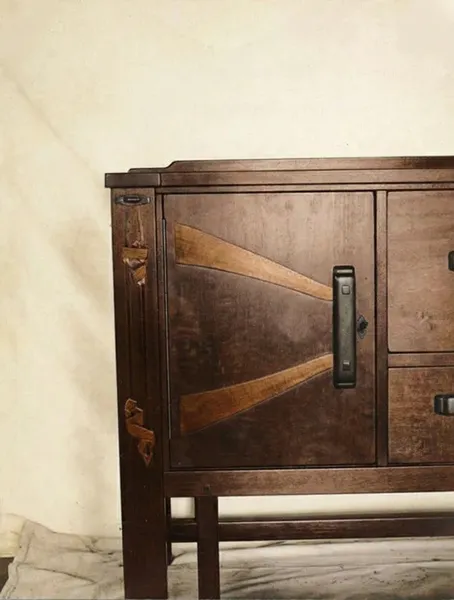
Another distinctive feature of the Bolton-Bush furniture is the subtle “cloud lift” profile, a design element evocative of Asian furniture traditions. This gentle, curving form, which appears in the aprons and rails of various pieces, adds a sense of lightness and grace to the furniture, softening the rectilinear forms that were typical of Arts and Crafts design. The cloud lift, along with the abstract japonesque inlay that adorns several pieces, reflects the Greenes’ deep fascination with Asian art and architecture, an influence that set their work apart from that of their contemporaries. The integration of these Eastern elements into a distinctly Western design tradition resulted in a style that was both innovative and timeless.
Craftsmanship
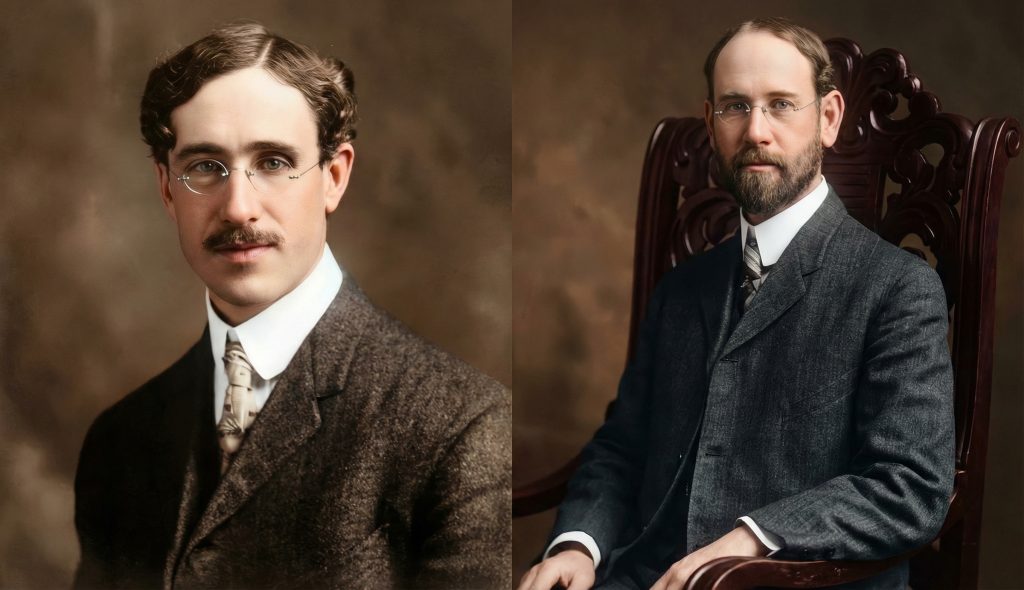
The successful realization of the Belle Barlow Bush furniture was not solely the result of the Greenes’ design genius. It was also a testament to the extraordinary craftsmanship of Peter and John Hall, the master builders who had been the Greenes’ preferred contractors since 1904. The Hall brothers, with their deep understanding of materials and their unwavering commitment to quality, were the perfect partners to bring the Greenes’ ambitious designs to life. Their workshop in Pasadena became the crucible in which the Greenes’ visions were transformed into tangible works of art.
The relationship between the Greenes and the Halls was more than just a typical designer-builder arrangement. It was a true collaboration, a meeting of minds based on a shared set of values and a mutual respect for each other’s abilities. Both sets of brothers were lifelong woodworkers, having received their early training in manual arts schools that emphasized the importance of hand skills and a deep understanding of materials. The Hall brothers had attended Calvin Woodward’s Manual Training School in St. Louis, where their education was divided evenly between intellectual subjects and practical crafts such as machine-tool-making and woodworking. This shared background created a bond of trust and a level of communication that allowed them to push the boundaries of their respective crafts.
Charles Greene was a frequent visitor to the Hall brothers’ workshop, where he would engage in detailed discussions with John Hall about the furniture that was being built. Biographers and scholars have documented a remarkable connection between Charles Greene and John Hall, a creative partnership that elevated the work of both men. This close collaboration ensured that every detail of the design was executed to perfection, from the precise joinery to the hand-rubbed finish. The result was a collection of furniture that was not only beautiful to look at but also built to last, a testament to the enduring power of quality craftsmanship. Each piece bore the distinctive brand “Sumner Greene His True Mark,” a signature that proclaimed the furniture’s distinguished provenance.
The Furniture Collection
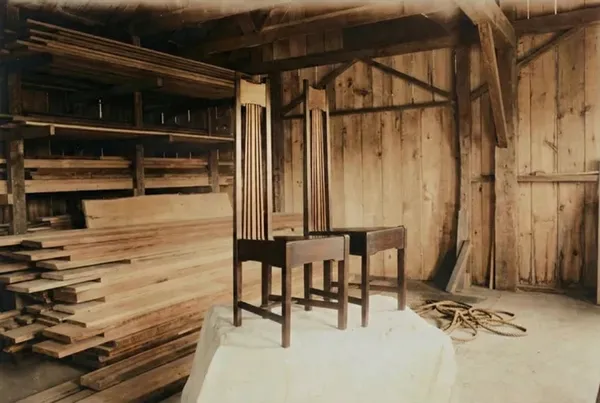
The furniture created for the Belle Barlow Bush commission is not merely a collection of individual pieces, but a cohesive ensemble that speaks to a unified design vision. Each piece, while possessing its own unique character, contributes to the overall harmony of the interior spaces for which it was designed. Among the most notable pieces are the two hall chairs that flanked the entrance of the Bolton house. With their tall, slender backs and dramatic, tapering lines, they create a powerful vertical statement, drawing the eye upward and creating a sense of grandeur in the entry hall. The chairs’ design, with its subtle cloud lift profiles and its exquisite integration of square ebony pegs, is a masterful blend of Arts and Crafts simplicity and Asian-inspired elegance. The influence of Charles Rennie Mackintosh is palpable in the chairs’ attenuated forms, yet the overall effect is pure Greene & Greene, a testament to their ability to absorb and transform a wide range of influences into a style that was uniquely their own.
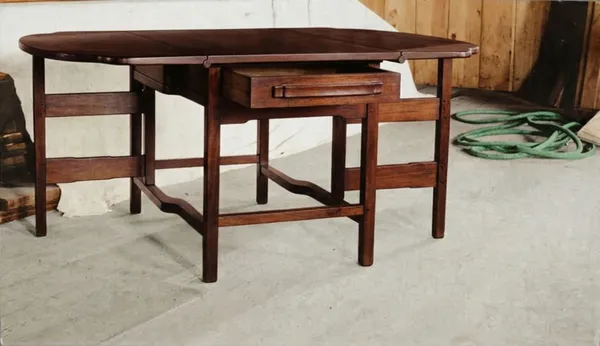
The inlaid mahogany drop-leaf library table is another masterpiece of design and craftsmanship from the Bolton-Bush commission. With its gently rounded corners, its abstract japonesque inlay, and its characteristic square ebony pegs, the table is a perfect example of the Greenes’ ability to create furniture that is both beautiful and functional. The drop-leaf design allows the table to be easily adapted to a variety of uses, while the intricate inlay and the carefully placed ebony pegs add a touch of refined detail that elevates the piece from a simple piece of furniture to a work of art. The table’s design, like that of the hall chairs, is a harmonious blend of form and function, a testament to the Greenes’ belief that even the most utilitarian objects should be imbued with a sense of beauty.
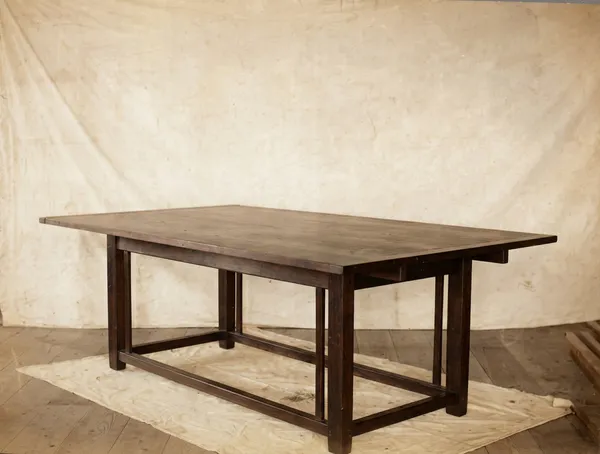
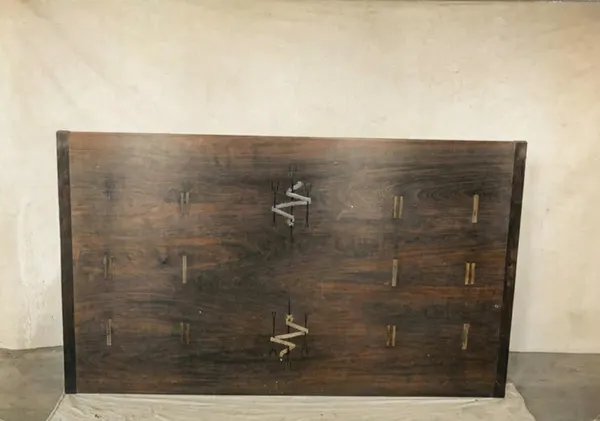
The dining room table, the only piece of furniture completed before Dr. Bolton’s death, is a fascinating precursor to the rest of the Bolton-Bush commission. While it does not feature the fully developed design language of the later pieces, it does contain the seeds of what was to come. It was in this table that the Greenes first experimented with the use of ebony inlay, a detail that would become a signature element of their mature style. The table’s simple, rectilinear form and its emphasis on the natural beauty of the wood are hallmarks of the Arts and Crafts movement, yet the subtle inlay hints at the more refined and decorative style that would emerge in the later pieces of the commission.
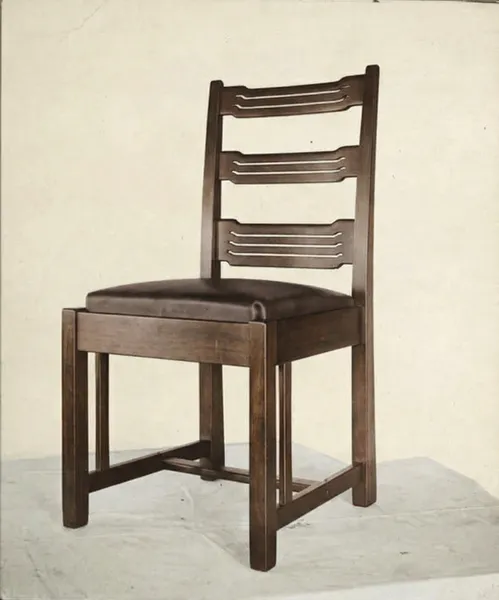
The dining room chairs, both arm and side chairs, are a study in understated elegance. The high-backed chairs feature a vertical slat design that emphasizes their height and slender proportions. The leather upholstery adds a touch of warmth and comfort, while the curved armrests of the armchairs provide a graceful counterpoint to the chairs’ otherwise rectilinear form. The ever-present ebony pegs, strategically placed on the frame, serve as a subtle reminder of the chairs’ handcrafted origins and their connection to the larger suite of furniture.

The hall mirror, with its rectangular frame and decorative top, is a perfect example of the Greenes’ ability to create functional objects that are also works of art. The mahogany frame, with its characteristic ebony accents, is a study in proportion and balance. The mirror’s design is fully integrated with the other pieces in the hall, creating a sense of visual harmony and continuity.
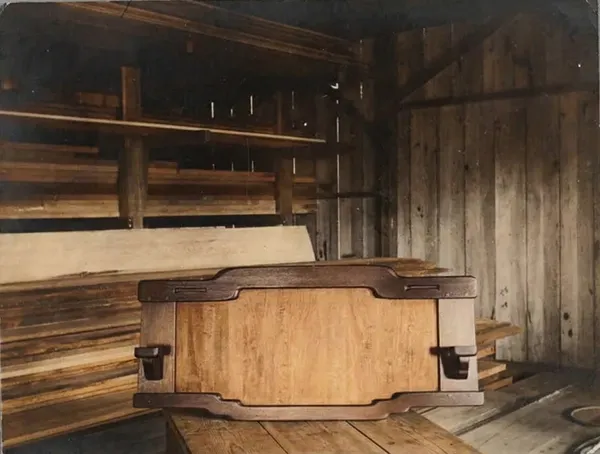
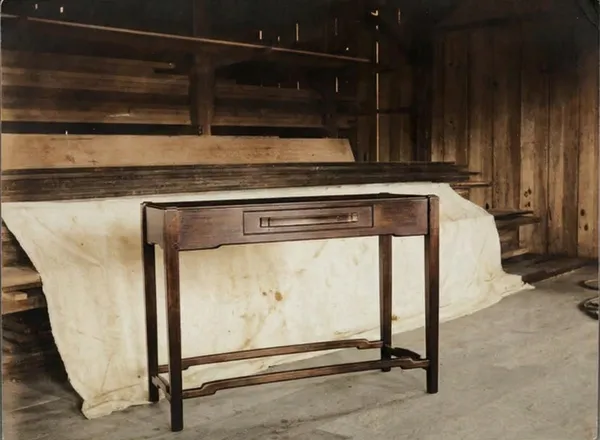
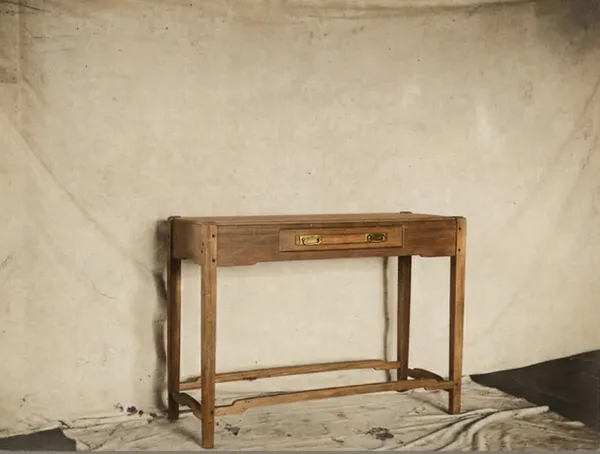
The hall tables, console-style pieces of simple, elegant lines, are a testament to the Greenes’ mastery of form. The mahogany construction, the subtle cloud lift profiles on the aprons, and the carefully placed ebony pegs all contribute to a sense of refined simplicity. These tables, while functional, are also objects of beauty, their understated elegance a perfect complement to the more dramatic pieces in the collection.
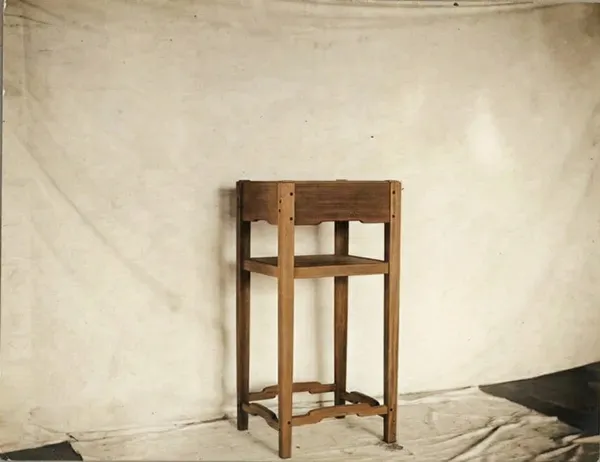
The lamp stand, a tall, slender piece of mahogany, is a perfect example of the Greenes’ attention to detail. Designed to hold a lamp, the stand is a functional object that has been elevated to the level of art. The ebony pegs, visible on the stand’s frame, are a subtle yet powerful design element, a reminder of the stand’s connection to the larger suite of furniture.
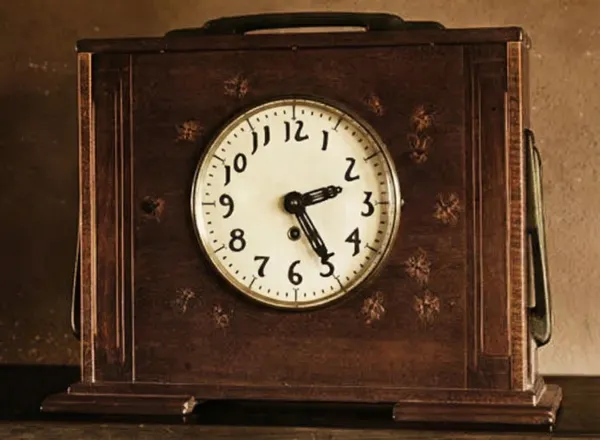
The mantle clock, with its wooden case and Greene & Greene styling, is another example of the Greenes’ ability to create a totally unified environment. The clock’s design is fully integrated with the other pieces in the room, its mahogany case and ebony accents echoing the materials and design motifs of the surrounding furniture. The clock is not merely a time-telling device, but a work of art that contributes to the overall harmony of the interior.
The rocking chair, with its curved rockers and high back design, is a study in comfort and grace. The leather or upholstered seat provides a touch of warmth and luxury, while the ebony pegs, visible on the chair’s frame, serve as a subtle reminder of its handcrafted origins. The chair’s design, with its gentle curves and its emphasis on natural materials, is a perfect expression of the Arts and Crafts philosophy.

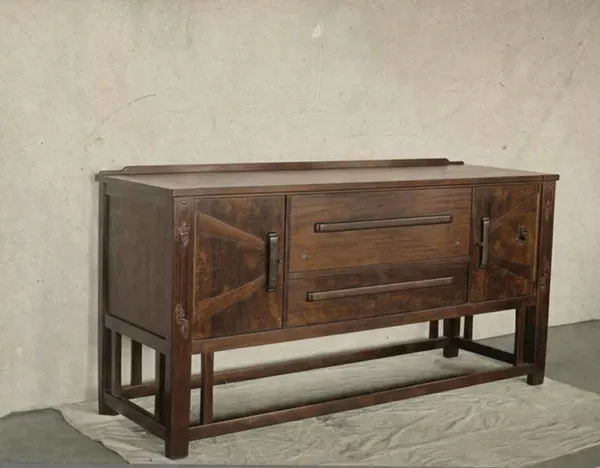
The sideboard, a large and impressive piece of furniture, is a testament to the Greenes’ ability to create functional objects that are also works of art. With its multiple drawers and cabinet doors, the sideboard provides ample storage space, while its mahogany construction, its cloud lift details, and its carefully placed ebony pegs connect it to the other pieces in the dining room. The hardware, in keeping with the Arts and Crafts style, is simple and functional, yet elegant in its design. The sideboard is a masterpiece of cabinetmaking, a testament to the skill of the Hall brothers and the design genius of the Greenes.
Legacy and Preservation
The Belle Barlow Bush furniture commission was a pivotal moment in the careers of both Greene & Greene and the Hall brothers. It was a project that allowed them to explore new ideas, refine their techniques, and create a body of work that would come to define the very essence of the California Arts & Crafts movement. For Greene & Greene, the Bolton-Bush commission was a turning point, a project that allowed them to fully realize their vision of a totally unified environment, where every element, from the architecture to the furniture to the light fixtures, was designed to work in harmony. It was a project that showcased their mastery of materials, their innovative use of joinery, and their ability to create spaces that were both beautiful and livable.
For the Hall brothers, the Bolton-Bush commission was a crowning achievement, a project that allowed them to demonstrate the full range of their skills as craftsmen. The furniture they created for Belle Barlow Bush is a testament to their unwavering commitment to quality, their deep understanding of wood, and their ability to translate the Greenes’ complex designs into tangible works of art. The fact that this furniture is still so highly prized today, more than a century after it was created, is a testament to the enduring quality of their work. Pieces from the commission have appeared at major auction houses including Sotheby’s, Christie’s, and Toomey & Co., where they have commanded prices that reflect their significance in the history of American decorative arts.
The Belle Barlow Bush furniture, born from a unique set of circumstances, stands as a powerful symbol of the creative synergy that can occur when a visionary client, a talented team of designers, and a group of master craftsmen come together in pursuit of a shared vision. It is a legacy written in wood and design, a story of how a house became a home, and how a simple furniture commission became a pivotal moment in the history of American decorative arts. The pieces from this commission, whether a stately hall chair, an elegant library table, or a functional linen press, all bear the unmistakable stamp of Greene & Greene’s genius and the Hall brothers’ artistry, a timeless reminder of a golden age of American craftsmanship. Today, these pieces serve not only as objects of beauty but as tangible connections to a moment in history when art and craft were one, and when the pursuit of beauty was considered the highest calling of the designer’s art.
