The front of the Gamble House is the most photographed domestic interior in American Arts and Crafts architecture, and one of the first things to say about it is that it is dark. The entry hall, the living room, the dining room, the great stair — they are built of Burmese teak and Honduras mahogany, woods chosen for depth and warmth and the particular way they hold a low light, and the rooms are deliberately dim, shaded under the deep eaves the brothers loved. Visitors lower their voices in them. The wood seems to take in sound the way it takes in light.
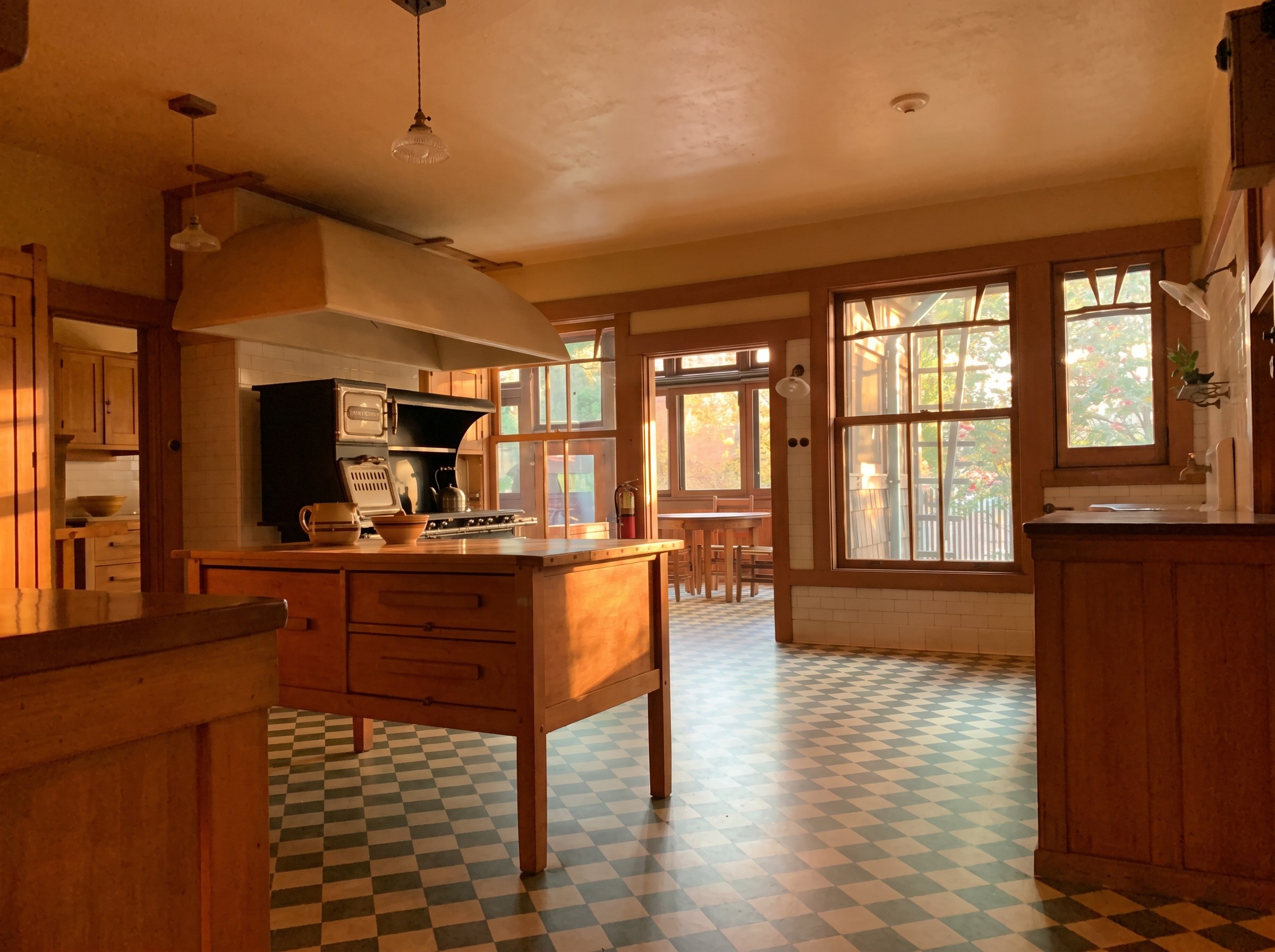
Walk back through the house, though — past the dining room, through the door the family did not use, into the part of the plan the tour sometimes hurries past — and the wood changes. The light changes. You come into the kitchen, and the kitchen is pale.

It is built of different woods, and the difference is the whole point. The cabinetry is maple — hard, close-grained, durable, washable. The countertops and work surfaces are sugar pine, the soft, pale, even-grained pine of the high Sierra. There is no teak in this room. There is no mahogany. There is nothing here that a guest was ever meant to stand and admire.
That was deliberate, and it was not thrift. David Gamble could have had any wood he wanted in any room of this house. The kitchen is pale because of what a kitchen is for.
Sugar pine was chosen for the work surfaces because it is a working wood. It is stable. It is smooth and even in the grain. It takes a knife and a scrubbing and a hundred years of heat and water and use, and it can be scoured clean and scoured again. It was not sealed to a glossy finish and set out to be looked at; it was left as a surface that could be used hard and maintained honestly. Maple was chosen for the cabinets for the same family of reasons — a hard, light wood that survives a working room. These are not the precious timbers of the Arts and Crafts imagination. They are the right timbers for heat, water, knives, and scrubbing.
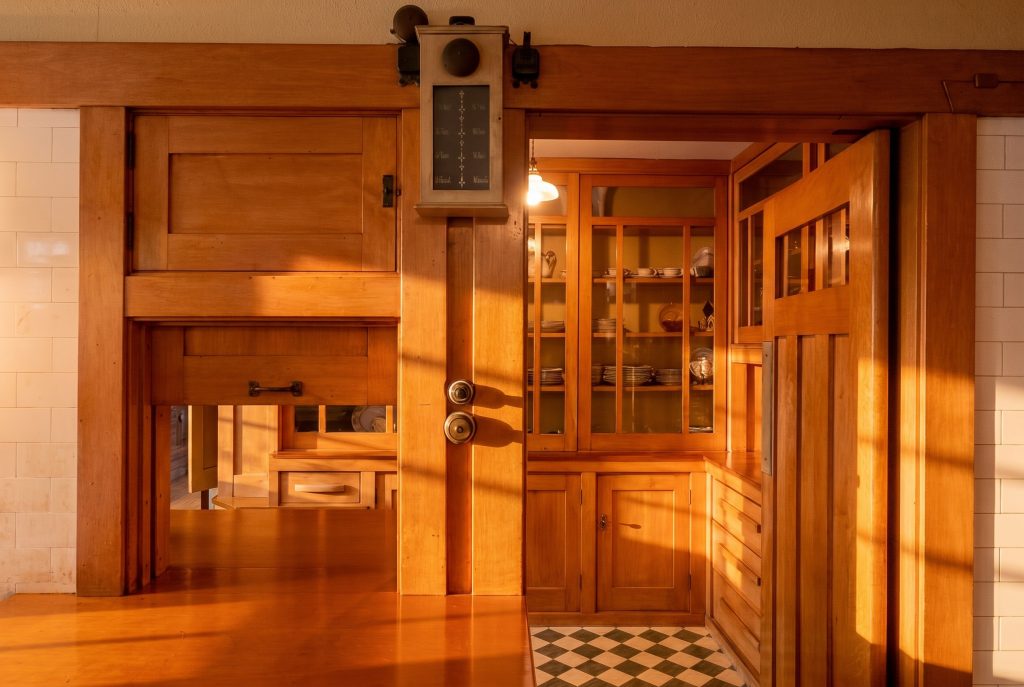
The light is part of the same decision. The family’s rooms at the front of the house face the Arroyo and the garden, and the brothers shaded them under deep eaves to keep them low and calm and warm. The kitchen faces the service yard, and the brothers gave it generous windows and kept it bright — because the work done in it had to be seen clearly: a knife, a flame, a pot, a hot surface, a thing either clean or not. The front of the house is organized around repose. The kitchen is organized around use. Pale wood and plain daylight are simply what use looks like when an architect takes it seriously.
There is a period idea folded into this, too. In 1908 the kitchen was a subject of real reform. Domestic-science writers and architects were arguing for kitchens that were light, well ventilated, and surfaced in materials that could be kept genuinely clean — a deliberate reaction against the dark, greasy, hard-to-scrub kitchens of the Victorian house. A bright, pale, sugar-pine-and-maple working kitchen was not only practical. In 1908 it was modern. The brothers, so often cast purely as romantics of the handmade, were here being briskly, sensibly up to date.
This is the thing worth stopping on, because it corrects something about how the brothers are usually understood.
The popular account of Greene & Greene is an account of teak. It is a story about rare wood, obsessive joinery, the house as a jewel box. That story is true of the front of the Gamble House. But told by itself it makes the brothers sound like aesthetes — like men who simply loved expensive timber for its own sake and spent a client’s fortune indulging the preference. The kitchen is the room that proves they were something better than that.
Here, where no guest would ever be brought, where no photograph was anticipated and no impression needed to be made, the brothers applied the exact same principle they applied in the teak living room — and it produced a room that looks like its opposite. The principle was never “use beautiful wood.” The principle was “use the right wood for what the room is asked to do.” The living room is for sitting in a low, gathered light among warm surfaces, and so its wood is teak. The kitchen is for work, and so its wood is sugar pine and maple. One rule. Two rooms that share almost nothing to the eye.
A decorator can put teak in a parlor. Anyone with money can do that. It takes a builder who actually believes the principle to carry it through the door into the kitchen, let it produce a plain, pale, scrubable room — and then detail that plain pale room with the same evident care as the showpieces: the same considered proportions, the same softened edges, the same sense that every surface was thought about by someone who respected the people who would touch it.
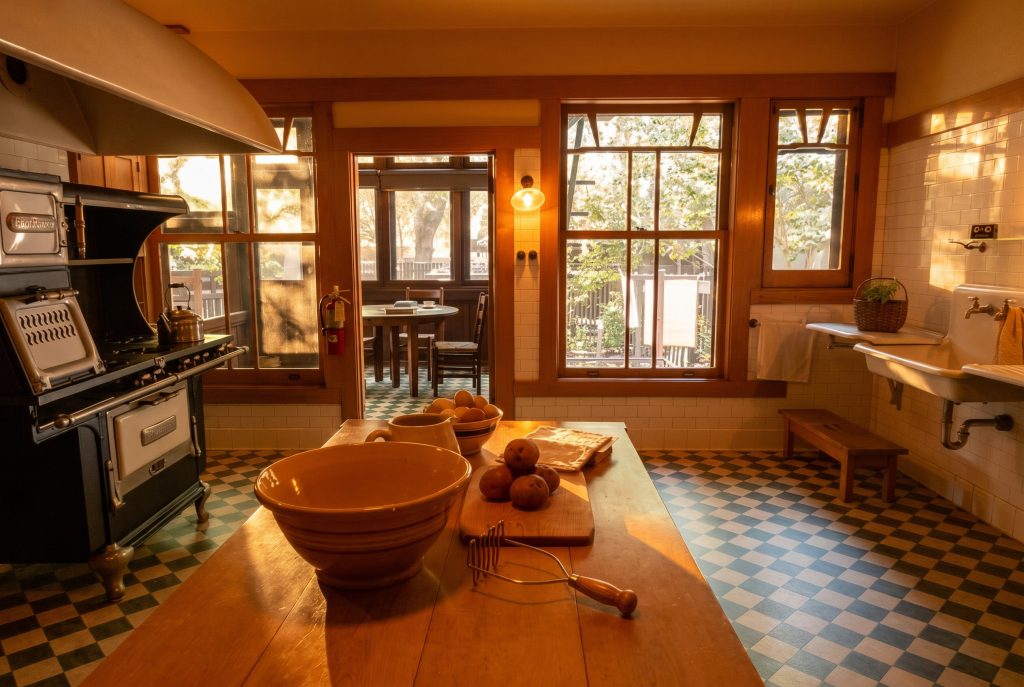
And the people who would touch it were not the Gambles. The kitchen of a house like this, in 1908, was the domain of the household staff — the cook and the kitchen help who ran it from before breakfast to after dinner. The family passed through it rarely, if at all. The brothers designed it, in full knowledge of that, as carefully as they designed the rooms the family lived in: windows for working daylight, ventilation for the heat, a plan that made sense to a person on her feet all day, surfaces that would survive decades of real use. It is a room made with respect for work, and for the workers, by architects who could easily have treated it as the part of the house that did not matter.
They did not treat it that way. That is the quiet argument the kitchen makes.
Stand in it for a while and the famous front of the house reads a little differently afterward. The teak entry hall tells you that Charles and Henry Greene loved beautiful wood. The kitchen tells you something harder, and better, and easier to miss: that they loved the rule more than they loved the wood. “Truth to materials” was not a phrase they used to justify spending money on teak. It was a working method, and a working method has to hold up in the room where the work is actually done.
The teak is what the Gamble House is famous for. The pine is what the Gamble House is honest about.
For more on the other overlooked room of the same house, see The Attic at the Gamble House. For more on the brothers’ handling of wood as a surface meant to be touched, see The Legible Hand.