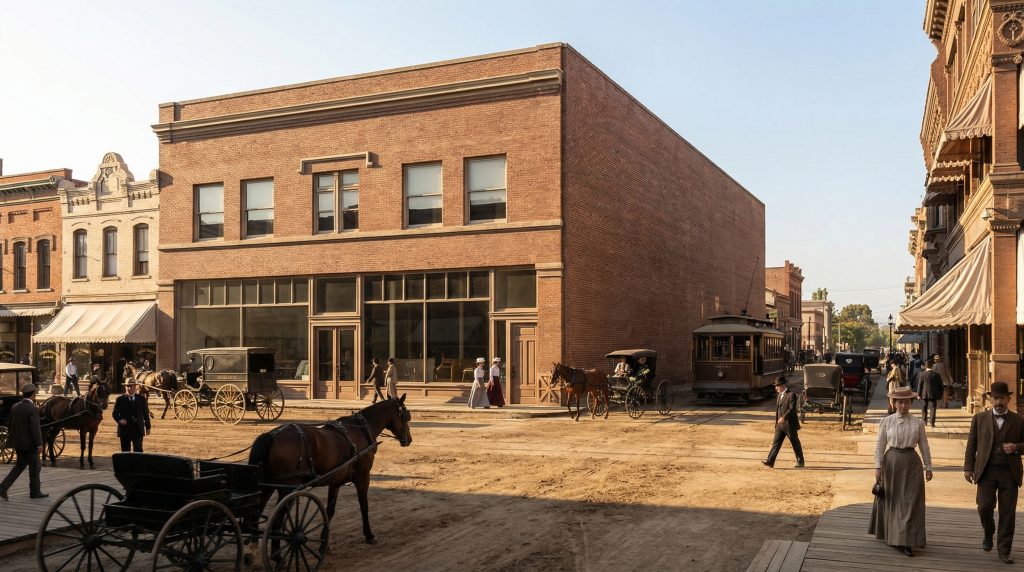
The John C. Bentz Store Building, designed in 1901, is a significant example of Greene & Greene’s early commercial architecture. Commissioned by John C. Bentz, a prominent dealer in high-end Chinese and Japanese art, the building was designed to be a sophisticated and elegant retail space that would reflect the quality and beauty of the objects sold within. The Bentz Store is a testament to the Greenes’ ability to adapt their architectural vision to the specific needs of a commercial client, creating a building that was both functional and beautiful, modern and timeless. The store, with its simple, elegant design and its connection to the world of Asian art, is an important example of the Greenes’ versatility and their ability to create architecture that was both innovative and deeply respectful of tradition.

Architectural Significance
The John C. Bentz Store Building is a significant work in the Greene & Greene portfolio for several reasons. First, it is a rare and important example of their early commercial work, a field in which they had limited but significant experience. Second, it is a testament to their ability to create architecture that was perfectly suited to the needs of a specific client and a specific program. The Bentz Store was designed to be a showcase for the beautiful and exotic objects that were sold within, and the Greenes’ design, with its simple elegance and its subtle references to Asian art and architecture, was the perfect setting for these treasures. Finally, the Bentz Store is a significant work because it demonstrates the Greenes’ growing interest in the arts and crafts of Asia, an interest that would have a profound influence on their later work.
A Fusion of East and West: The Influence of Asian Art
The design of the John C. Bentz Store Building is a beautiful and subtle fusion of Eastern and Western design principles. The Greenes, who were both avid collectors of Asian art, were deeply influenced by the simplicity, elegance, and craftsmanship of Japanese and Chinese architecture. In the Bentz Store, they created a building that was both modern and timeless, a building that was perfectly suited to the display of Asian art. The store’s simple, geometric forms, its use of natural materials, and its emphasis on craftsmanship are all hallmarks of the Greenes’ work, but they are also a reflection of their deep appreciation for the arts and crafts of Asia. The Bentz Store is a testament to the Greenes’ ability to create architecture that was both innovative and deeply rooted in tradition.
Architectural Features
Exterior Design
The exterior of the John C. Bentz Store Building was a simple and elegant composition of brick, wood, and glass. The building was designed to be a quiet and understated backdrop for the beautiful objects that were sold within, and the Greenes’ design, with its clean lines, its simple geometric forms, and its emphasis on natural materials, was the perfect expression of this idea. The building’s most prominent feature was a large, multi-paned window that would have flooded the interior with natural light and provided a tantalizing glimpse of the treasures within. The simple, unadorned brickwork, the carefully crafted wooden details, and the elegant proportions of the building are all hallmarks of the Greenes’ work, and they combine to create a building that is both modern and timeless.
Simple and Elegant: The exterior of the building was a simple and elegant composition of brick, wood, and glass, designed to be a quiet and understated backdrop for the beautiful objects that were sold within.
Natural Materials: The use of natural materials, such as brick and wood, was a key feature of the exterior design, reflecting the Greenes’ commitment to the principles of the Arts and Crafts movement.
Craftsmanship: The carefully crafted wooden details and the elegant proportions of the building are all hallmarks of the Greenes’ work, and they combine to create a building that is both modern and timeless.
Interior Design and Craftsmanship
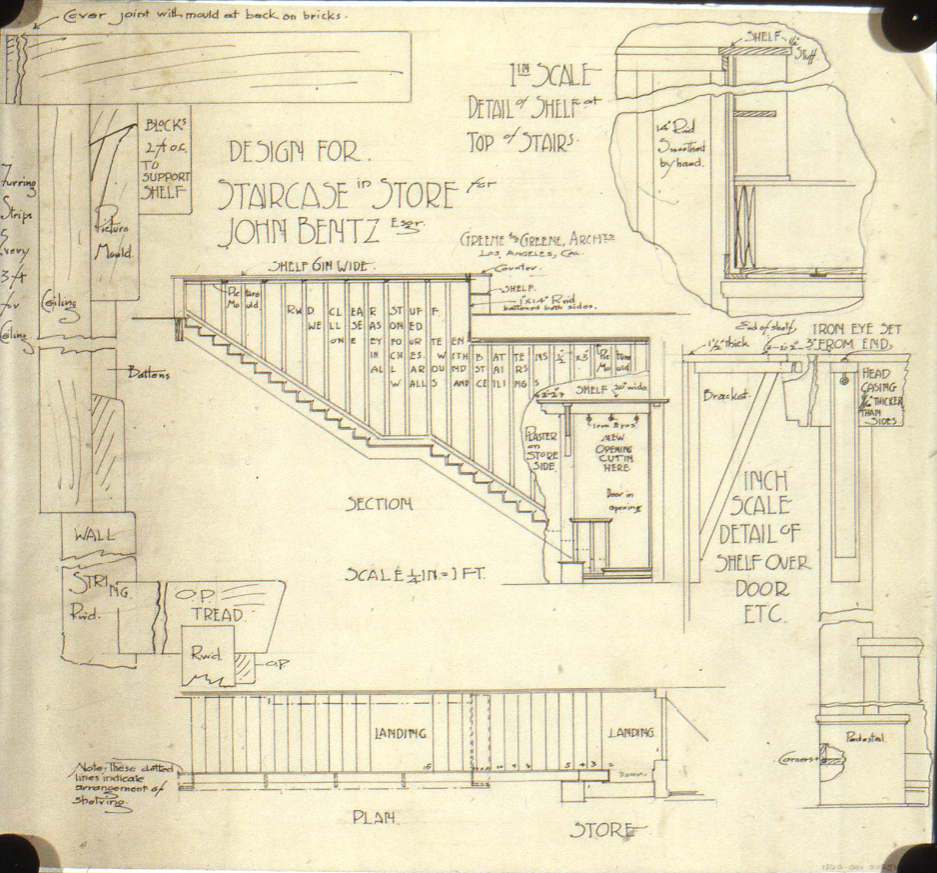
The interior of the John C. Bentz Store Building was designed to be a simple and elegant showcase for the beautiful and exotic objects that were sold within. The space was likely open and uncluttered, with a focus on creating a sense of serenity and tranquility that would allow the objects to be seen to their best advantage. The use of natural materials, such as wood and plaster, and the careful attention to detail would have created a warm and inviting atmosphere, a perfect setting for the appreciation of art. The Greenes’ design for the interior of the Bentz Store was a testament to their belief that the environment in which art is displayed is as important as the art itself.
Serene and Tranquil: The interior of the store was designed to be a serene and tranquil space, a quiet and understated backdrop for the beautiful objects that were sold within.
Natural Materials: The use of natural materials, such as wood and plaster, would have created a warm and inviting atmosphere, a perfect setting for the appreciation of art.
Craftsmanship: The careful attention to detail and the high quality of the craftsmanship would have been a hallmark of the interior design, reflecting the Greenes’ commitment to the principles of the Arts and Crafts movement.
Historical Context
Pasadena: A Center for Asian Art
The John C. Bentz Store Building was built at a time when Pasadena was becoming a major center for the collection and appreciation of Asian art. The city’s wealthy and sophisticated residents were avid collectors of Chinese and Japanese art, and there was a growing demand for high-quality objects and expert advice. John C. Bentz, with his deep knowledge of Asian art and his connections to dealers and collectors in Asia, was perfectly positioned to meet this demand. The Bentz Store, with its beautiful and elegant design, was the perfect setting for his business, and it quickly became a popular destination for collectors and connoisseurs from all over Southern California.
John C. Bentz: A Pioneer in the World of Asian Art
John C. Bentz was a pioneer in the world of Asian art in Southern California. He was one of the first dealers to specialize in high-quality Chinese and Japanese art, and he played a key role in educating the public about the beauty and importance of these objects. Bentz was a man of great taste and discernment, and he was known for his ability to find rare and beautiful objects that were not available anywhere else. His store was a reflection of his personal vision, and it was a place where collectors could come to learn about Asian art and to find objects of great beauty and rarity.
Greene & Greene and the World of Asian Art
The commission for the John C. Bentz Store Building was a significant one for Greene & Greene, as it allowed them to explore their growing interest in the arts and crafts of Asia. The Greenes were both avid collectors of Asian art, and they were deeply influenced by the simplicity, elegance, and craftsmanship of Japanese and Chinese architecture. The Bentz Store was the perfect opportunity for them to translate their appreciation for Asian art into a built form, and the result was a building that was both modern and timeless, a building that was perfectly suited to the display of Asian art. The Bentz Store is a testament to the Greenes’ ability to create architecture that was both innovative and deeply rooted in tradition.
Legacy and Current Status
The John C. Bentz Store Building is a significant and important work in the Greene & Greene portfolio. It is a rare and important example of their early commercial work, a testament to their ability to create architecture that was perfectly suited to the needs of a specific client and a specific program, and a beautiful and eloquent expression of their growing interest in the arts and crafts of Asia. The Bentz Store is a reminder that the Greenes’ genius was not limited to the design of residential buildings but was also evident in their more modest and understated commercial works.
Location: 45-55 S. Raymond Ave., Pasadena, California
Year Built: 1901
Architectural Style: Early Commercial with Arts and Crafts and Asian influences
Significance: Rare example of Greene & Greene’s commercial work, designed for a prominent dealer in Asian art
Historical Context: Greene & Greene’s eighth year of practice, Pasadena as a center for Asian art
The John C. Bentz Store Building is a beautiful and sophisticated work of commercial architecture, a testament to Greene & Greene’s ability to create buildings that were both functional and beautiful, modern and timeless. It is a reminder of the firm’s versatility, their deep appreciation for the arts and crafts of Asia, and their ability to create architecture that was perfectly suited to the needs of a specific client and a specific program.
