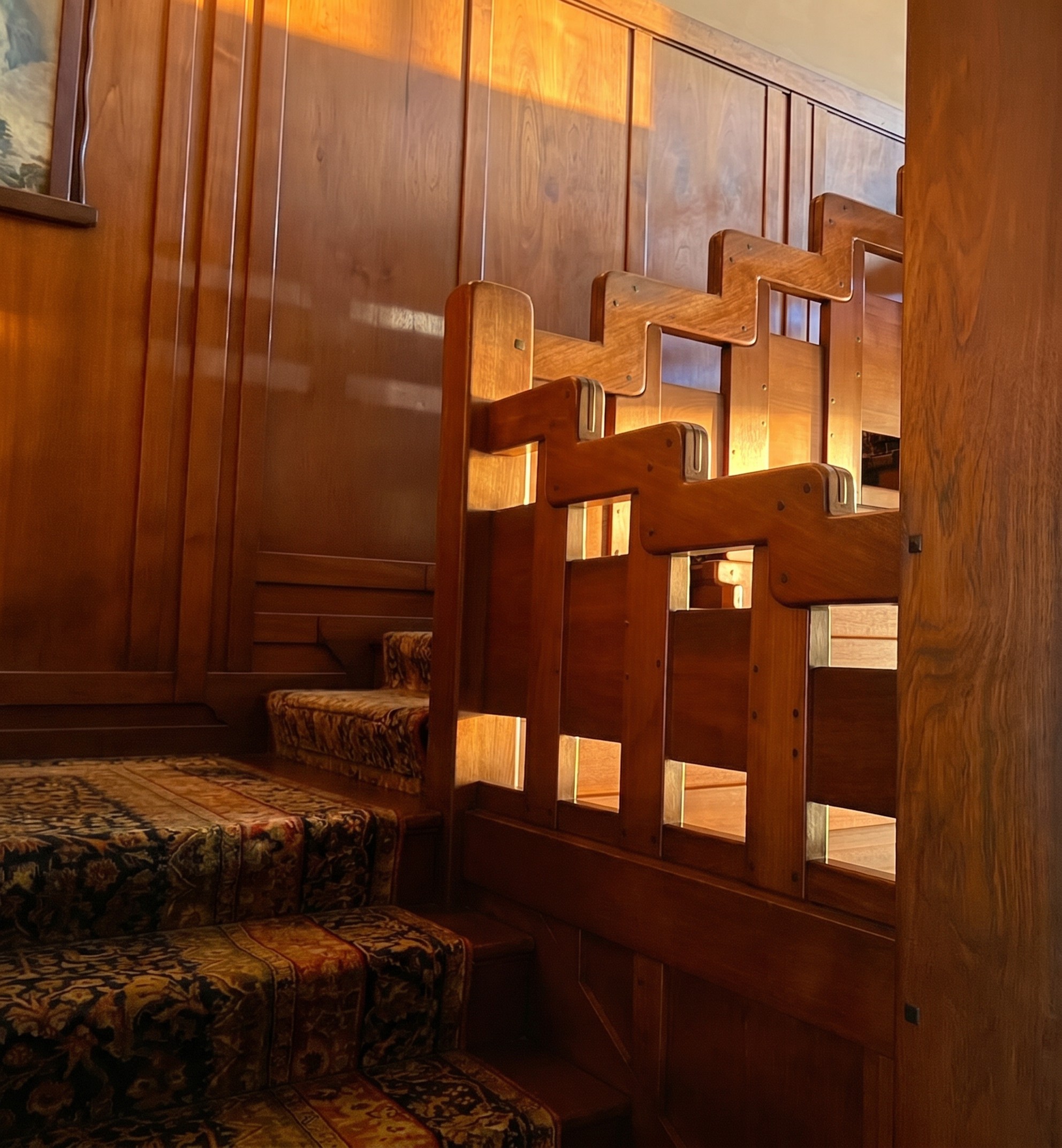
Run your hand along any piece of Greene & Greene woodwork and you will not find a sharp edge anywhere on it. Not on the handrail. Not on the beam. Not on the breadboard end of a dining table or the lower lip of a drawer front. Every arris — every line where two surfaces meet — has been softened, rounded back by hand until it reads less like a corner than like a contour. It is the first thing the body notices and the last thing the eye is told about, because no photograph quite carries it. You have to touch it.
The detail has a plain shop name: easing the edge. A craftsman takes a finished, square-cornered member and works the sharp line off it — with a plane, a file, a scraper, sandpaper wrapped around a finger — until the ninety-degree edge becomes a small rounded transition. Most furniture of the period was eased a little, almost as an afterthought, to keep corners from chipping. The Greenes and the Halls who built for them did it everywhere, to a degree that was deliberate, consistent, and expensive, and they did it because they had decided that their houses were meant to be handled.
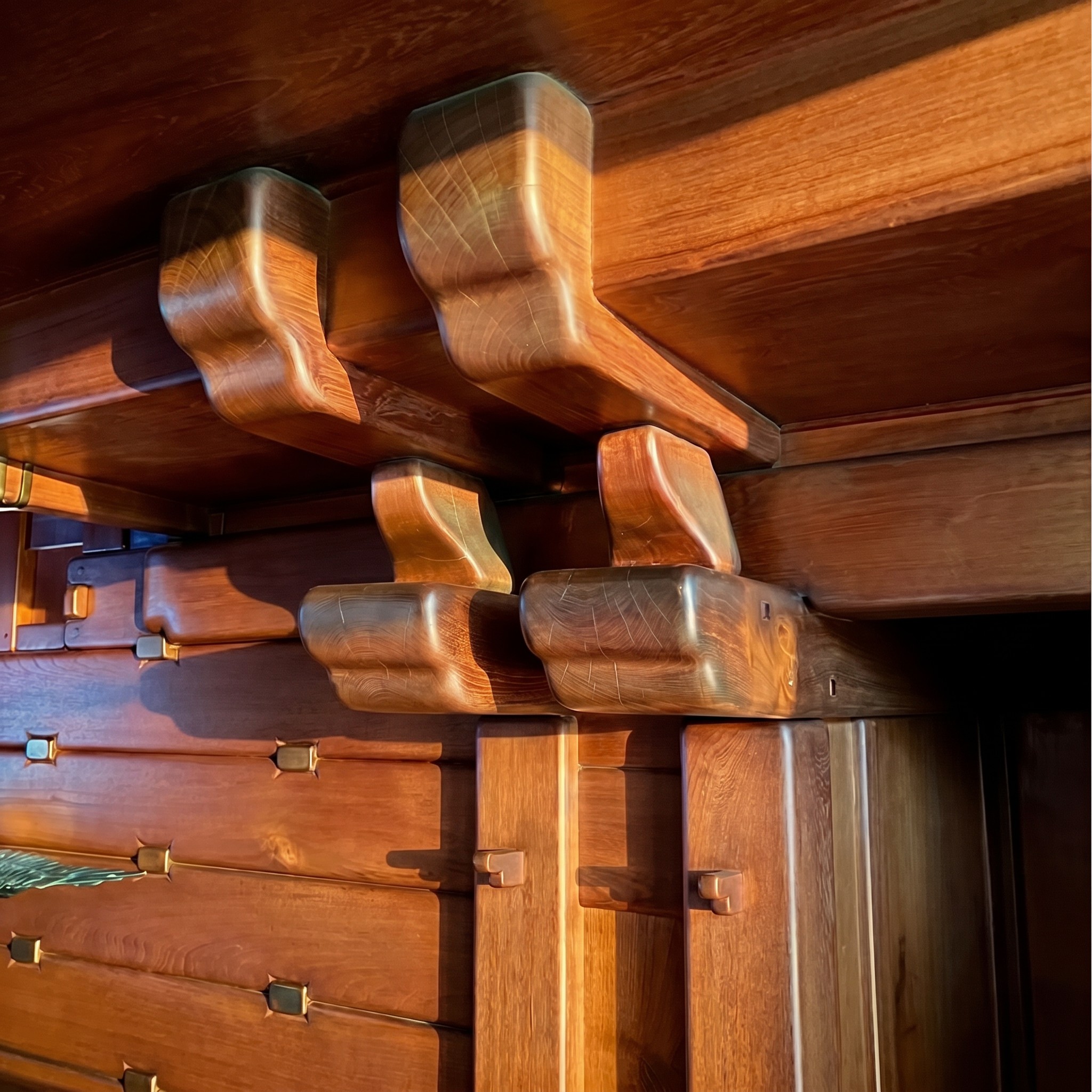
That is the argument hiding inside the detail. A building can be made to be looked at, or it can be made to be lived against, and the two ambitions ask for different edges. A surface that exists for the eye can stay crisp; sharpness photographs as precision, and precision reads as quality. But a surface that a person will actually touch — lean a shoulder on, drag a palm down, rest a wrist against at dinner for forty years — should not be sharp, because a sharp edge is a small hostility repeated every day. The Greenes rounded their edges because they were designing for the hand and the shoulder before they were designing for the camera.
Stand at the foot of the main stair in the Gamble House and the logic becomes physical. The newel, the handrail, the stepped corbels that carry the rail down toward the floor — all of it has been rounded until the whole assembly looks as though it has been worn smooth by a century of hands, except that it left the shop that way. The wood was soft to the touch on the day it was installed. The Greenes built in the patina of long use before anyone had used it. They anticipated the hand and met it halfway.
It is tempting to read this as mere comfort, a kind of ergonomic kindness, and it is that. But it is also continuous with everything else the brothers believed about wood. The same conviction that led them to choose the exposed ebony peg over the hidden screw — the refusal to let a surface lie about how it was made — led them to round the edge. A square machined corner is, in a quiet way, a boast about tooling: it says a blade did this, cleanly, fast. A rounded edge says a hand did this, slowly, last. The easing is the final operation, the one no machine of the period could do as well as a patient person, and the Greenes gave it to every linear foot of visible wood in the house. The labor is invisible until you touch it, and then it is the only thing you feel.
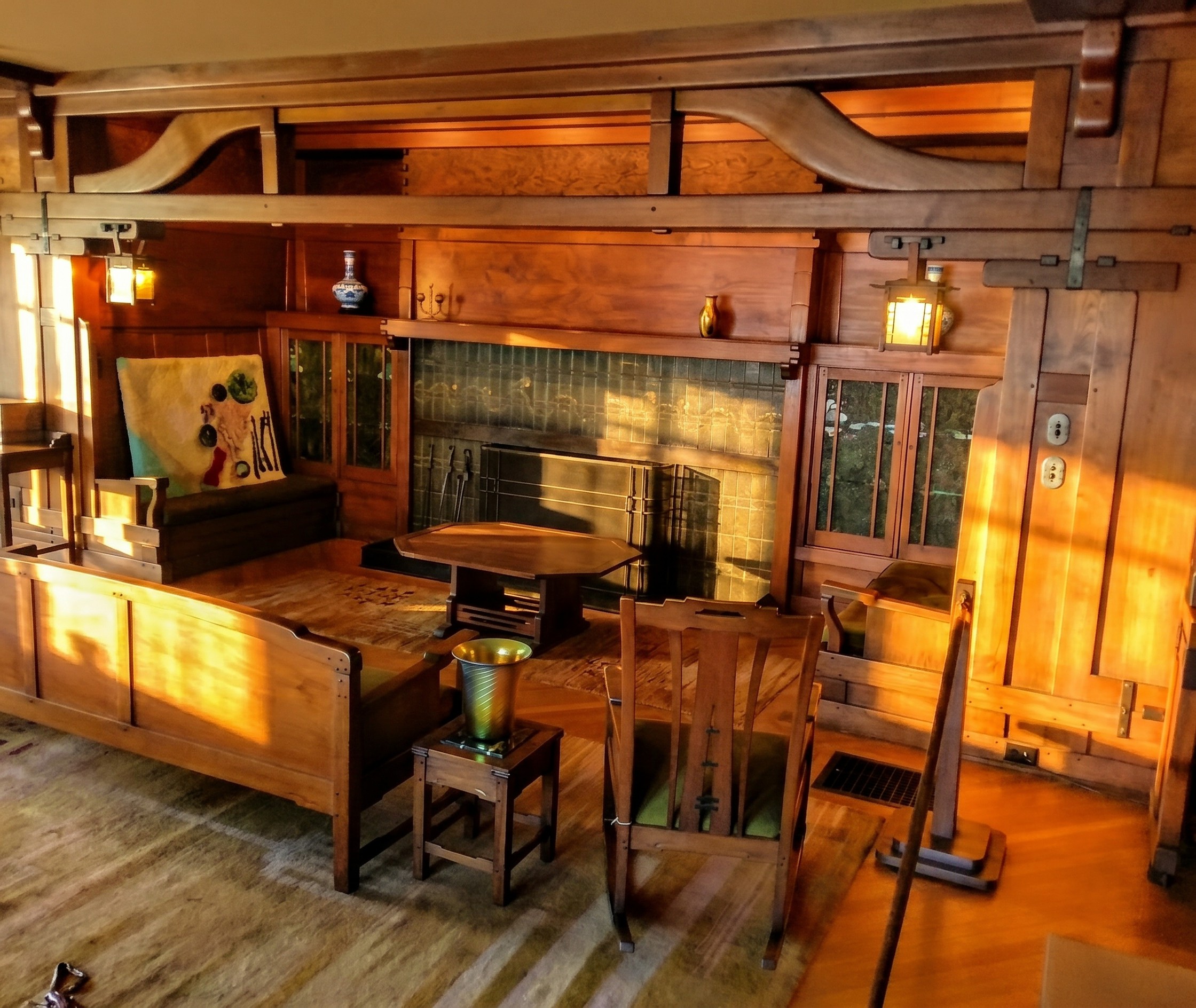
There is a structural honesty in it as well, easy to miss. A rounded edge survives. A sharp arris is the most vulnerable line on any piece of wood — the first place a finish wears through, the first place a knock leaves a pale dent, the first place dirt and damage register. By easing every edge, the Greenes were not only softening the wood for the body; they were protecting it, removing the fragile line before it could fail. The detail that feels gentle is also the detail that lasts. The brothers tended to design that way, so that the kind thing and the durable thing turned out to be the same thing, and you could not say which one they had been aiming at.
The easing also changes how the wood holds light, and this is where it stops being only practical and becomes, frankly, beautiful. A sharp edge catches light as a hard bright line, a tiny glare. A rounded edge gathers light along its curve into a soft graded highlight that travels as you move past it. Walk down a Greene corridor and the edges of the beams above you do not flash; they glow and shift, each one carrying a moving band of light along its softened arris. The warmth everyone feels in these rooms and attributes vaguely to the dark wood is partly this — thousands of rounded edges, each one trading a hard glint for a soft one. The house does not sparkle. It smolders.
You see the same hand on the smallest members and the largest. The exposed end of a rafter, given its finest handwork at the point that carries the least load, is rounded as carefully as a chair arm. The square ebony pegs themselves are eased, their tiny corners taken off so they sit in the surface like rounded river stones rather than hard chips of black. There is no scale at which the brothers decided sharpness was acceptable. The rule held from the newel post to the peg, and its consistency is part of why a Greene interior feels composed rather than merely decorated: one decision, about how an edge should meet a hand, repeated several thousand times without a single exception.
It is worth saying plainly that this is rare. Most architecture, even very good architecture, is designed to be seen and only incidentally to be touched. The Greenes inverted that priority. They built houses whose deepest pleasures are reserved for the person who actually lives in them and puts a hand on the wood — pleasures that a visitor walking through, or a reader looking at photographs, will largely miss. The rounded edge is the clearest proof of where their attention went. It is a detail addressed not to the spectator but to the inhabitant, and it asks to be received not by looking but by holding.
So the next time you are in one of these rooms, do the thing the guards would rather you not. Touch the rail. Let your hand find the place where two planes meet and feel that they do not actually meet — that the line you expected has been turned, by hand, into a curve you can ride your palm along. That curve is the building speaking to the only sense it saved its best work for. The eye gets the grain and the proportion. The hand gets the edge. And the edge, rounded soft a hundred years ago in anticipation of your touch, is the part of the house that was always waiting for you specifically.