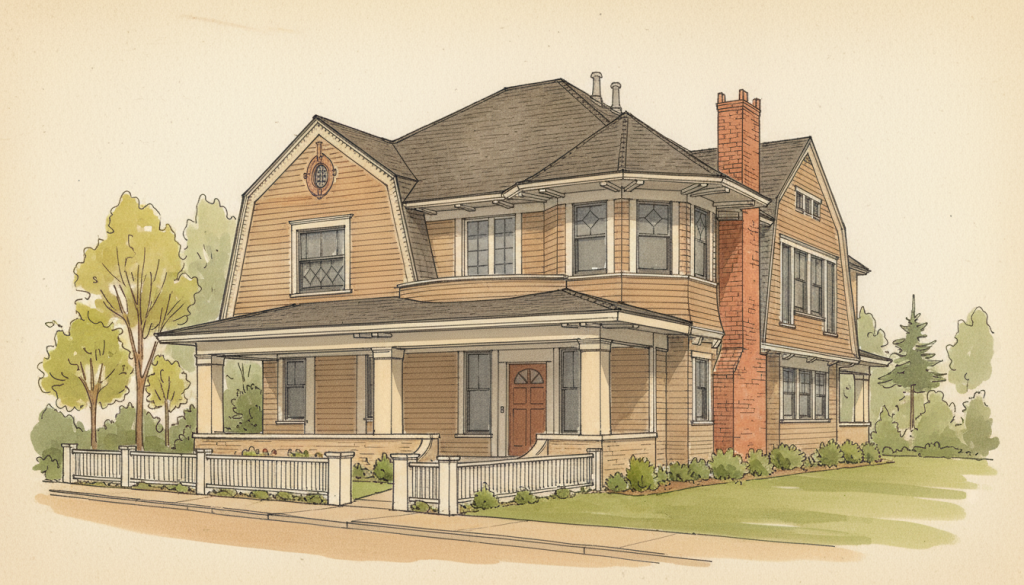
The Elizabeth A. McLean House represents Greene & Greene’s significant early exploration of residential architecture, and their developing understanding of how traditional design principles could be adapted to serve the sophisticated requirements of cultured women seeking distinguished domestic environments in California. Built in 1897 at 450 N. Raymond Ave. in Pasadena for Elizabeth A. McLean, this important early commission stands as Greene & Greene’s fourteenth documented residential project and demonstrates their growing reputation among Pasadena’s cultured community during the crucial formative period of their practice. The house holds special significance as an example of their early residential work that served the requirements of sophisticated women clients and as evidence of their ability to attract discerning clients who appreciated quality architecture during the pioneering years of their practice when they were establishing their reputation as masters of California residential design that could serve both cultural sophistication and domestic comfort.

Architectural Significance
The Elizabeth A. McLean House occupies an important position in Greene & Greene’s early body of work as a significant example of their developing residential design vocabulary and their growing understanding of how traditional architectural principles could be adapted to serve the specific requirements of cultured women seeking distinguished domestic environments. Completed in 1897 during the crucial early period of Greene & Greene’s practice establishment, the residence represents their continued exploration of residential architecture that could serve the requirements of sophisticated domestic life while demonstrating their developing mastery of design principles that could accommodate the cultural and personal aspirations of refined clients. The design demonstrates their early approach to creating architecture that was both functionally appropriate for comfortable living and architecturally distinguished for cultural representation, making it a crucial achievement in their development as residential architects and an important milestone in the evolution of their design philosophy that would eventually establish them as masters of American Craftsman architecture capable of serving diverse client requirements and cultural functions.
The Cultured Client Context
The Elizabeth A. McLean House commission provided Greene & Greene with an important opportunity to develop their understanding of residential architecture for cultured women clients and establish their reputation among Pasadena’s growing community of sophisticated individuals:
Cultural Integration: The McLean House represented Greene & Greene’s early exploration of how residential architecture could reflect the cultural sophistication and personal refinement of educated women clients, demonstrating their growing understanding of how domestic design could serve both practical living requirements and cultural representation needs.
Cultural Community Recognition: The commission from Elizabeth A. McLean demonstrated Greene & Greene’s ability to attract discerning cultured clients who appreciated quality architecture, establishing their reputation among Pasadena’s cultural community and sophisticated women who sought distinguished residential environments that could reflect their cultural achievements and social standing.
Cultural Function Adaptation: The project provided opportunities for Greene & Greene to develop their understanding of how residential architecture could serve both comfortable family life and cultural pursuits while maintaining the sophistication expected by cultured clients seeking distinguished domestic environments.
Architectural Features
Design Approach
The Elizabeth A. McLean House showcased Greene & Greene’s early approach to residential design for cultured clients and their developing understanding of California domestic architecture that could serve multiple cultural functions:
Cultural Integration: The house was designed to demonstrate how residential architecture could accommodate both comfortable domestic living and cultural pursuits, showcasing Greene & Greene’s early understanding of culturally-informed domestic design and their developing mastery of residential architecture that could serve diverse cultural requirements.
Traditional Refinement: The design incorporated careful adaptation of traditional residential design principles to California climate and lifestyle requirements while accommodating the cultural expectations of sophisticated clients, demonstrating Greene & Greene’s early understanding of regional architectural adaptation and their developing mastery of refined domestic design.
Functional Sophistication: The house featured thoughtful planning that could serve both the requirements of comfortable family life and the cultural functions expected by educated clients, demonstrating Greene & Greene’s early understanding of how residential architecture could balance practical requirements with cultural distinction and architectural quality.
Site Consideration: The design showed careful attention to site conditions and orientation that demonstrated Greene & Greene’s early understanding of how residential architecture could respond to California climate while creating refined environments for both domestic living and cultural activities.
Construction Quality
The Elizabeth A. McLean House represented Greene & Greene’s early commitment to construction quality and their developing understanding of how craftsmanship could enhance both residential comfort and cultural distinction:
Detail Refinement: The house incorporated careful attention to architectural details that demonstrated Greene & Greene’s early understanding of how construction quality could enhance design distinction while serving the practical requirements of both comfortable living and cultural representation.
Cultural Standards: The design reflected Greene & Greene’s early understanding of the quality standards expected by cultured clients and their commitment to construction excellence that could serve both domestic comfort and cultural representation requirements.
Material Sophistication: The house featured quality material selection and integration that demonstrated Greene & Greene’s early understanding of how construction materials could contribute to both architectural distinction and functional performance in environments serving multiple cultural functions.
Historical Context
Elizabeth A. McLean
Elizabeth A. McLean represented the type of cultured client who sought Greene & Greene’s architectural services during their early practice development:
Cultural Achievement: As a sophisticated woman in Pasadena’s growing cultural community, Elizabeth A. McLean brought cultural refinement and social standing to her commission, making her an ideal client for Greene & Greene’s approach to distinguished residential architecture that could serve both domestic and cultural requirements.
Cultural Requirements: Her commission demonstrated the specific needs of cultured clients who sought architecture that could accommodate both comfortable domestic living and cultural pursuits, providing Greene & Greene with important experience in residential design for sophisticated clients.
Community Leadership: Her selection of Greene & Greene demonstrated her recognition of their developing reputation for quality design and her confidence in their ability to create distinguished residential architecture that could serve the complex requirements of cultural life and social distinction.
Cultural Sophistication: Her appreciation for quality architecture and understanding of design distinction made her a sophisticated patron who could appreciate Greene & Greene’s approach to residential design that emphasized both functional performance and architectural quality suitable for cultural representation.
The 1897 Cultural Context
The Elizabeth A. McLean House commission emerged during the crucial early period of Greene & Greene’s practice establishment and the broader development of Pasadena as a center for cultured women seeking distinguished residential environments:
Cultural Migration: The period was characterized by the migration of cultured women to California, creating opportunities for residential architecture that could serve both domestic and cultural requirements while adapting to regional climate and lifestyle conditions.
Cultural Integration: The late 1890s saw the development of residential architecture that could accommodate the integration of comfortable domestic living with cultural pursuits, providing the context for architectural innovation that emphasized functional flexibility and cultural distinction.
Community Development: The period witnessed Pasadena’s continued growth as a destination for cultured families seeking distinguished residential environments, creating opportunities for residential architecture that could establish new standards for cultural domestic design in California.
Construction and Completion
The Elizabeth A. McLean House underwent careful development and execution that reflected both Greene & Greene’s architectural vision and their commitment to serving the complex requirements of cultured residential clients:
Quality Execution (1897): The house was completed with attention to construction quality that demonstrated Greene & Greene’s early commitment to architectural distinction while serving the dual requirements of sophisticated residential clients and cultural representation needs, establishing their reputation for quality design that could accommodate multiple functional and cultural requirements.
Cultural Integration: The project was executed with careful attention to the integration of architectural design with both domestic and cultural functional requirements, creating residential architecture that achieved practical performance for multiple uses while maintaining design distinction and architectural quality suitable for cultural representation.
Excellence Standards: The completed house reflected Greene & Greene’s early establishment of quality standards that could serve the demanding requirements of cultured clients while maintaining the sophistication expected by refined residential clients seeking distinguished domestic environments, demonstrating their understanding of how construction quality could enhance both functional performance and cultural distinction.
Continuous Evolution
The Elizabeth A. McLean House influenced both Greene & Greene’s legacy and the broader evolution of cultured residential architecture in California:
Cultural Practice Development: The successful completion of the McLean House contributed to Greene & Greene’s growing reputation for cultured residential design quality and confirmed their ability to serve sophisticated clients with complex cultural and functional requirements, serving as foundation for their continued development in serving cultural communities.
Cultural Design Principles: The house’s successful integration of domestic and cultural requirements influenced subsequent understanding of culturally-informed residential architecture and demonstrated new possibilities for domestic design that could serve both personal and cultural needs while maintaining architectural distinction.
Cultural Community Recognition: The project’s successful completion established Greene & Greene’s reputation within Pasadena’s cultural community and contributed to their ability to attract subsequent cultured residential commissions during their crucial early practice development.
Preservation and Legacy
Historical Recognition
The Elizabeth A. McLean House has maintained its significance as an important example of Greene & Greene’s early cultured residential work and their developing mastery of culturally-informed California domestic architecture:
Architectural Documentation: The house is recognized as an important example of Greene & Greene’s early cultured residential architecture and their successful adaptation of traditional design principles to serve both domestic and cultural requirements, ensuring its place in the history of American residential architecture.
Practice History: The house’s significance as Greene & Greene’s fourteenth residential commission ensures its recognition as part of their crucial early practice development, demonstrating the foundation of their subsequent mastery of cultured residential architecture and their understanding of complex cultural and functional requirements.
Cultural Architecture: The house has been studied as an example of Greene & Greene’s early exploration of cultured residential design and their growing understanding of how residential architecture could serve multiple cultural and functional requirements while maintaining sophisticated design standards.
Current Status
Location: 450 N. Raymond Ave., Pasadena, California
Date: 1897
Status: Historic cultured residential commission
Significance: Greene & Greene’s fourteenth residential project
Recognition: Important example of early cultured residential architecture
Architectural Legacy: The Elizabeth A. McLean House stands as Greene & Greene’s important early exploration of cultured residential architecture and their developing understanding of how traditional design principles could be adapted to serve the complex requirements of sophisticated women seeking distinguished domestic environments that could accommodate both personal refinement and cultural sophistication.
The Elizabeth A. McLean House represents a crucial moment in Greene & Greene’s early practice development—a demonstration of their growing confidence in cultured residential design and their developing understanding of how traditional architectural principles could be adapted to serve the complex requirements of sophisticated women while maintaining the refinement expected by cultured clients, establishing design principles and cultural relationships that would influence their subsequent development as masters of American Craftsman residential architecture capable of serving diverse cultural and functional requirements while maintaining architectural distinction and design quality that could accommodate both domestic comfort and cultural excellence.