In the annals of architectural history, the year 1906 shines with a particular incandescence for the firm of Greene & Greene. It was a year of profound creativity and transition, a pivotal moment when Charles and Henry Greene stood at the precipice of their most celebrated period. The seeds of the “ultimate bungalows” that would forever define their legacy were not just sown but were actively blossoming in projects like the third Dr. William T. Bolton House and the final phases of the Duncan-Irwin residence. Yet, hidden within the firm’s archives, nestled between the detailed drawings for these residential masterpieces, lies a tantalizing and enigmatic entry: “Bank Competition, 1906.” This single line item, referring to a set of preliminary drawings for an unidentified bank, opens a window into a fascinating, unrealized chapter of the Greene brothers’ career—a moment when they contemplated translating the intimate, handcrafted language of their domestic architecture to the public and institutional realm.
To understand the significance of this unbuilt project, one must first appreciate the context of 1906. The Greenes were ascending to the zenith of their powers. Their design philosophy, a deeply personal fusion of the English Arts and Crafts movement, Japanese aesthetics, and the specific environmental conditions of Southern California, was reaching its most articulate expression. They were orchestrating symphonies in wood, stone, and light, creating homes that were not merely shelters but holistic environments for living. The idea of them pausing to engage with the rigid, formal typology of a bank building is, at first, incongruous. Banks of that era were architectural statements of a very different kind. They were fortresses of commerce, designed to project an image of unbreachable security and timeless permanence. Their architectural language was overwhelmingly classical, employing heavy stone, soaring columns, and imposing facades to communicate stability and inspire public confidence.
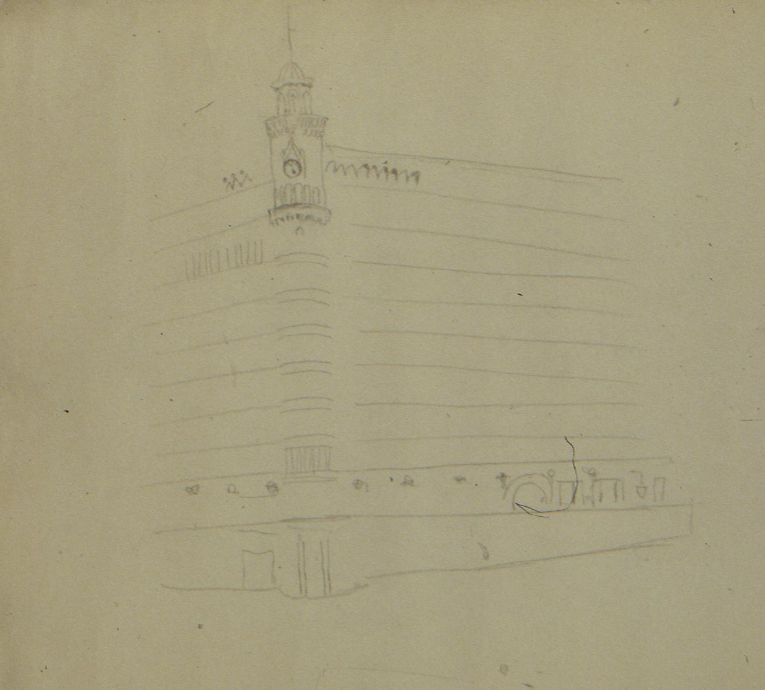
Into this world of Beaux-Arts classicism, the Greenes would have brought a radically different sensibility. An Arts and Crafts bank, as envisioned by Charles and Henry Greene, would have been a quiet revolution. Where traditional banks were cold and institutional, a Greene & Greene design would have been warm and human-scaled. Instead of polished marble and ornate plasterwork, one can imagine an interior rich with the textures of handcrafted wood—Port Orford cedar or Burmese teak—for the teller cages, check-writing stands, and public seating. The ubiquitous barred windows of typical banks would have been replaced with exquisite art glass, filtering the California sun into a soft, dappled light that would dance across the interior surfaces. The very structure of the building would have been celebrated, with exposed timber framing and meticulously crafted joinery transforming structural necessity into artistic expression.
The timing of this competition is made all the more significant by the cataclysmic event that shook the West Coast just months earlier. On April 18, 1906, the great San Francisco earthquake and the subsequent fires leveled the city, sparking an urgent and widespread re-evaluation of building practices. The architectural community in Southern California watched with keen interest as reports emerged from the ruins. It became clear that poorly constructed brick and stone buildings had crumbled, while well-engineered steel-frame structures and buildings founded on solid ground had fared significantly better. This disaster created a sudden and powerful argument for structural honesty and the thoughtful use of materials—core tenets of the Greene brothers’ philosophy. In a post-earthquake world, the idea of a bank that derived its sense of security not from thick, cosmetic layers of stone but from an honestly expressed and beautifully articulated structure would have been incredibly potent and timely.
While the preliminary drawings for the competition are all that remain of this venture, they allow us to imagine what might have been. A Greene & Greene bank would have been a landmark, not of imposing monumentality, but of quiet dignity and profound artistry. The exterior would have likely featured a masterful interplay of clinker brick, perhaps at the foundation, with timber framing and wood shingles above, creating a connection to the natural landscape that was unheard of in commercial architecture. The entrance, rather than being a grand, intimidating portal, would have been a carefully considered sequence of spaces, guiding the visitor from the public street into a serene and welcoming interior. The building would have been a testament to the idea that a place of business could also be a place of beauty, that a financial institution could serve its community not just economically, but also aesthetically and spiritually.

The ultimate fate of the Greene & Greene bank design remains a mystery. The archives do not record the competition’s sponsor, its specific location, or whether the brothers’ design placed or won. The fact that it is referred to as an “unidentified” project suggests it was never built. Perhaps their vision was too radical for the conservative world of finance. Perhaps the competition itself was a casualty of the economic uncertainties that followed the San Francisco disaster. Whatever the reason, the 1906 Bank Competition remains a tantalizing glimpse into an alternate timeline, a road not taken in the celebrated careers of Charles and Henry Greene. The surviving drawings are more than just a historical curiosity; they are a powerful reminder of the boundless creativity and ambitious vision of two architects who sought to bring beauty, craftsmanship, and a deep sense of humanity to every aspect of the built environment. They leave us to wonder about the magnificent public and commercial streetscapes we might have inherited, had the world been fully ready for the quiet revolution they proposed by Greene & Greene.
The competition itself, though its details are lost to time, was part of a broader cultural moment. The early 20th century was an age of civic boosterism, particularly in burgeoning cities like Pasadena. A new bank building was not just a financial necessity but a symbol of a community’s prosperity and ambition. Competitions were a common method for soliciting designs for such important public buildings, a way of ensuring that the final result would be a landmark worthy of the city’s aspirations. For the Greene brothers, who had already established a significant reputation with their residential work for the city’s elite, participating in such a competition would have been a logical next step, an opportunity to translate their growing fame into a major public commission.
Imagine the scene in their Pasadena office in 1906. The firm was a hive of activity. Drawings for the Bolton and Hawks houses were on the boards, and the final, exquisite details of the Duncan-Irwin house were being resolved. In the midst of this intense focus on creating the perfect domestic environment, the challenge of designing a bank would have presented a fascinating intellectual puzzle. How could the principles of the Arts and Crafts—the emphasis on natural materials, the celebration of the craftsman’s hand, the integration of art into daily life—be applied to a building type that was, by its very nature, formal, impersonal, and concerned with the abstract world of finance?
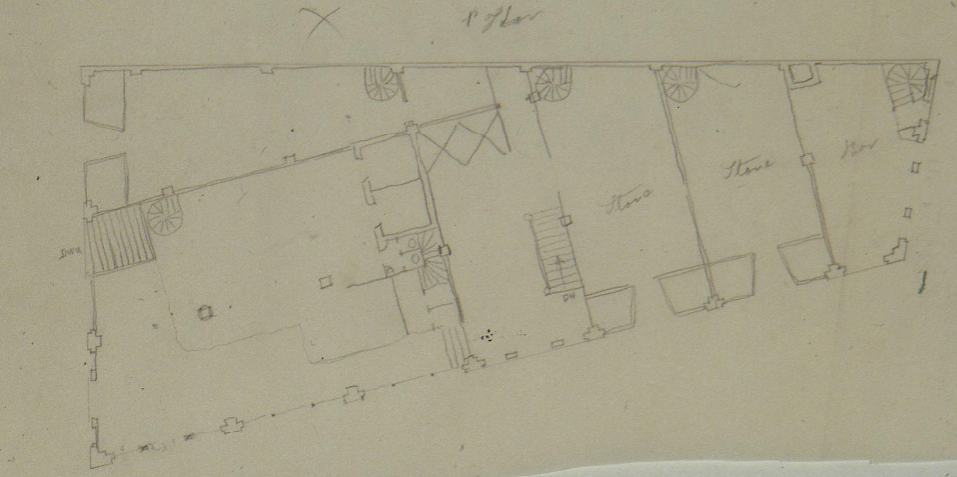
The Greenes’ solution, as hinted at by the very existence of the preliminary drawings, would have been to humanize the bank. They would have approached the project not as a problem of creating a secure vault, but as a challenge of designing a dignified and pleasant place for people to conduct their business. The teller line, often a formidable barrier between the public and the institution, might have been reconceived as a beautifully crafted wooden screen, its design echoing the delicate tracery of a Japanese shoji. The lighting, typically harsh and utilitarian in commercial spaces, would have been a primary design element, with custom-designed fixtures of iridescent glass and patinated metal casting a warm and inviting glow. Even the furniture—the check-writing desks, the waiting benches, the officers’ chairs—would have been designed as an integral part of the overall architectural vision, each piece a small work of art in its own right.
The failure of this project to come to fruition is, in retrospect, a significant loss for American architectural history. A Greene & Greene bank would have stood as a powerful counterpoint to the prevailing classicism of the era, a demonstration that commercial architecture could be both beautiful and humane. It would have been a building that was rooted in its specific place, a response to the unique climate and culture of Southern California, rather than an imported style from a distant time and place. It would have been, in short, a building that was as much a part of the landscape as the Arroyo Seco itself.
And so, the 1906 Bank Competition remains a ghost in the Greene & Greene archives, a whisper of what might have been. It is a story that is incomplete, a narrative without a final chapter. But in its very incompleteness, it offers a valuable lesson. It reminds us that the history of architecture is not just a story of what was built, but also a story of what was imagined. The unbuilt projects of great architects are often as revealing as their realized masterpieces, for they show us the full range of their ambition, the outer limits of their creative vision. The drawings for the 1906 Bank Competition are a precious fragment of that vision, a tantalizing glimpse into a world where the principles of the Arts and Crafts were not confined to the private realm of the home, but were brought to bear on the public life of the city, creating a richer, more beautiful, and more humane world for all.