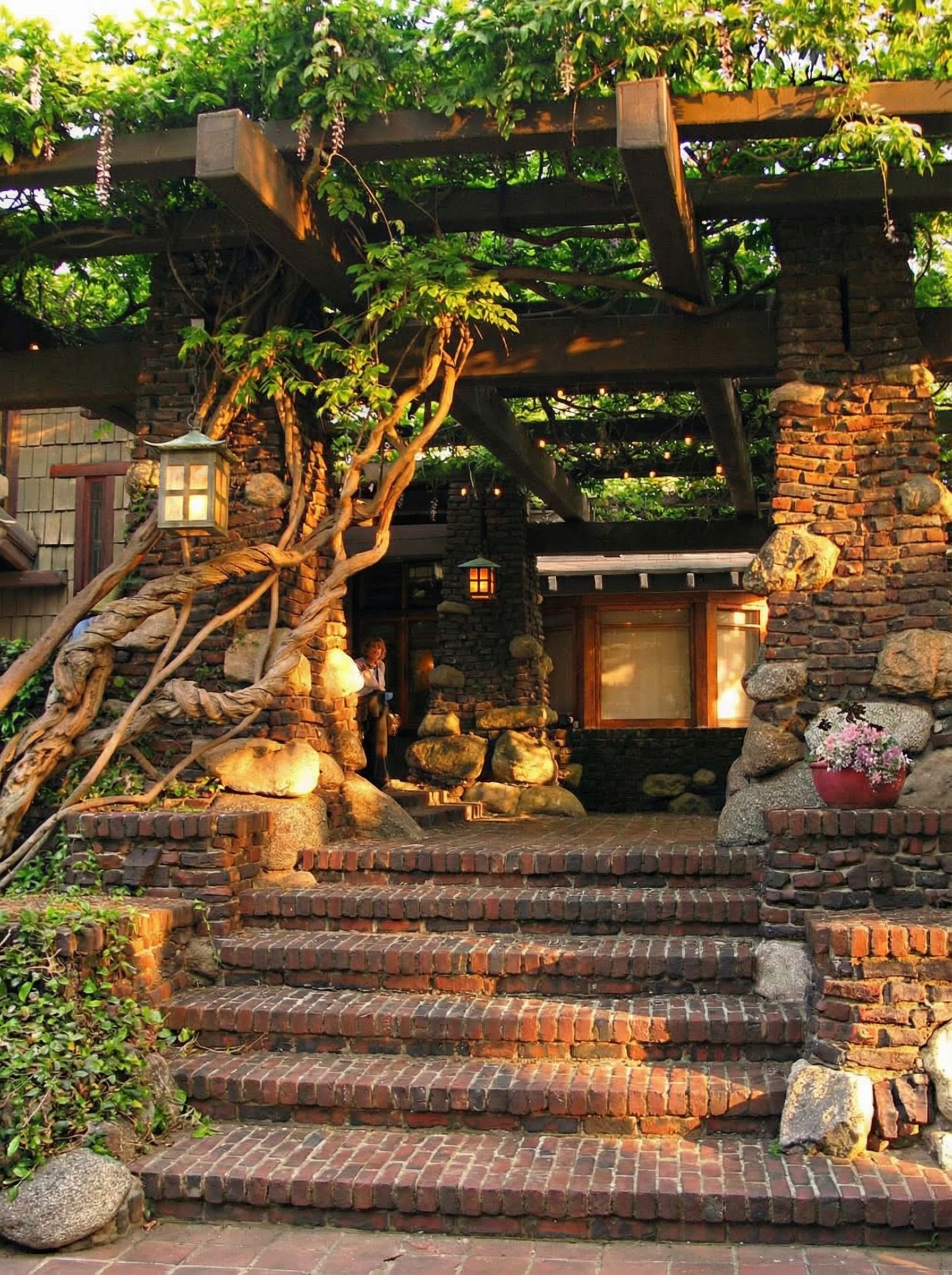
In late April, walking the perimeter of the Duncan-Irwin House on Grand Avenue in Pasadena, one comes upon the wisteria.
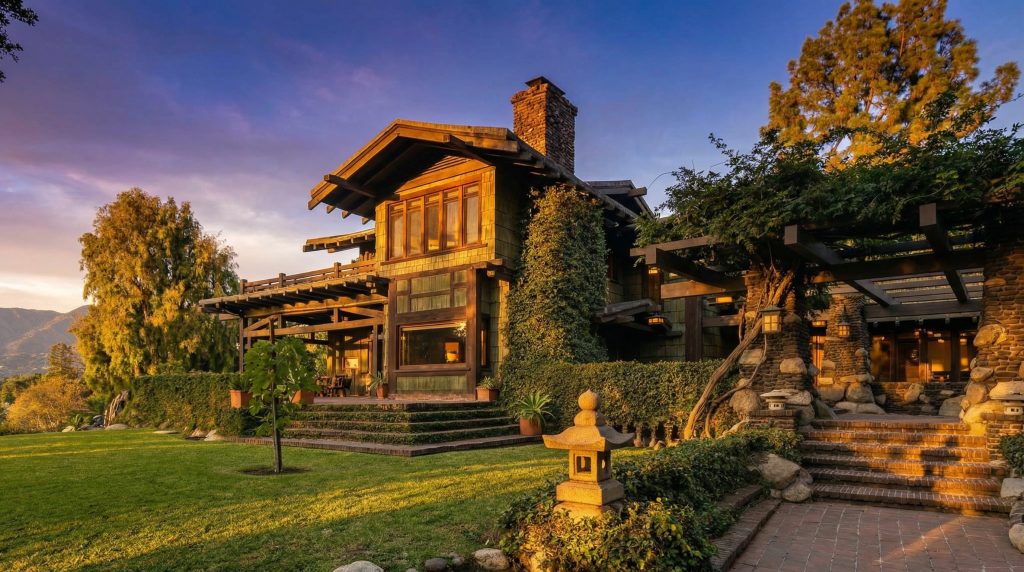
It hangs from the timber structure of the house’s outdoor extensions in the way wisteria has always hung — in great pendulous racemes of pale violet, each cluster a foot long or longer, suspended in the still air like something that has been weighed and balanced and then released to find its own gravity. The flowers are at their fullest for perhaps ten days each year. The day one happens to find them is a kind of accident.
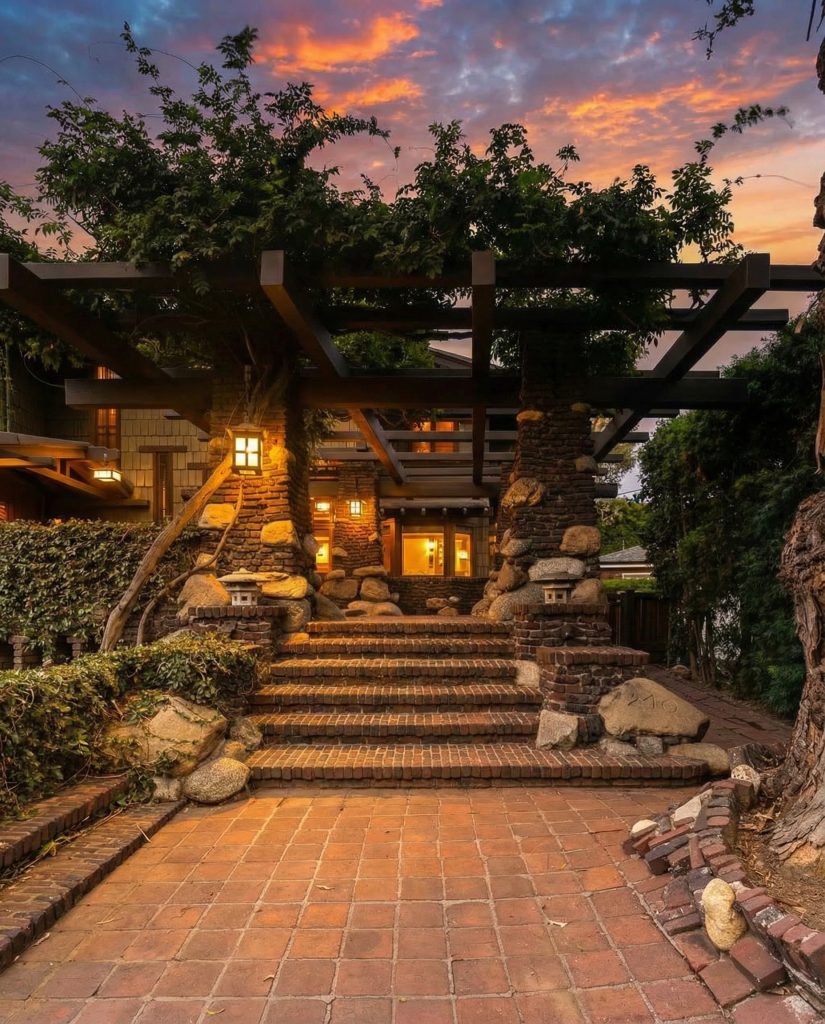
The Duncan-Irwin is a house designed for outdoor air and outdoor light. Its plan rambles; its wings extend; its timber overhangs and trellises were drawn to be planted, to be vegetated, to receive the climbing weight of vines without losing their architectural identity to the green. The wisteria here is not decoration applied to the house. It is the house’s seasonal adornment of itself — what the architecture wears when it is dressed.
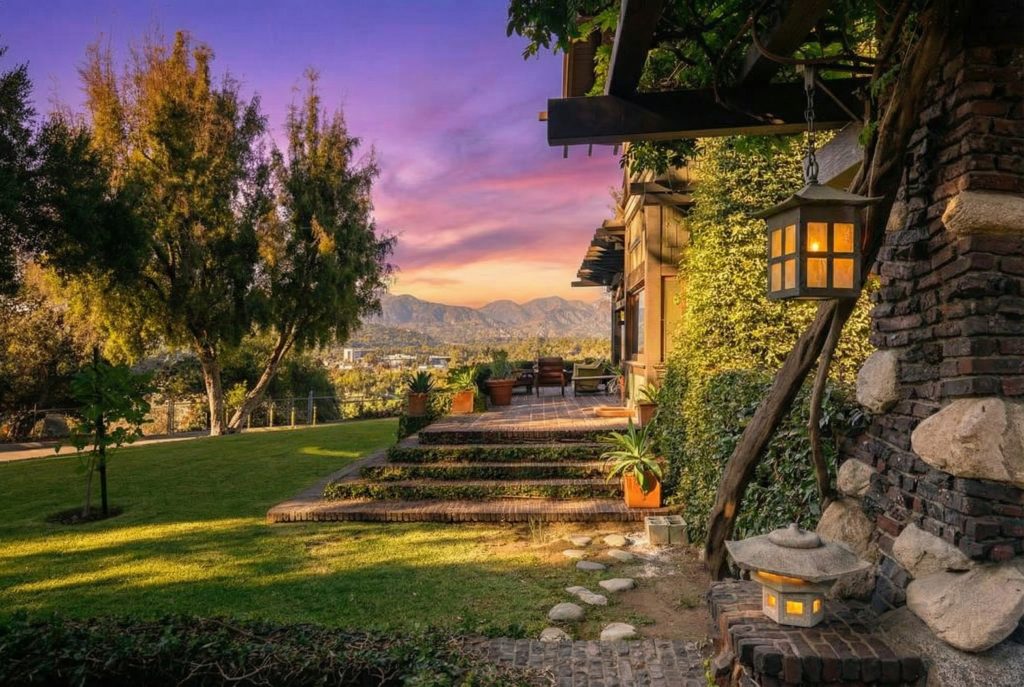
Stand beneath one of the racemes. The light filtering through the violet flowers is itself violet. The shadow on the path below shifts color when the breeze moves. The bees, which are everywhere in late April at Duncan-Irwin, are entirely undisturbed by the human visitor; they are working too seriously to mind. The scent is sweet but not cloying — wisteria is one of the great honeyed scents of the Southern California spring, and it is honest about what it is.
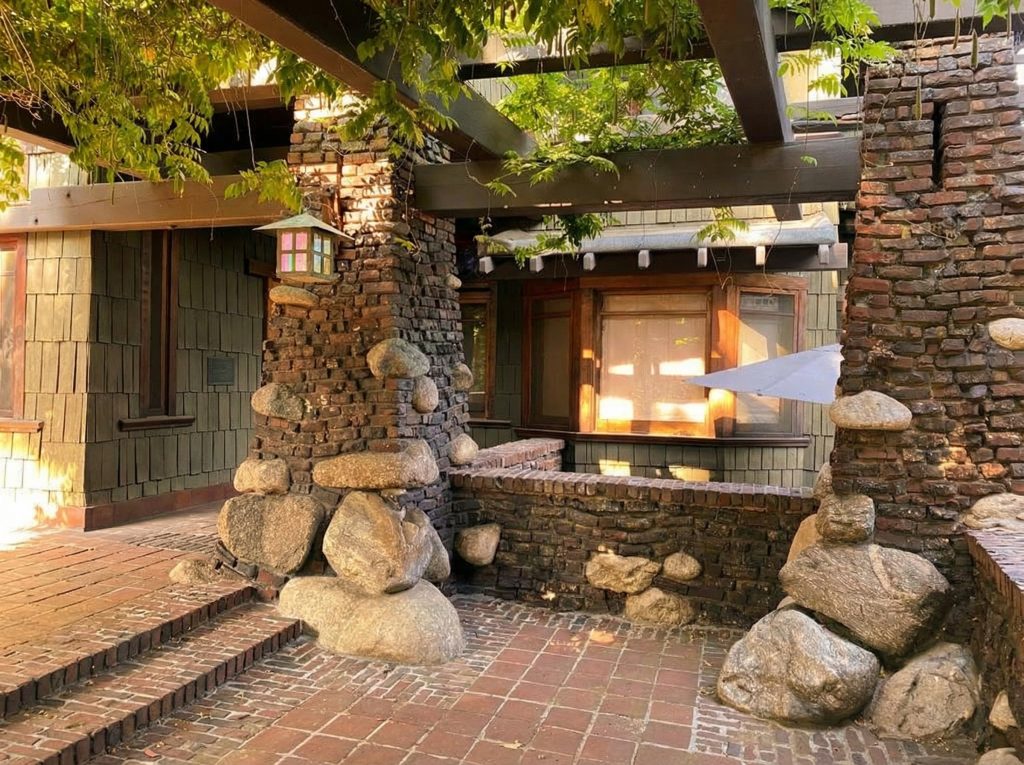
The brothers understood that a Pasadena garden is fundamentally an event of light. The wisteria hour at Duncan-Irwin is the moment when the architecture’s most modest gestures — a timber bracket, a trellis bay, a pergola end — are suddenly carrying weight, color, scent, and motion all at once. The house becomes briefly more than itself.
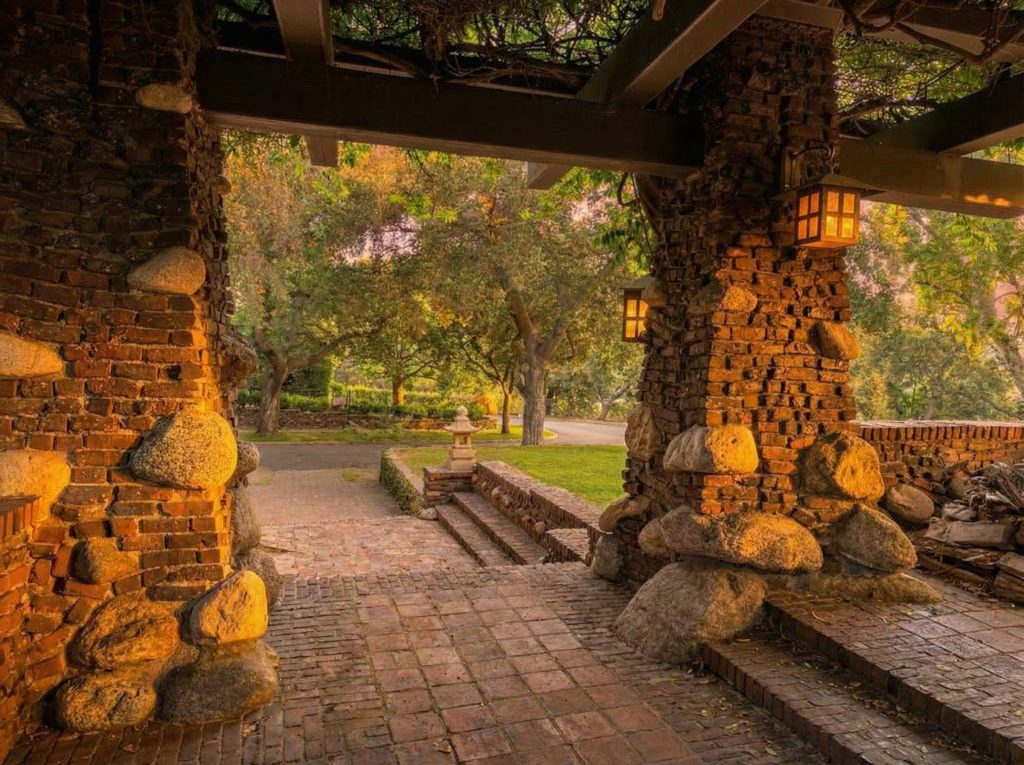
Stand long enough and the wisteria will tell you something the chimneys cannot. The architecture is a frame for time. The chimneys hold the house against the sky. The vines remind the house that the sky moves.