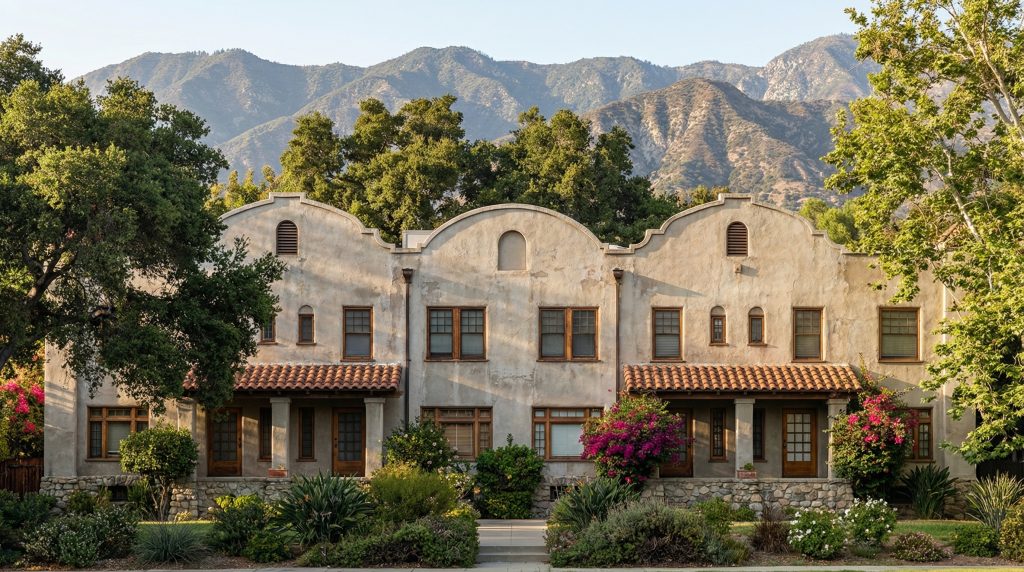
The F. J. Martin Apartment Building represents Greene & Greene’s most significant early exploration of Mission Revival residential architecture and their most accomplished demonstration of how Spanish Colonial building traditions could be adapted to serve multi-family housing requirements while maintaining authentic regional character and architectural distinction. Completed in 1903 during the crucial period of Greene & Greene’s stylistic experimentation, this “Block of Dwelling Houses” represents their most important example of Mission Revival apartment design and their most successful exploration of how traditional Spanish Colonial architectural vocabulary could serve contemporary urban housing needs while establishing new possibilities for multi-family residential architecture. The design demonstrates their sophisticated approach to creating architecture that was both regionally appropriate and functionally innovative, making it a crucial achievement in their development as masters of diverse architectural styles and a landmark in the evolution of Mission Revival apartment design that established new possibilities for urban residential expression in California domestic contexts.

Architectural Significance
The F. J. Martin Apartment Building occupies a unique position in Greene & Greene’s body of work as their most significant early exploration of Mission Revival residential architecture and their most accomplished demonstration of how Spanish Colonial building traditions could be elevated through sophisticated design treatment. Completed in 1903 during the crucial period of Greene & Greene’s stylistic diversification, the apartment building represents their most important example of Mission Revival multi-family housing and their most significant exploration of how traditional Spanish Colonial architectural vocabulary could serve contemporary urban residential requirements while maintaining authentic regional character. The design demonstrates their sophisticated approach to creating architecture that was both convincingly regional and functionally innovative, making it a crucial achievement in their development as masters of diverse architectural approaches and a landmark in the evolution of Mission Revival design that established new possibilities for multi-family residential expression in California urban contexts.
The Multi-Family Commission
The F. J. Martin Apartment Building commission provided Greene & Greene with the opportunity to explore Mission Revival architecture and demonstrate their mastery of Spanish Colonial design principles:
Mission Revival Mastery: The Martin Apartment Building represented Greene & Greene’s most important opportunity to demonstrate how Mission Revival architectural vocabulary could be elevated through sophisticated design treatment, requiring innovative approaches to multi-family planning that would achieve both authentic regional character and functional efficiency while serving contemporary urban housing requirements.
Spanish Colonial Integration: The commission challenged Greene & Greene to create architecture that celebrated traditional Spanish Colonial building traditions while incorporating modern residential conveniences, establishing new possibilities for apartment design that combined regional authenticity with contemporary functionality and construction quality.
Urban Housing Innovation: The project provided the opportunity for Greene & Greene to develop architectural solutions that addressed urban housing needs while maintaining their commitment to design excellence, establishing design elements that would demonstrate their understanding of how multi-family architecture could achieve both functional efficiency and architectural distinction.
Architectural Features
Exterior Design
The F. J. Martin Apartment Building showcased Greene & Greene’s sophisticated approach to Mission Revival residential architecture and Spanish Colonial design:
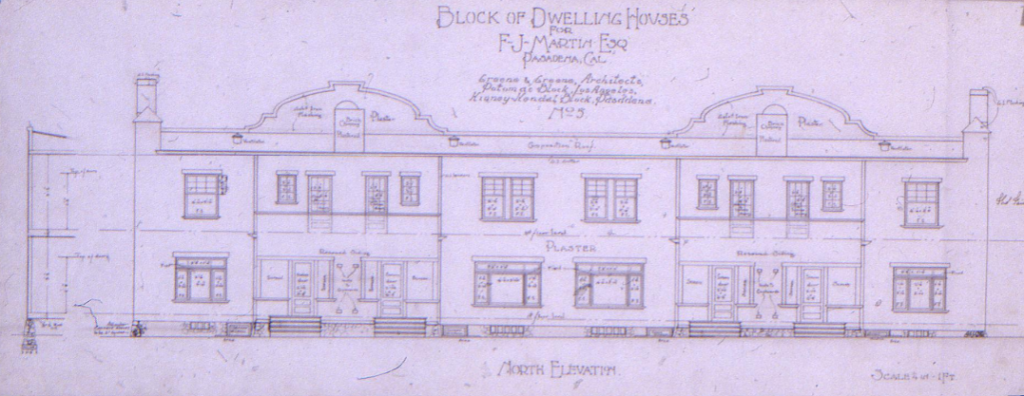
Mission Revival Elements: The building featured authentic Mission Revival architectural elements including high roof lines, tile roofs over porches, and timber posts that reflected traditional Spanish Colonial construction while demonstrating Greene & Greene’s understanding of how regional architectural vocabulary could be employed to create distinguished multi-family housing.
Spanish Colonial Details: The design incorporated segmental arcs in the parapets that suggested mission architecture, Spanish tiles cladding the shed roof areas over doorways, and cobblestone foundation covering that enhanced the authentic regional character expected in Mission Revival construction.
Four-Unit Configuration: The building was designed as a “Block of Dwelling Houses” featuring four houses of two stories and a half basement, showcasing Greene & Greene’s ability to create multi-family residential architecture that served urban housing requirements while maintaining the scale and character appropriate for residential neighborhoods.
Regional Authenticity: The building employed traditional Mission Revival construction techniques and materials that demonstrated Greene & Greene’s mastery of Spanish Colonial building traditions while adapting these methods to serve contemporary multi-family housing requirements and California urban residential expectations.
Interior Design and Craftsmanship
The interior of the F. J. Martin Apartment Building represented Greene & Greene’s most accomplished early exploration of Mission Revival residential planning and multi-family interior design:
Functional Planning: Each unit featured carefully planned spaces including a living room and dining room with pocket door between, and a kitchen with screen porch, demonstrating Greene & Greene’s understanding of how Mission Revival planning could be enhanced to serve both practical requirements and contemporary residential living expectations.
Multi-Level Organization: The design included three bedrooms and a bathroom on the upper level, with access to a deck over the porch below, showcasing Greene & Greene’s mastery of multi-family planning and their ability to create spaces that maximized residential functionality within the constraints of urban lot requirements.
Arts and Crafts Integration: The building incorporated Arts and Crafts sensibility through piled boulders flanking the doorways, demonstrating Greene & Greene’s understanding of how Mission Revival architecture could be enhanced through thoughtful integration of complementary design traditions and authentic craftsmanship.
Regional Character: The units featured interior treatments that enhanced the authentic Mission Revival character while supporting contemporary residential living, demonstrating Greene & Greene’s understanding of how Spanish Colonial architecture could serve modern lifestyle requirements through thoughtful design integration and functional planning.
Historical Context
F. J. Martin
F. J. Martin represented the forward-thinking developer who sought Greene & Greene’s architectural services for innovative multi-family housing:
Urban Developer: As a Pasadena developer, F. J. Martin embodied the entrepreneurial spirit that appreciated Greene & Greene’s approach to multi-family residential design, making him an ideal client for their exploration of Mission Revival apartment architecture that could serve urban housing needs while maintaining architectural distinction.
Regional Vision: His commissioning of a Mission Revival apartment building demonstrated his understanding of the value of regional architectural character in multi-family housing, providing opportunities for Greene & Greene to explore Spanish Colonial design traditions while serving contemporary urban residential requirements.
Housing Innovation: His willingness to commission innovative multi-family housing demonstrated his appreciation for architectural quality and his understanding of the potential for distinguished apartment design, making him a sophisticated client who could appreciate Greene & Greene’s approach to elevating traditional building types through design excellence.
Market Understanding: His investment in quality multi-family housing demonstrated his recognition of the growing demand for distinguished urban residential architecture, providing the context for Greene & Greene’s exploration of how Mission Revival design could serve contemporary housing markets while maintaining regional authenticity.
The 1903 Architectural Context
The F. J. Martin Apartment Building emerged during a crucial period in the development of Greene & Greene’s practice and the broader evolution of Mission Revival residential architecture:
Mission Revival Movement: The year 1903 saw growing interest in Spanish Colonial Revival architecture, providing the context for residential design that could demonstrate mastery of regional building traditions while serving the requirements of contemporary urban development and California lifestyle expectations.
Multi-Family Innovation: The period was characterized by the emergence of sophisticated approaches to apartment design, creating opportunities for multi-family housing that could combine functional efficiency with the architectural distinction expected by educated clients and urban residential sophistication.
Stylistic Exploration: The early 1900s saw Greene & Greene’s continued exploration of diverse architectural approaches, providing the broader architectural context for innovation that emphasized stylistic versatility and design excellence within the constraints of regional building traditions and urban housing requirements.
California Urbanization: The period witnessed the successful adaptation of Spanish Colonial building traditions to urban residential requirements, demonstrating the possibilities for Mission Revival architecture that could maintain authentic regional character while serving contemporary urban housing needs and development patterns.
Construction and Completion
The F. J. Martin Apartment Building underwent careful development and execution that reflected both Greene & Greene’s architectural vision and their commitment to Mission Revival authenticity:
Mission Revival Construction (1903): The apartment building was completed using authentic Mission Revival construction techniques that maximized regional character within the constraints of multi-family housing requirements while maintaining Greene & Greene’s standards for construction quality and architectural distinction, demonstrating their ability to create distinguished architecture through traditional Spanish Colonial building methods.
Multi-Family Integration: The project was executed with careful attention to the integration of authentic Mission Revival character with functional multi-family planning, creating architecture that achieved both convincing regional authenticity and residential efficiency while serving the specific requirements of urban housing development and California climate conditions.
Regional Achievement: The completed building featured the successful achievement of authentic Mission Revival character that combined traditional Spanish Colonial architectural elements with contemporary multi-family functionality, establishing new possibilities for American urban residential architecture that maintained regional authenticity while serving contemporary housing requirements and urban development expectations.
Continuous Evolution
The F. J. Martin Apartment Building influenced both Greene & Greene’s legacy and the broader evolution of Mission Revival residential architecture:
Regional Mastery: The successful completion of the Martin Apartment Building established Greene & Greene’s reputation as masters of Mission Revival architecture and confirmed their ability to create distinguished buildings through authentic Spanish Colonial construction, serving as the foundation for their continued development of diverse regional architectural approaches.
Multi-Family Innovation: The building’s successful demonstration of sophisticated Mission Revival apartment design influenced subsequent understanding of how regional architecture could serve urban housing requirements, demonstrating new possibilities for multi-family residential design that could maintain authentic character while achieving functional efficiency.
Stylistic Development: The project’s successful exploration of Mission Revival construction established Greene & Greene’s reputation for stylistic versatility and confirmed their mastery of diverse regional building traditions while maintaining their commitment to design excellence and construction quality across multiple building types.

Preservation and Transformation
The Mission Revival Legacy
The F. J. Martin Apartment Building underwent various changes that demonstrate both the evolution of Mission Revival residential architecture and the ongoing development of Greene & Greene’s design philosophy:
Regional Documentation: The building is documented as an important example of Greene & Greene’s Mission Revival work and their successful adaptation of Spanish Colonial construction to multi-family residential requirements, ensuring its place in the history of California regional architecture and providing ongoing opportunities for understanding Mission Revival design development.
Architectural Evolution: The building’s role in Greene & Greene’s stylistic development demonstrates their growing mastery of diverse regional architectural traditions while maintaining recognition of their ability to create distinguished architecture across multiple building approaches and construction methods.
Urban Legacy: The building has been preserved through historical records that maintain Greene & Greene’s Mission Revival design principles while contributing to contemporary understanding of early 20th-century multi-family architecture and the development of California’s urban residential building traditions.
Current Status
Location: 225 N. Madison Ave., Pasadena, California
Status: Historical documentation preserved, demolished in 1967
Significance: Greene & Greene’s most significant Mission Revival multi-family project
Recognition: Important example of sophisticated regional apartment architecture
Architectural Legacy: The F. J. Martin Apartment Building stands as Greene & Greene’s most significant early exploration of Mission Revival residential architecture and their most accomplished demonstration of how Spanish Colonial building traditions could be elevated through sophisticated design treatment while maintaining the authentic regional character and functional efficiency required for successful multi-family housing in California urban residential contexts, establishing new possibilities for Mission Revival apartment design that combined traditional Spanish Colonial architectural vocabulary with contemporary urban housing requirements and construction excellence.
