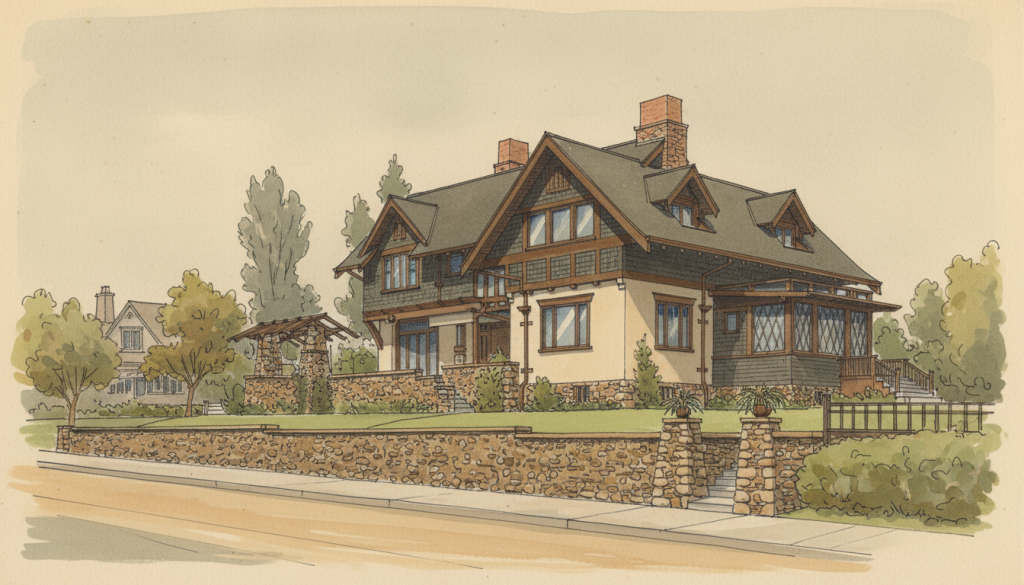
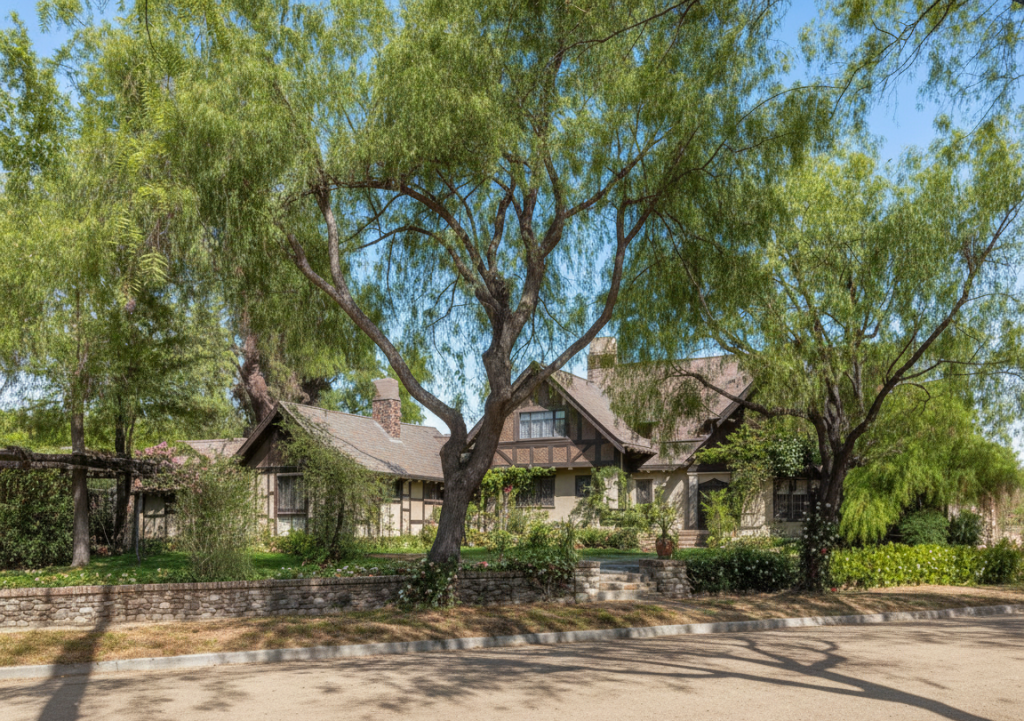
The James A. Culbertson House stands as one of Greene & Greene’s most significant early works, representing a crucial turning point in the development of their mature Arts and Crafts style and marking their emergence as leaders of the American Craftsman movement. Built in 1902 for Chicago lumber executive James A. Culbertson at 235 North Grand Avenue in Pasadena, this remarkable residence demonstrates the brothers’ transition from Victorian-influenced designs to their distinctive Anglo-Craftsman aesthetic that would define their legacy. The house holds special significance as one of the first projects where Greene & Greene fully embraced the William Morris movement and began their exploration of Asian design influences that would become hallmarks of their architectural philosophy.
Architectural Significance
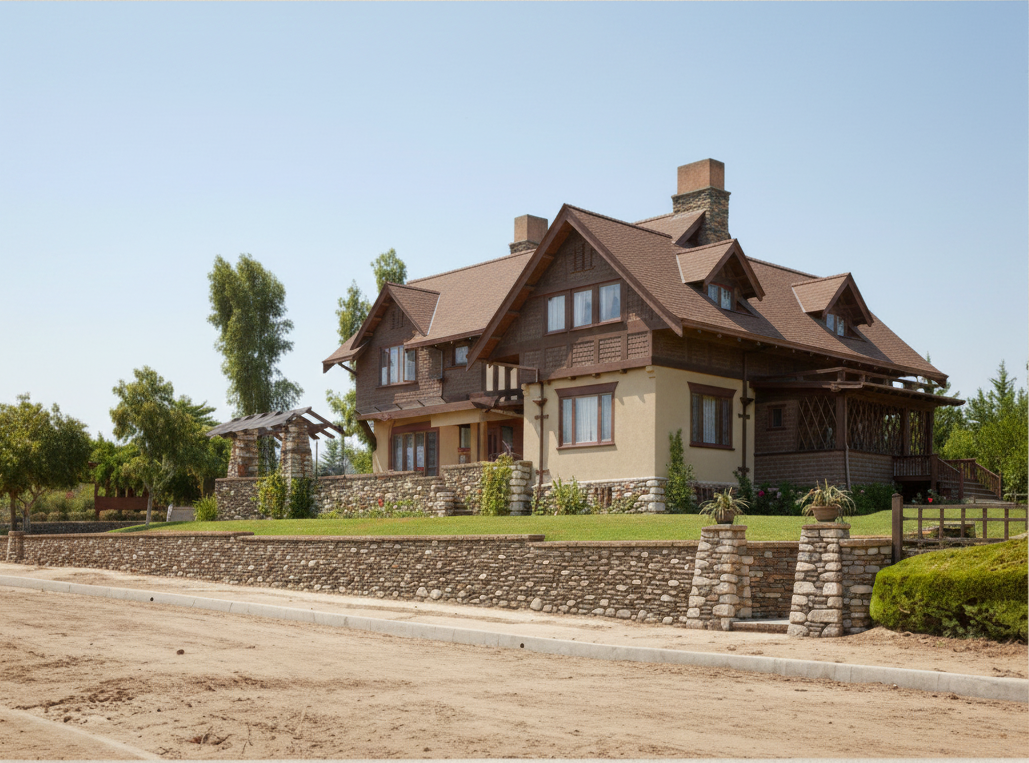
The James A. Culbertson House holds a unique position in Greene & Greene’s body of work as the project that established their reputation and launched their mature design philosophy. Completed in 1902, the house showcases the brothers’ emerging mastery of the English Arts and Crafts aesthetic while demonstrating their growing confidence in handling complex residential programs and their innovative approach to material relationships. The design represents an important bridge between their earlier Victorian-influenced works and the ultimate bungalows that would follow, establishing many of the design principles and construction techniques that would define their mature style.
The Catalyst Commission
The Culbertson commission came at a crucial moment in Greene & Greene’s career, providing them with an ideal client and the creative freedom to develop their architectural vision:
Visionary Client: James Culbertson deserves credit for fostering a climate in which the Greenes could exercise new design ideas that were coming from England and the Continent, encouraging their exploration of innovative approaches to residential design.
William Morris Influence: In reply to a letter from his client, Charles Greene wrote that he was in sympathy with the “William Morris movement” and that the interior of the house was inspired by Morris’s work, establishing the philosophical foundation for their Arts and Crafts approach.
Asian Design Introduction: Culbertson possibly encouraged the Greenes’ budding interest in Asian design and decorative arts, leading to their first use of Asian-inspired bracket details that would become signature elements of their style.
Architectural Features
Exterior Design
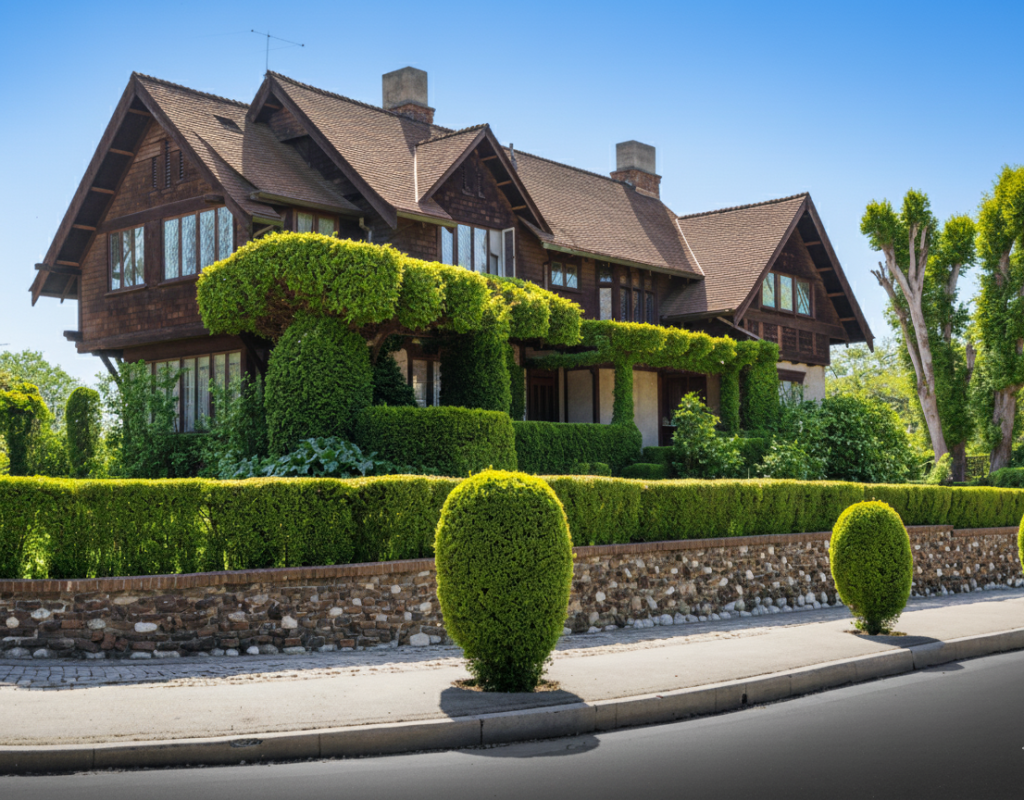
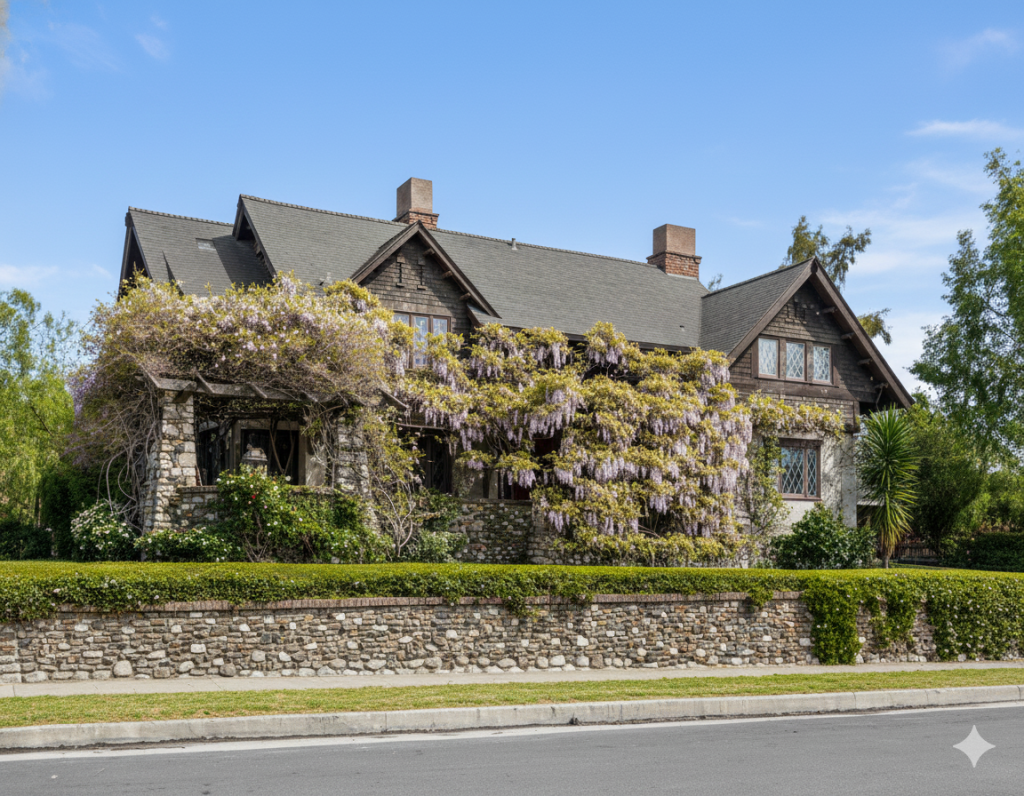
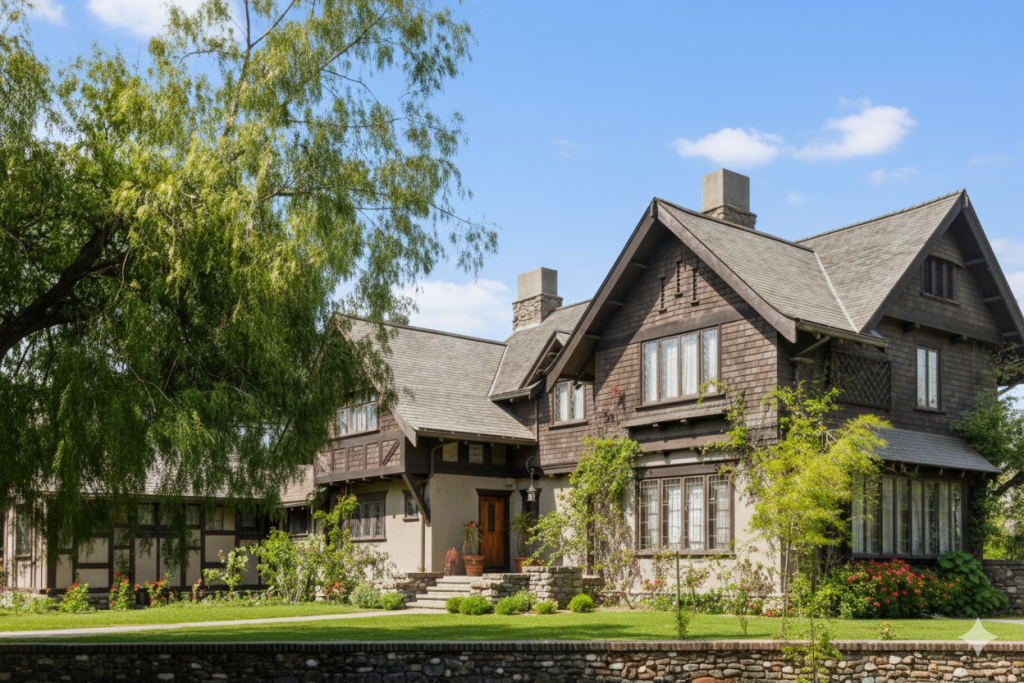
The James A. Culbertson House showcases Greene & Greene’s emerging mastery of the Anglo-Craftsman aesthetic:
English Arts and Crafts Inspiration: The preliminary front elevation design relates closely to an English-inspired design published by Boston architect Ralph Adams Cram in 1901, demonstrating the brothers’ engagement with contemporary architectural movements.
Compact Sophistication: The Greenes’ design was more compact than its English precedents but fully expressive of the Anglo-craftsman ideal then being promoted in Gustav Stickley’s Craftsman magazine and elsewhere.
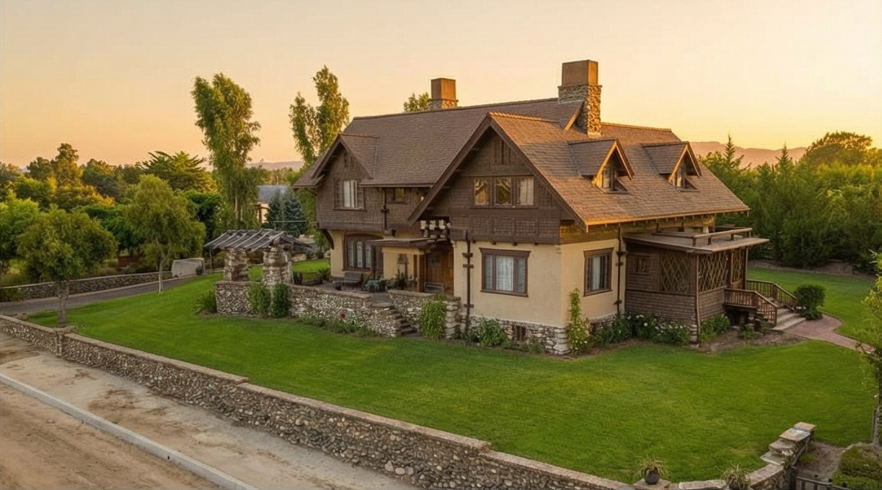
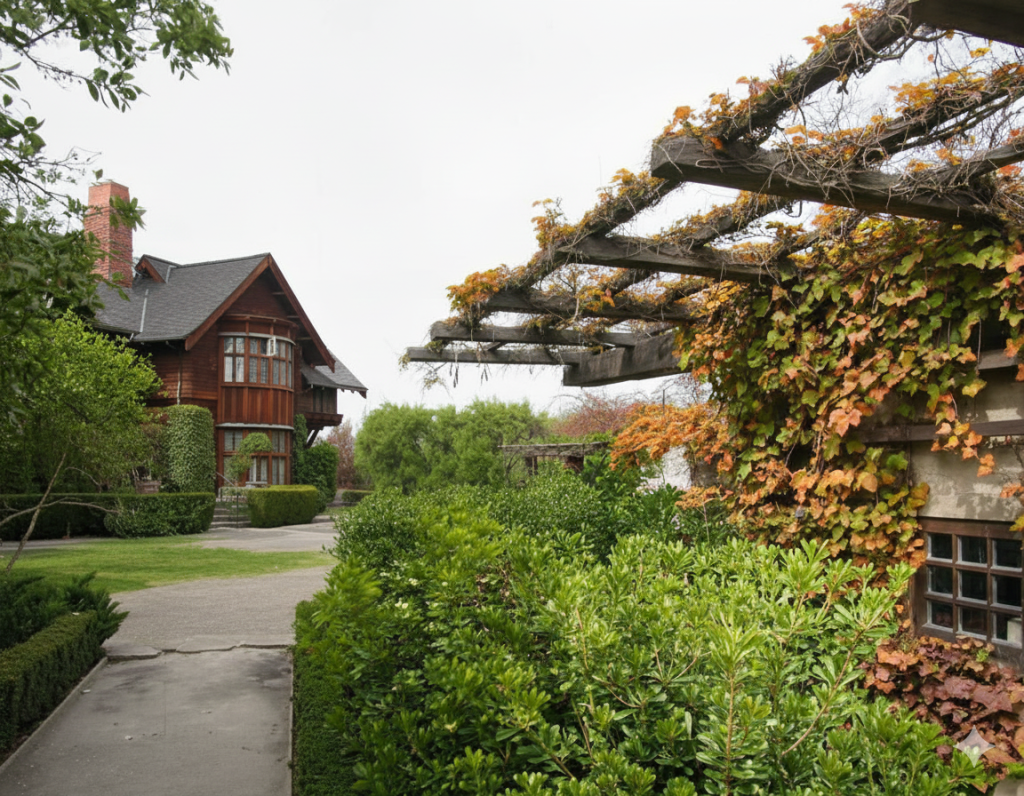
Site Integration: The house was sited near the northwest corner of its lot in the Park Place tract of Pasadena, affording views of the Arroyo Seco below and the San Gabriel Mountains in the distance to the north, establishing the principle of landscape integration that would characterize all their subsequent work.
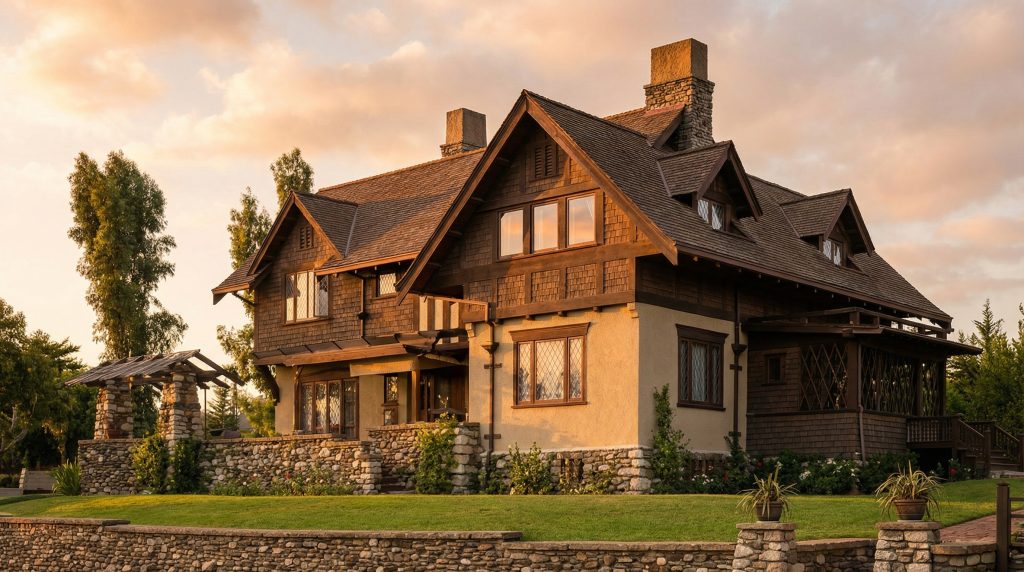
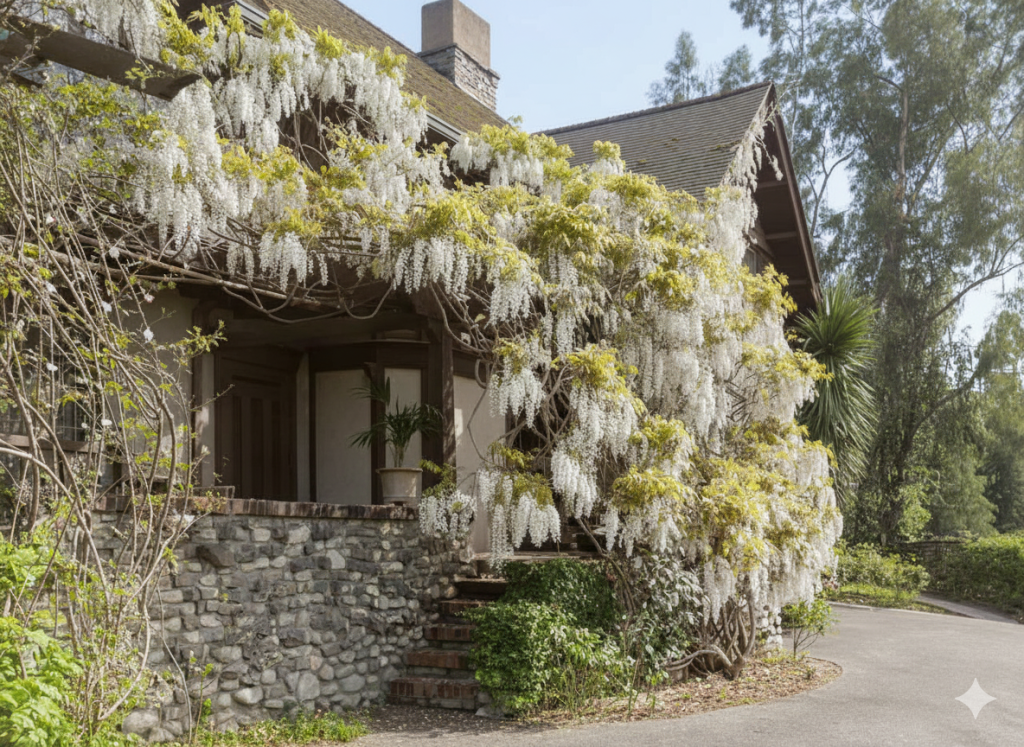
Half-Timbered Construction: The house features shingled and half-timbered construction with leaded glass windows, demonstrating the brothers’ mastery of traditional English building techniques adapted to California conditions.
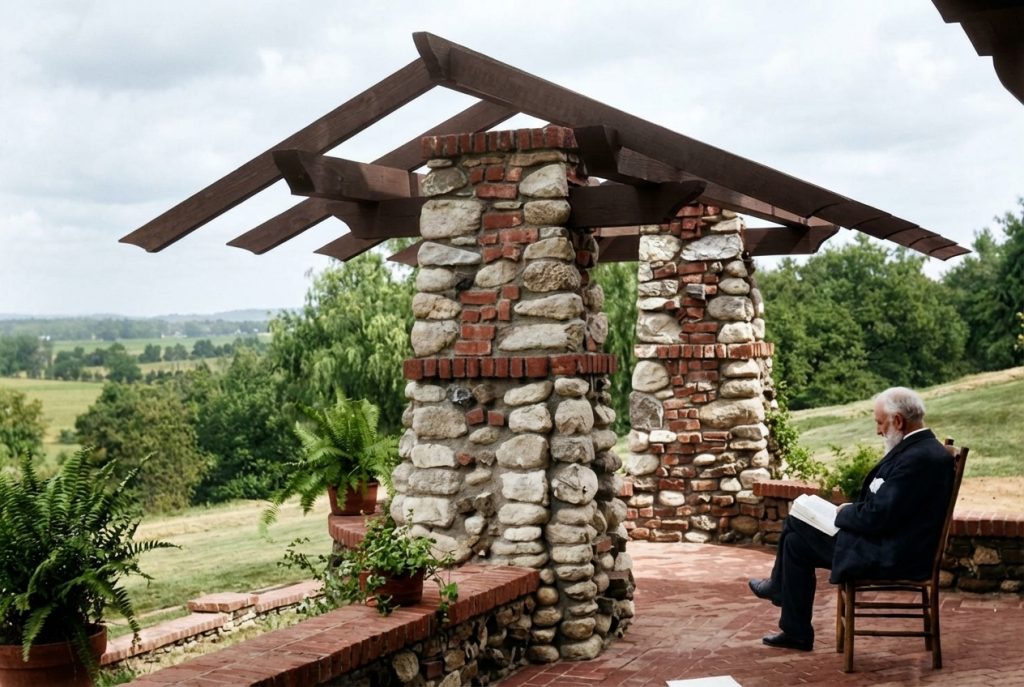
Clinker Brick Innovation: The Greenes added clinker bricks to the foundation, retaining walls, and supports, with these irregular bricks having been too close to the kiln’s heat source, creating rich warm browns, purples, and blacks that added richness and texture to the stonework.

Interior Design and Craftsmanship
The interior of the James A. Culbertson House represents Greene & Greene’s first mature expression of integrated design:
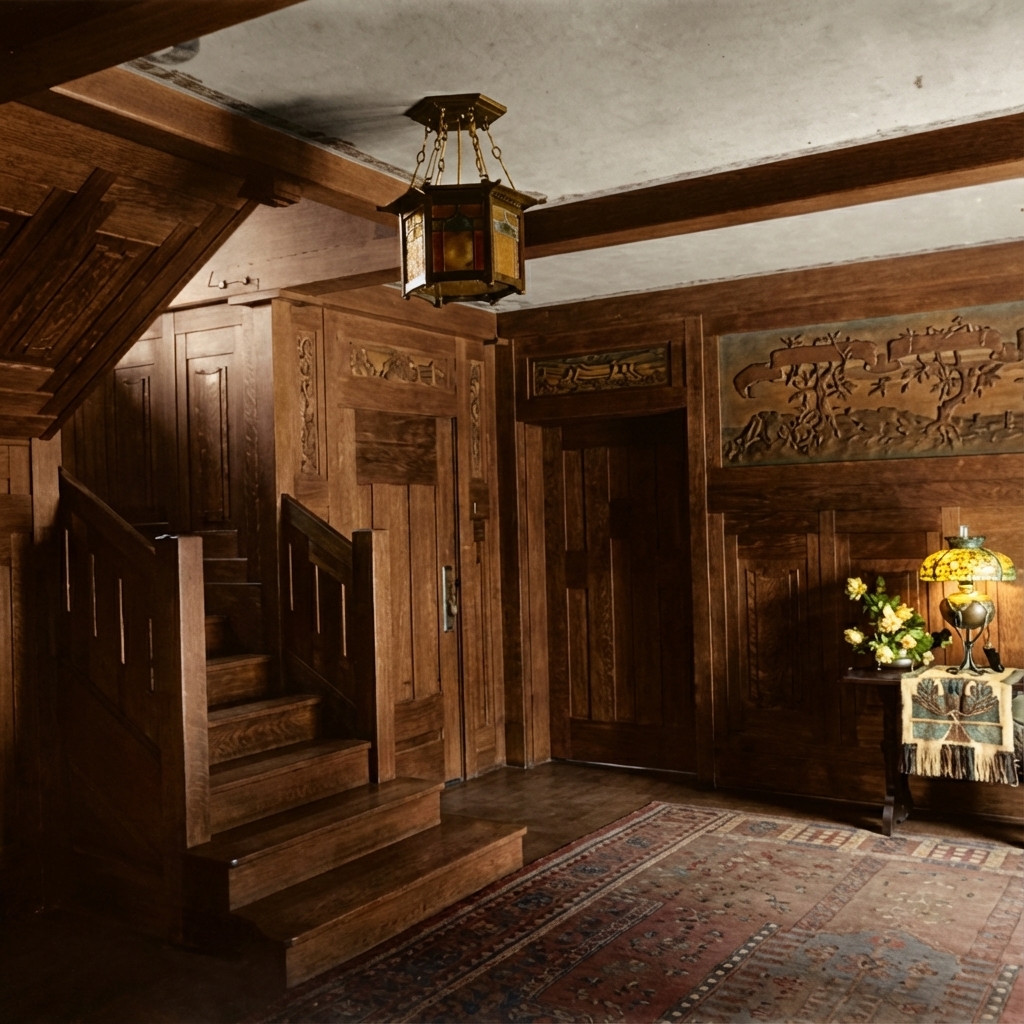
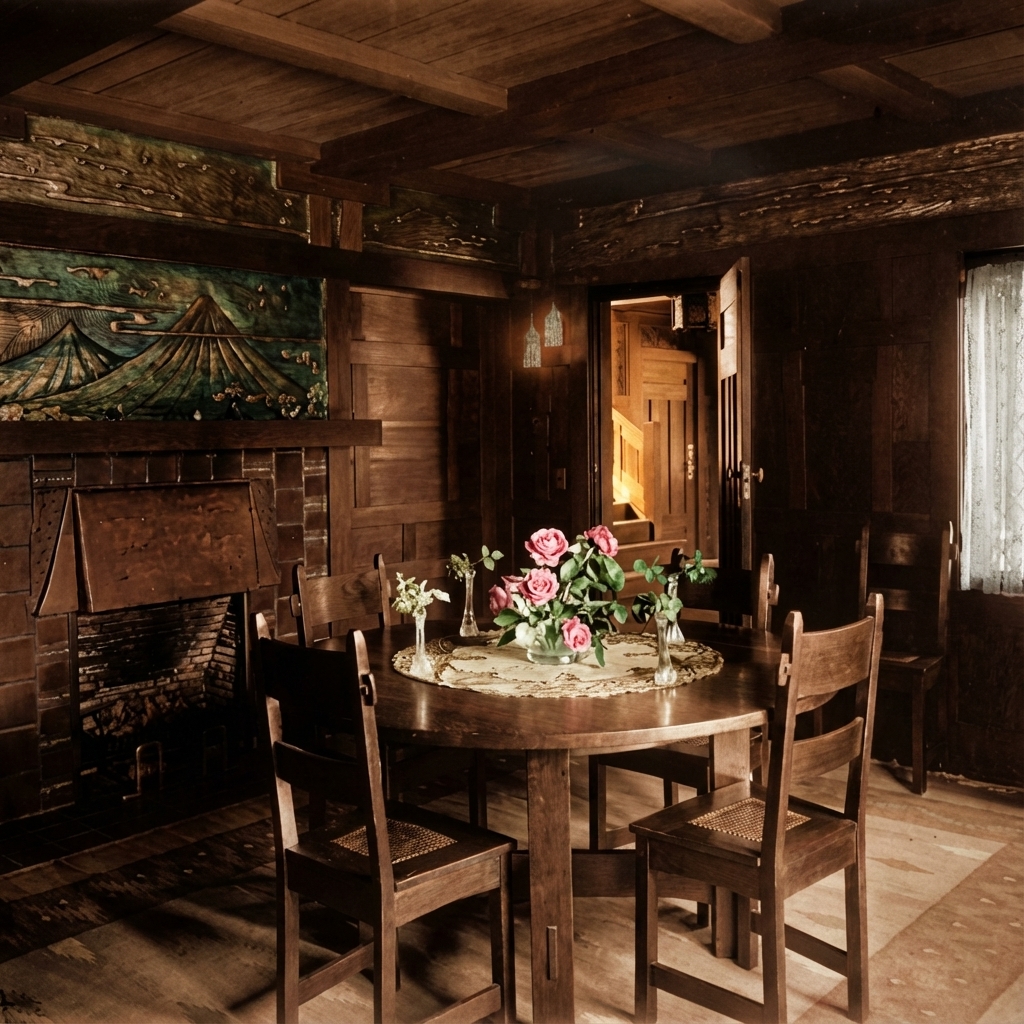
Dark-Stained Cedar Interior: The living room’s dark-stained, cedar interior (in its original 1902 phase) shows their earliest use of an Asian-inspired bracket detail over the window seat, marking the beginning of their synthesis of Eastern and Western design principles.
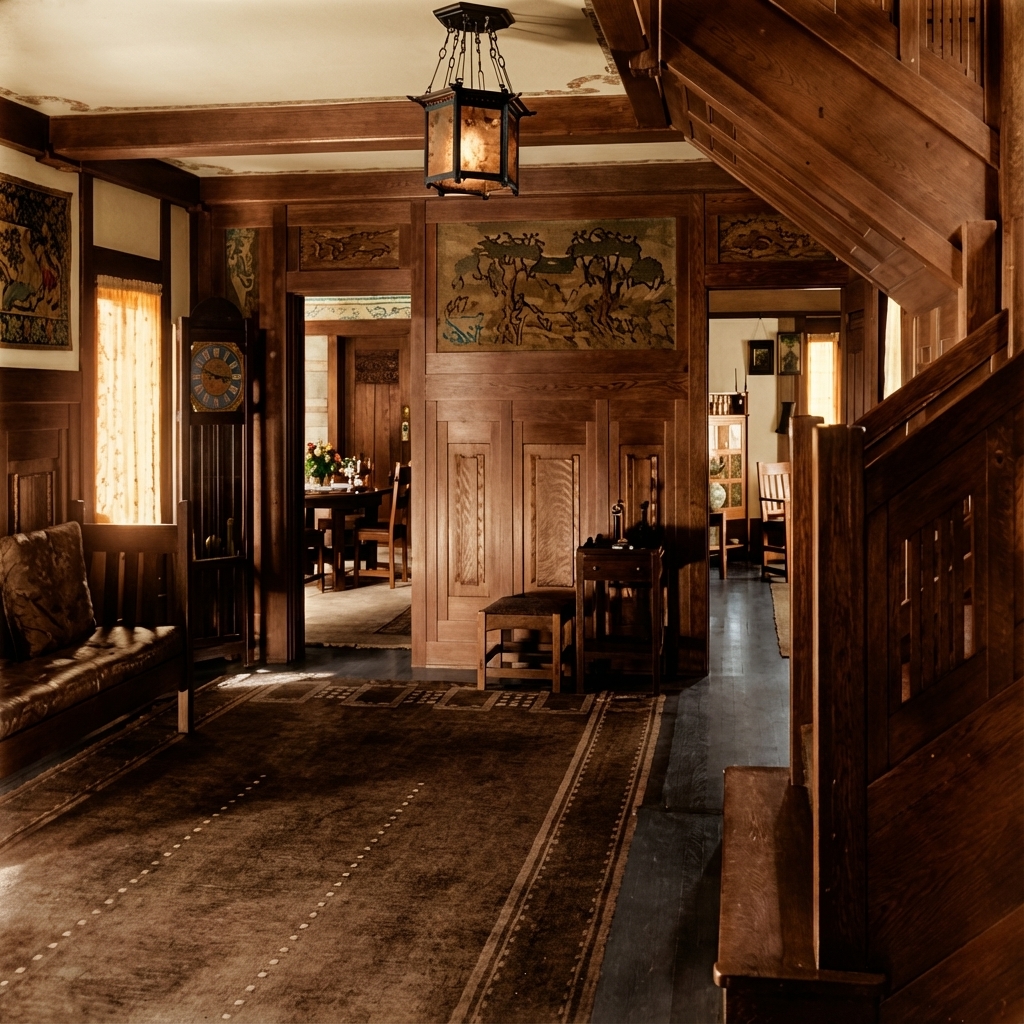
Extensive Handcarved Woodwork: The interior featured extensive handcarved woodwork and Japanese-influenced ceiling panels, demonstrating the brothers’ commitment to craftsmanship and their growing appreciation for Asian aesthetic principles.
Integrated Phrases: The woodwork included phrases reflecting the spirit of California, showing how the brothers sought to create architecture that expressed both place and philosophy.
Custom Everything: Every element of the interior was custom-designed, from the largest architectural features to the smallest decorative details, establishing the principle of total design integration that would define their mature work.

Historical Context
James A. Culbertson
James A. Culbertson (1854-1915) was a successful Chicago-based lumber executive who had spent numerous winters in Pasadena before commissioning his winter residence. His background in the lumber business made him an ideal client for Greene & Greene, as he could appreciate the quality of their woodworking and was willing to invest in the finest materials and craftsmanship.
The English Arts and Crafts Connection
The Culbertson House emerged during a period of intense interest in the English Arts and Crafts movement in America:
Good Housekeeping Recognition: Featured in a 1906 Good Housekeeping magazine, the Culbertson house was described as an inexpensive embodiment of California living, bringing national attention to Greene & Greene’s work.
Shared Vision: Culbertson and Charles Greene shared an Anglophilia and admiration for the romantic aspects of English arts and crafts, creating a perfect collaboration between client and architect.
Continental Influences: The house incorporated design ideas coming from both England and the Continent, demonstrating the brothers’ sophisticated understanding of international architectural movements.
Continuous Evolution
The Culbertson House underwent continuous development throughout James Culbertson’s lifetime:
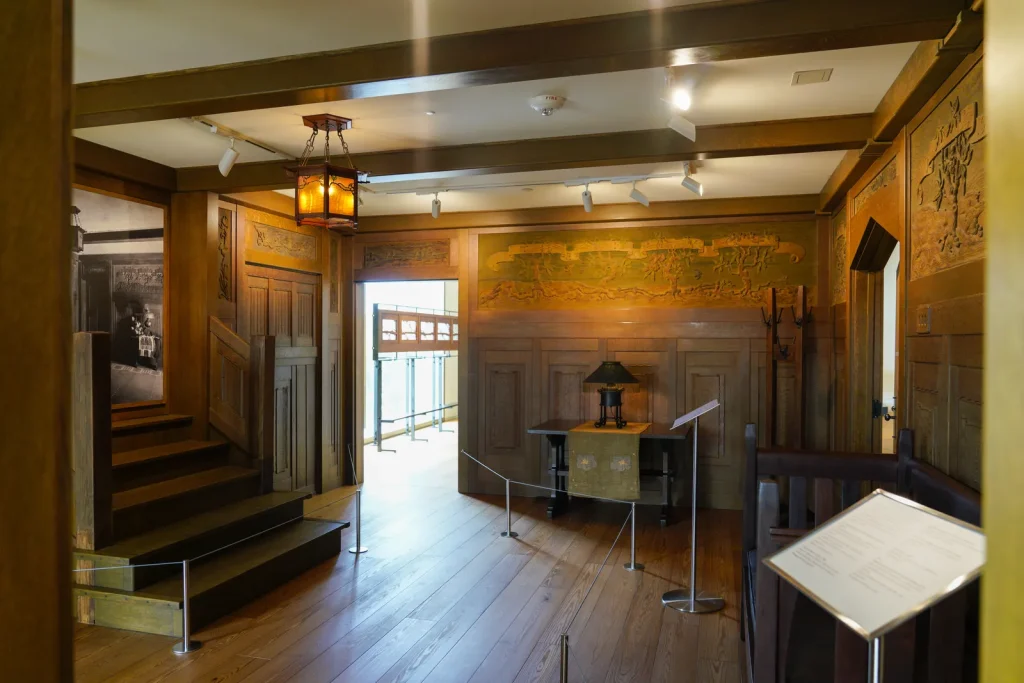
1907 Grand Entry Hall: The brothers added a grand entry hall in 1907, which has been recreated at the Museum of the American Arts & Crafts Movement in Fort Lauderdale, Florida, preserving this important example of their interior design.
Ongoing Collaboration: The Greenes designed numerous additions and alterations for the house until James Culbertson’s death in 1915, demonstrating the evolving relationship between architect and client.
Preservation and Transformation
The 1953 Remodel
The house underwent dramatic changes in 1953 when architectural firm Smith and Williams persuaded the owner to preserve certain design elements through reconstruction:
Controversial Alterations: Despite significant alterations such as removing the second floor and interior woodwork and rearranging rooms, some claimed the remodel made the Greene & Greene designed gardens more accessible.
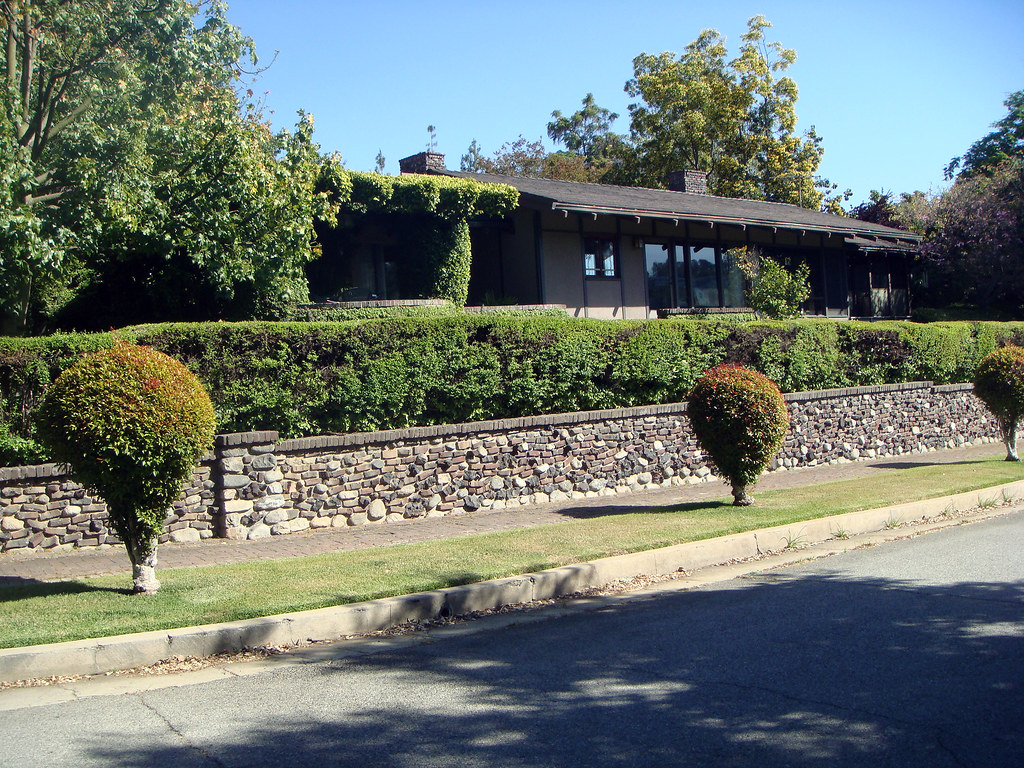
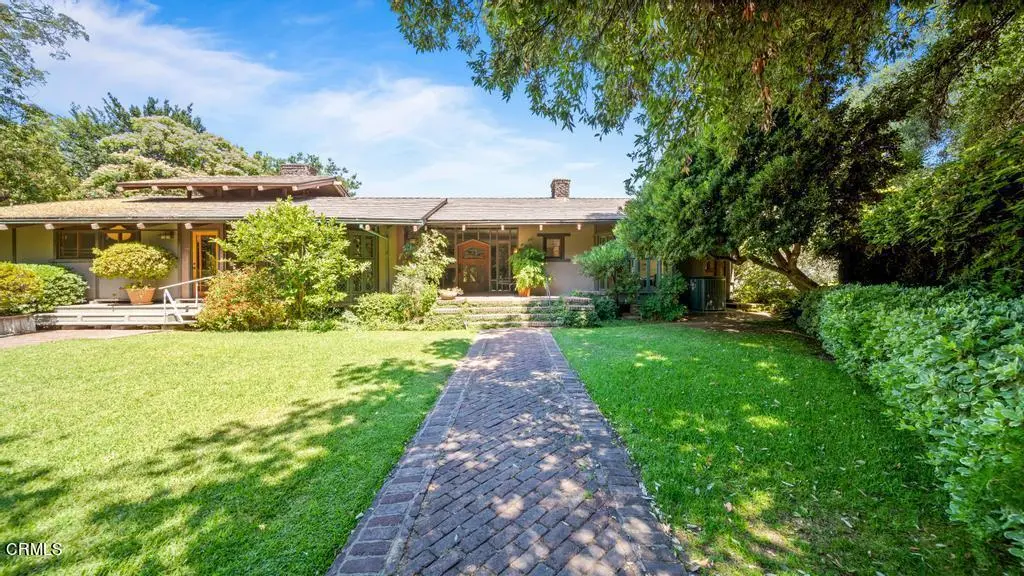
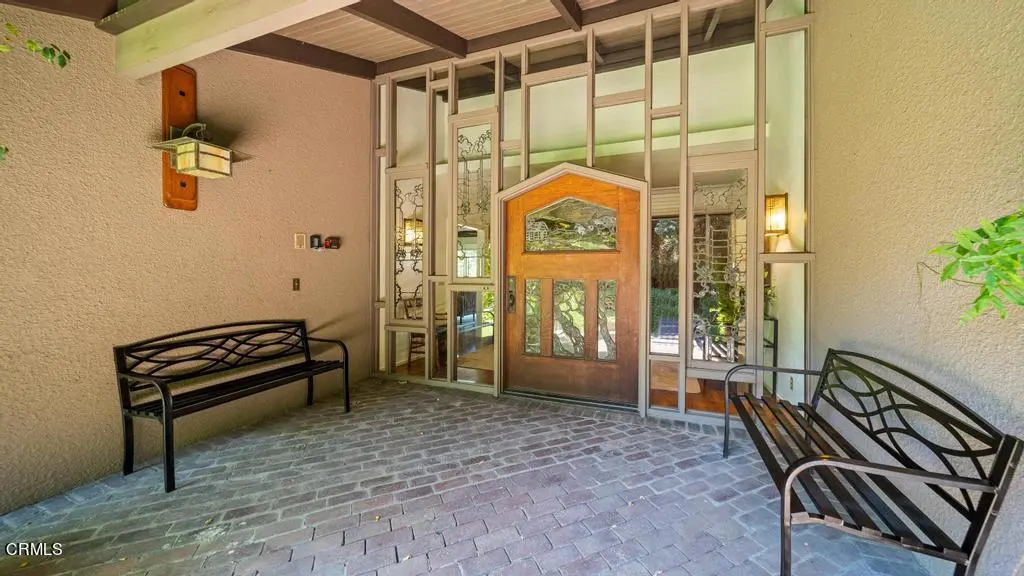

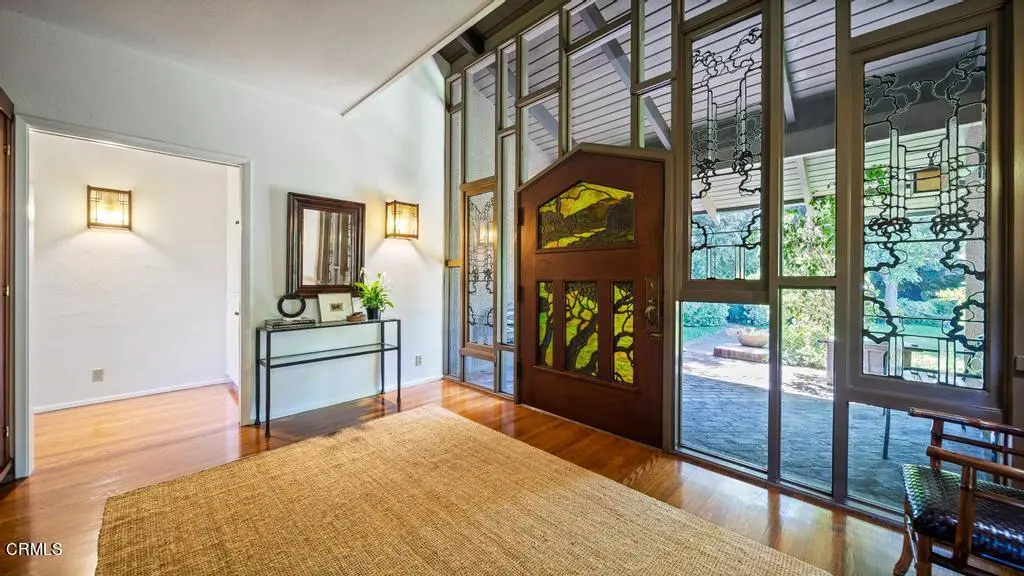
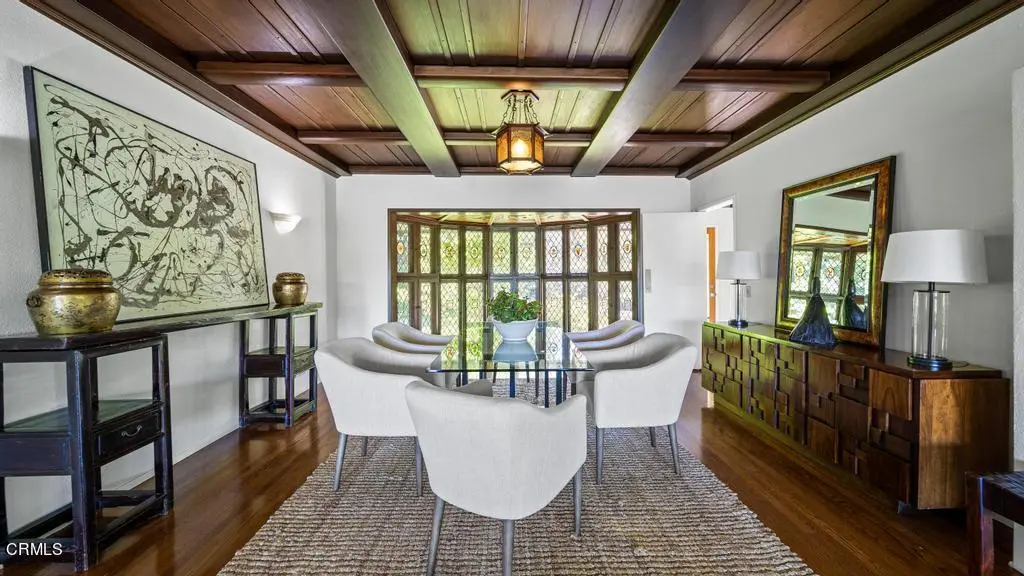
Preserved Elements: The reassembled entry hall is now displayed at the Museum of the American Arts & Crafts Movement, ensuring that this important example of Greene & Greene’s interior design is preserved for future generations.
Current Status
Location: 235 North Grand Avenue, Pasadena, CA 91103
Status: Private residence, significantly altered from original design
Significance: Crucial early work establishing Greene & Greene’s mature style
Recognition: Entry hall preserved at Museum of the American Arts & Crafts Movement
Historical Legacy: The James A. Culbertson House stands as the project that launched Greene & Greene’s reputation and established the design principles that would guide their subsequent masterpieces.
The James A. Culbertson House represents the moment when Greene & Greene found their architectural voice—a project that transformed two talented young architects into leaders of the American Arts and Crafts movement and established the design philosophy that would create some of America’s most celebrated residential architecture.